Top 10 FAQs for Weighing and Load Cell Integration
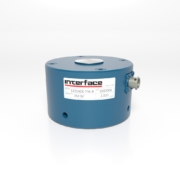
 At the core of modern industrial weighing systems is the sensor. A load cell is a device that converts mechanical force into a measurable electrical signal for accurate weighing. To transition from raw force measurement to actionable weight data, instrumentation provides a stable excitation voltage and processes the returning signal, such as an analog-to-digital converter (ADC), translating the micro-strain into a weight value. This value is displayed on indicators and handheld displays for immediate analysis or monitoring.
Navigating the complexities of integrating load cell technology into a high-accuracy weighing system requires an understanding of how physical, environmental, and electrical variables affect overall performance. In our Weighing Your Options Webinar, we answered several frequently asked questions about using Interface sensors and instrumentation in architecting advanced systems, equipment, and machines for precision weighing.
Before we get started, here is a quick video that highlights how load cells are used for weighing applications. You can also reference our Interface Weighing Guide to find products for these types of applications.

Now, let’s take a deeper dive into some of the top questions and answers about using load cells for weighing.
Ten Frequently Asked Questions About Weighing Applications Using Load Cell Technologies
FAQ #1 – How do you quantify weighing accuracy and expected tolerance?
A high-precision sensor benchmark is about 0.02% nonlinearity and hysteresis. However, accuracy is a system-level metric that depends on the dead-to-live load ratio, environmental factors, and mechanical influences. Oversizing sensors reduces the live-load signal-to-noise ratio, and factors such as temperature, vibration, and mounting quality affect performance. The 0.02% baseline requires proper mechanical integration for accuracy. Also, reference our Accuracy Matters for Weighing and Scales case study for additional information.
FAQ #2 – What sensor features ensure environmental resilience in outdoor deployments?
Deploying load cells outdoors, in washdown areas, or in corrosive environments requires specific protection, such as stainless steel, for caustic or food-grade settings. Components such as specialized weight modules are designed for these conditions, offering IP68 sealing against moisture and dust. Structural safety is also vital. Look at the mechanical design of the load cell, as some will provide side-load protection up to 400% of capacity and lift-off protection to prevent the weighing structure from tipping during high winds or seismic events. In environments with flammable gases or dust, sensors must be intrinsically safe or flame-proof to prevent ignition.
FAQ #3 – How do you maintain signal integrity across extended cable runs?
Using incorrect cables reduces system accuracy. Connecting a traditional junction box causes signal degradation over distance due to line resistance. Standard 4-wire systems are suitable only for short runs as they cannot compensate for voltage drop, leading to measurement drift with temperature changes. For lengths over 50 feet, 6-wire setups are necessary because additional sense wires monitor the actual voltage at the load cell to compensate for changes in resistance.
TIP: Alternatively, cable-related concerns can be eliminated entirely by using wireless weighing sensors. Wireless telemetry system components for weighing, including ICPW Wireless Stainless Steel Compression Load Cells, wireless load shackles, and wireless tension load links, do not require cabling, making them ideal for heavy machinery, expansive outdoor installations, or any environment where physical cabling is a nuisance.
FAQ #4 – What is the optimal number of sensors for structural stability?
The number of weighing architecture supports impacts stability, thermal freedom, and calibration ease. A three-point system relies on the principle that three points define a plane, ensuring load balance and simplifying leveling. Four-point support is typical for rectangular tanks but needs precise leveling. Specialized weight modules with shim kits help align sensors on the same plane and use rocker-pin or sliding-plate designs to accommodate thermal expansion. Without these, thermal growth causes lateral forces, known as extraneous loading, that lead to measurement errors.
FAQ #5 – Why are summing and junction boxes necessary in weighing systems?
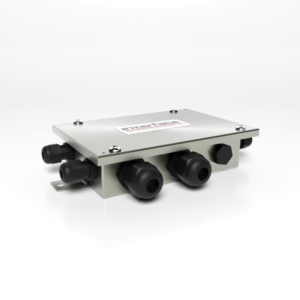 When a weighing system uses multiple load cells for a single structure, a junction box electrically combines their signals into a single output. Basic setups use analog summing, while advanced smart junction boxes offer digital diagnostics and fault alerts, including emulation of failing cells by averaging data from working sensors, thereby supporting system uptime.
FAQ #6 – What is signal trimming and why is corner adjustment needed in weighing applications?
Signals typically need to be trimmed to ensure the weight reading remains independent of the load’s position on the scale. Signal trimming involves adjusting the output signal of each cell with potentiometers to match it to the system’s lowest output level. Alternatively, excitation trimming adjusts the voltage applied to each cell to normalize their outputs. Utilizing factory-standardized output sensors minimizes the need for extensive field trimming by matching the millivolt-per-volt outputs before delivery.
FAQ #7 – What instrumentation selection criteria are key based on data utilization for weighing use cases?
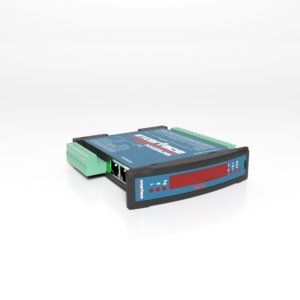 The selection of instrumentation depends entirely on the application’s communication and processing needs. Simple visual weight checks and setpoint relays require only basic indicators. For more complex tasks, programmable controllers offer advanced features like multi-scale summing, batching, and in-motion weighing. These controllers often utilize open-source, C-based programming languages, feature built-in Wi-Fi for remote calibration via mobile devices, and support numerous setpoints. To ensure smooth integration with factory PLCs or cloud-based IoT systems, instrumentation should support industrial protocols such as Modbus, Ethernet/IP, or Profinet. Interface offers a wide range of weighing transmitters and indicators through our INF1 and INF4 series.
FAQ #8 – Why is on-site calibration critical if components are pre-calibrated?
Interface’s sensor calibration verifies individual sensor accuracy, while on-site calibration accounts for the full mechanical structure. One quick note: if you buy an instrument and a sensor together, like our WSSCLC Stainless Steel Low Profile Compression Load Cells and 480 Bidirectional Weight Indicator Weighing System, Interface offers system-level calibrations. Rigid piping, conduit, and attachments often divert force from sensors. The test weight method with certified weights is the premier standard for on-site verification. For large capacities, the substitution method calibrates segments with small weights and water to reach higher capacities. If weights cannot be used, theoretical calibration employs a mV/V simulator and high-precision voltmeter, based on load cell calibration and dead load calculations.
FAQ #9 – What are the recommended maintenance cycles and troubleshooting steps?
The frequency of recalibration depends on the criticality of the data and the severity of the operating environment. A baseline recommendation for most industrial processes is quarterly calibration. However, monthly checks are recommended for systems subject to high-cycle usage, shock loading, or extreme temperature fluctuations. Interface recommends that our load cells be calibrated annually under normal use.
TIP: Operators should implement daily verification routines using a mV/V simulator or a known check-weight system, such as our A4200 WeighCheck Load Cells and 1280 Programmable Weight Indicator and Controller Weighing System, to ensure the system remains within tolerance. When troubleshooting drift or errors, technicians should use a multimeter to check the zero balance to detect physical overload and measure bridge resistance to verify internal circuit health.

FAQ #10 – How do you engineer for granular resolution without creating display flicker?
A common engineering error is specifying a system resolution that exceeds the environment’s actual signal-to-noise ratio. The standard engineering rule of thumb is to limit the system to 20,000 divisions. For example, a 20,000-pound-capacity system can reliably resolve to 1-pound increments. Attempting to resolve 0.1 pounds on that same scale is generally impossible due to the resolution limits of the Analog-to-Digital Converter and ambient electronic noise. If the division count exceeds 20,000, the final digit on the display will typically fluctuate rapidly, rendering the data useless for control or inventory purposes.
Listen in to gather more insights in the Do’s and Don’ts of weighing using load cells.

Summary of Engineering Best Practices for Weighing Systems
Achieving long-term reliability requires strict adherence to mechanical and electrical isolation principles. Ensure no rigid conduit or piping is attached directly to a weighing structure. Always implement flexible couplings to prevent force shunting.
When selecting component sizes, aim for a balance between overall capacity and the desired resolution. It is acceptable to oversize sensors by about 25% for safety margins, but going beyond that can reduce accuracy at a more detailed level.
Electrically, never cut factory load cell cables. The lead length and its internal resistance are factored into the factory calibration; shortening the cable permanently alters this resistance balance and destroys the sensor’s built-in temperature compensation characteristics. For complex vessel weighing, especially when involving active mixers, detailed center-of-gravity calculations, or hazardous classified areas, consulting an applications engineer early helps ensure the right components are chosen.
ADDITIONAL RESOURCES
Interface Instrumentation Connects Sensors to Actionable Data
INF4-Analog Two, Three, and Four Sensor Weight Transmitter and Indicator
INF1 Single Channel Weight Transmitter and Indicator
Wireless Wheel Weighing Platform with Remote Indicator and Integrated Printer in Carrying Case
Vessel Weighing Animated Application Note