
Engineering Force Intelligence in Heavy Machinery
 Manufacturers and engineers who design and test heavy machinery are making a sweeping transition from basic mechanical structures to intelligent systems, as mandated by modern requirements across various industries.
The primary challenge in modernizing any equipment is extracting high-fidelity data from high-capacity environments without compromising structural integrity. Shifting from external monitoring to integrated force measurement addresses these technical hurdles at the design and production levels.
Interface solutions are transforming the design, testing, and operation of heavy machinery assets across diverse global industries. From massive earthmoving equipment to high-precision agricultural machines, Interface’s range of load cells, torque transducers, and wireless telemetry systems provides accurate measurement data required to optimize performance and safety.
TIP: Read Force Sensor Applications in Heavy Machinery Testing and Monitoring for specific examples.
By integrating these sensor technologies directly into the mechanical load path, heavy machinery manufacturers are moving beyond basic monitoring and into the era of force intelligence. Whether used for real-time control via a PLC or for standalone safety monitoring in the field, Interface products provide the foundational force, torque, and weight data that help prevent failure and extend equipment life.
Structural Integration and the Load Path
A significant hurdle for heavy machinery OEMs is the trade-off between adding sensors and preserving the machine’s original mechanical geometry. In such cases, Interface load pins and load shackles are finding a functional purpose as active structural components.
By replacing a standard pivot pin or clevis with a sensor-integrated version, you capture data directly in the load path. This eliminates the need for external mounting kits that introduce parasitic loads and mechanical lag. The result is a streamlined design where the sensor serves as the primary structural joint.
Signal Integrity in High-Torque Environments
Testing engineers require sensor immunity to harsh operating conditions. Heavy machinery often operates in environments involving significant electromagnetic interference from high-powered motors, vibration-induced signal jitters, and thermal drift from hydraulic systems.
Interface sensors use strain gage technology with high signal-to-noise ratios. When paired with Interface’s robust wireless telemetry products, these systems can eliminate the cabling requirements typical of traditional test stands. This leads to faster test setups and cleaner data for analyzing the dynamic stress profiles of prototypes.
Real-Time Control and PLC Integration
Integrating Interface sensors into a programmable logic controller (PLC) system moves force data from a static measurement to a live control variable. Using Interface digital instrumentation, such as DMA2 DIN rail-mount signal conditioners or the INF-USB3 PC Interface Module, engineers can feed high-resolution force and torque data directly into the machine control architecture via protocols such as CAN bus, Ethernet/IP, or IO-Link.
Enabling Force Intelligence in Heavy Machinery
This integration allows the machine to make autonomous decisions based on physical stress. The following applications demonstrate how Interface products enable this shift across various heavy machinery designs.
#1 Use Case for Autonomous Grade Control in Earthmoving Heavy Machinery
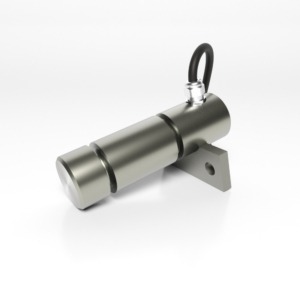 In standard excavation, a machine follows a programmed GPS path but cannot sense varying soil density or hidden obstructions. By integrating Interface load pins, such as our ILMP Standard Stainless Steel Load Pin, into the bucket linkage and feeding that data to the PLC, the machine gains a tactile sense of the material it is moving. Interface load pins replace standard pivot pins to measure the actual resistance encountered by the bucket. When the PLC detects a force spike through a DMA2 signal conditioner that exceeds efficient operating ranges, it automatically adjusts the blade angle or bucket curl. This prevents hydraulic overheating and structural fatigue while ensuring the autonomous system maintains a consistent grade without manual operator intervention. Check out Force Sensors in Heavy Machinery Boost Safety and Performance.
#2 Use Case for Standalone Payload Monitoring
In forestry and waste management, Interface sensors provide critical standalone data for field operations that are reliant on heavy machinery. Interface wireless load shackles and tension links allow operators to monitor cable tension on log skidders and harvesters directly through a handheld WTS display. This ensures log loads remain within safe hauling limits without the need for complex vehicle integration. Interface load pins embedded in waste management equipment hydraulic lift arms to provide real-time weight data to an in-cab display, allowing operators to verify payloads and avoid road-overload fines and equipment damage. Check out Interface Solutions for Waste Management Applications.
#3 Use Case for Precision Draft Control and Yield Tracking in Heavy Equipment
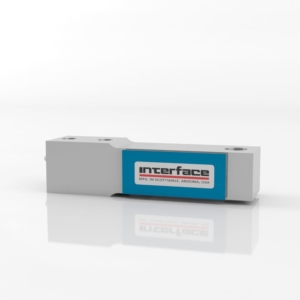 Interface force measurement products are used in smart farming to provide immediate feedback on field conditions. In agriculture, Interface load pins are integrated into tractor three-point hitches for draft control. Rather than relying on a control network, these sensors can provide direct analog feedback to hydraulic valves, automatically adjusting the plowing depth based on soil resistance. Additionally, SSB Sealed Beam load cells are mounted on heavy equipment used for transportation and weighing to provide accurate measurements in outdoor environments, ensuring precise data for yield tracking and animal health.
#4 Use Case for Active Stability and Tip-Over Prevention in Mobile Cranes
Heavy machinery, such as mobile cranes, often relies on static load charts that do not account for dynamic variables like wind gusts or sudden shifts in the center of gravity. Integrating Interface load cells or tension links directly into the outriggers and hoist lines creates a live safety loop. The PLC continuously compares the reactive forces at each outrigger using Interface LowProfile load cells. If the instrumentation detects a corner approaching a zero-load state, the PLC triggers a soft-stop or restricts boom extension. This type of use case transforms the crane from a passive lifting tool into an active safety system that corrects for environmental variables that human operators or simple limit switches might miss.
#5 Use Case of Predictive Drill-Head Optimization in Mining
Drilling through non-homogeneous rock creates unpredictable torque profiles that can damage drivetrains or snap drill bits. Placing an Interface rotary torque transducer in the drill string and connecting itto the PLC allows engineers to monitor the exact mechanical bite of the drill. Using an Interface T2 or T25 series rotary torque transducer, the PLC monitors the torque-to-penetration ratio. If the sensor detects high-frequency vibrations or torque patterns associated with specific rock hardness, the PLC automatically modulates rotational speed and downward pressure. This closed-loop control maximizes consumable lifespan and prevents the catastrophic downtime associated with retrieving a broken drill string from a deep bore. Learn more in our Mining Industry Transformation Turns to Precision Measurement Data post.

Validation Accuracy and Structural Modeling
In production engineering, the accuracy of a digital model depends on the physical data used for calibration. Multi-axis sensors that measure force and moment across three axes simultaneously allow testing engineers to capture complex real-world stresses that single-axis cells miss. This high-fidelity data supports more precise lightweighting during the design phase. When the exact forces applied during a duty cycle are known, engineers can reduce material overhead without sacrificing structural reliability.
Modern heavy machinery for construction, mining, and agricultural are using force intelligence. Interface’s sensors enable the transformation of standard mechanical joints into smart components that provide the data-driven insights necessary for modern, high-production operations.
Integrating these solutions into the design and testing phases of heavy machinery ensures that every component is monitored for performance and fatigue. By making Interface force measurement a foundational part of the bill of materials, engineering teams can validate machine safety and performance with higher certainty.