
The Power in Pairing Load Pins with Shackles
 When heavy lifting, towing, weighing, or tension monitoring happens in industrial, harsh environments, standard force sensors may not fit easily into the equipment and systems. In these demanding setups, engineers turn to load pins embedded into shackles. These pins are machined cylindrical sensors designed to replace standard structural clevis pins, shear pins, or bolts, turning a shackle into active measuring hardware.
A load pin is rarely an isolated component. In many of the most critical lifting and weighing systems across maritime, aerospace, construction, industrial, and entertainment, the pin works inside a bow or dee shackle. Read Load Pins 101.
A load shackle is fundamentally a standard lifting shackle fitted with a custom instrumented load pin. How these two elements are paired determines whether the measurement reflects reality or introduces costly errors. Read Load Shackles 101.
Learn more about these products in this video.

Why Pairing Matters in Load Pins and Load Shackles
Unlike a standard load cell that rests flat under a press or hangs freely from a cable, a load pin measures force through internal shear strain as loads push against it from opposite directions. This means the pin reacts directly to mechanical contact, fit, and movement. Relying on experts who design and build standard and custom load pins and shackles eliminates these common challenges.
When pairing a shackle body with an instrumented load pin, small physical details make a substantial difference. Here are four critical considerations in the pairings.
#1 – Contact Area and Alignment – Standard commercial shackle bolts often tolerate loose clearances, but an instrumented pin requires uniform load distribution across its designated shear grooves. If the pin sits loose or binds against an uneven shackle eye, the stress concentrates in unintended areas rather than across the internal strain gages.
TIP: Listen to the InterfaceIQ Podcast: Don’t Misalign Your Load Pins
#2 – Anti-Rotation Mechanisms: A load pin is directional. It measures force along a specific shear axis. If the pin rotates inside the shackle holes during operation, the sensitive axis twists away from the line of pull, creating immediate signal degradation. Pairing requires integrated anti-rotation brackets, keeper plates, or keyed collars to keep the sensor permanently locked in its calibrated direction.
#3 – Calibrating as a Single Assembly: Testing a load pin on a flat hydraulic test bench does not replicate the curved saddle and specific geometry of a shackle. True measurement fidelity requires calibrating the pin while it is physically seated inside the exact shackle body and paired with the specific bobbin or central load collar it will use in the field. This accounts for bending moments, natural shackle flex, and contact friction under real load.
#4 – Environmental Sealing and Telemetry: Shackles work in water, mud, salt spray, and extreme weather when IP-rated and designed for hazardous environments. Pairing a load pin into a shackle body must not compromise ingress protection (IP). Submersible ratings, potted internal electronics, internal wireless transmitters, and recessed connector cavities ensure the mechanical rigging hardware protects the internal electrical sensor.
Paired Load Pins and Shackles Complete Systems
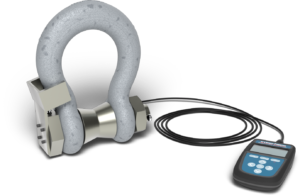 Load Pin and Shackle Complete System: ISHK-B Bow Type Crosby™ Cabled Load Shackle and 9325 Portable Sensor Display
The ISHK-B Bow-Type Crosby™ Cabled Load Shackle securely attaches to a load-bearing point and transmits force data via a cable. The 9325 Portable Sensor Display receives real-time measurements from the shackle (up to six calibration modes), logs data, and can graph or export readings to a PC—providing precise, portable monitoring of tension and compression loads.
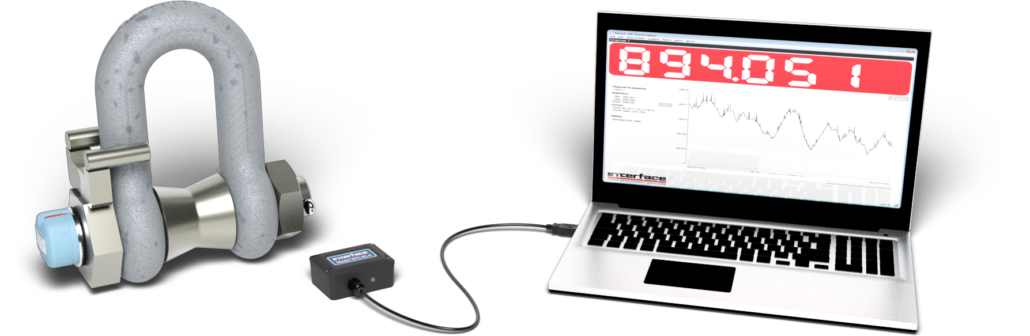 Wireless Load Pin and Shackle Complete System: WTSSHK-D Wireless Crosby™ Load Shackle and WTS-BS-4 Wireless Base Station with USB
The WTS Wireless Crosby Load Shackle accurately measures lifting and tension forces and transmits data wirelessly to the WTS-BS-4 Base Station via a secure, long-range telemetry link. The base station connects to a PC via USB and streams data directly into the Log100 software, which supports real-time logging and visualization of up to 100 channels. Users can create custom system layouts, assign live readings to visual elements, and remotely monitor performance via a built-in web server accessible from any standard browser.
Load Pins and Load Shackles at Work
Load shackles with load pins provide real-time weight and tension data across a wide range of industries. They integrate easily into existing equipment and machinery, and can be configured for independent test rigs and new product designs.
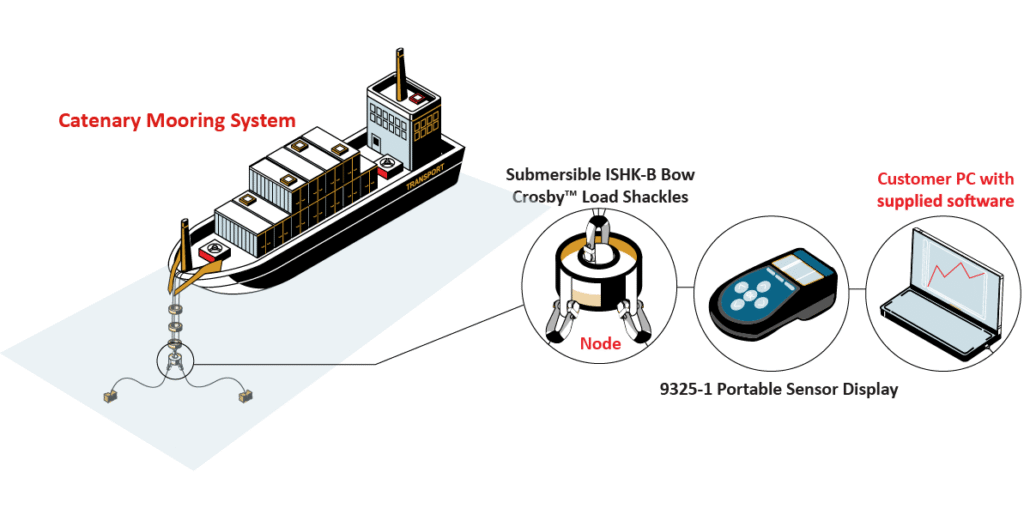
Offshore Marine and Subsea Operations
Mooring lines, tow lines, and subsea cable-laying operations face dynamic wave action and corrosive saltwater. Load shackles integrated into winch lines, anchor lines, and crane hooks give operators continuous pull data, warning crews of shock loads before a tow line fails or seabed equipment is dropped. Check out the Aquafarming Mooring System and Catenary Mooring System applications.
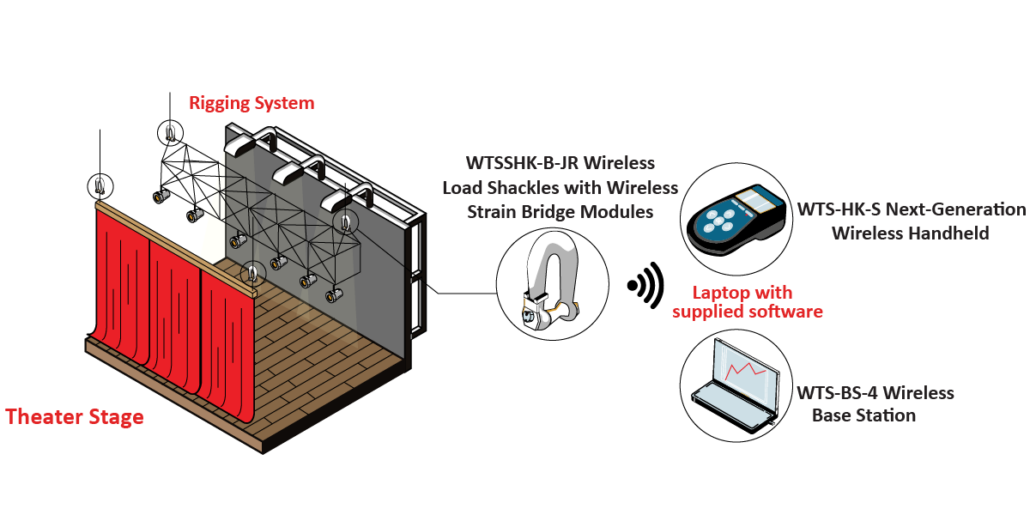
Entertainment Rigging and Event Production
Arenas and stages support massive overhead grids carrying lighting trusses, LED video walls, speakers, and moving performers. Space above the stage is limited, and overhead safety cannot be compromised. Wireless load shackles fitted into bridle legs and hoist points allow stage engineers to monitor weight distribution across multiple hoists simultaneously, ensuring no single point becomes overloaded during scene changes or live motion. Read the Theatre Rigging System application.
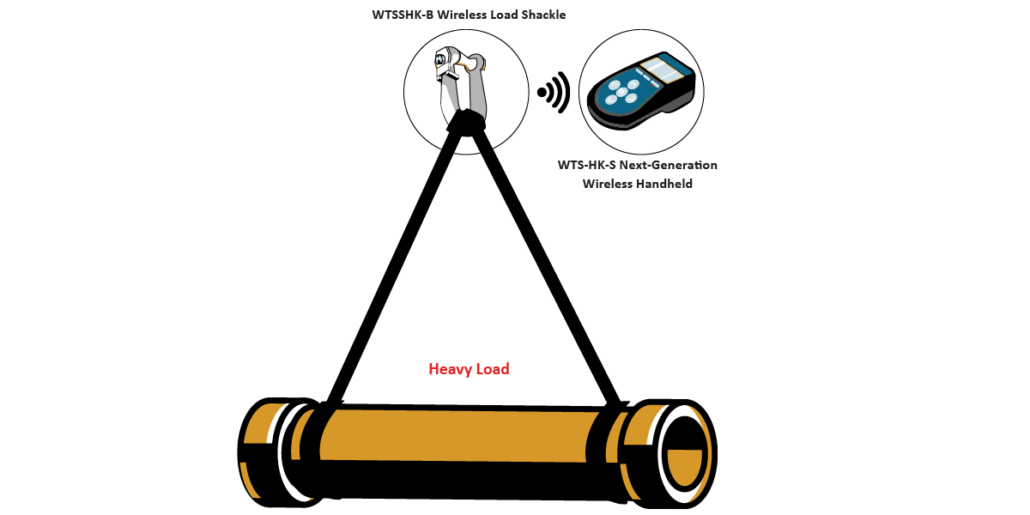
Heavy Civil Construction and Mobile Cranes
Lifting precast concrete elements, bridge spans, and modular steel structures requires strict balance control. Multi-crane tandem lifts and complex rigging configurations rely on load shackles at each hook or lifting beam link. Crane operators receive instant overload alarms and load-balancing feedback without sacrificing valuable lifting height. Learn more about heavy object lifting solutions.
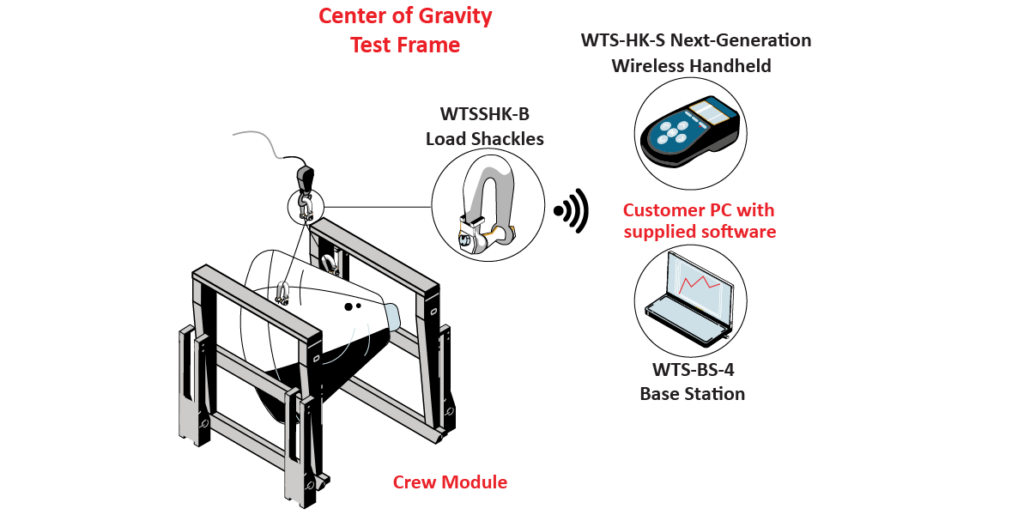
Aerospace and Defense Ground Support
Before aircraft components or satellite modules fly, they undergo structural hoist testing, sling load verification, and center-of-gravity checks. Instrumented shackles allow test engineers to verify tension in each sling branch during delicate transport and installation operations, safeguarding sensitive flight hardware from uneven sideloading. Learn more in the applications for Aircraft Engine Hoisting and Center of Gravity testing.
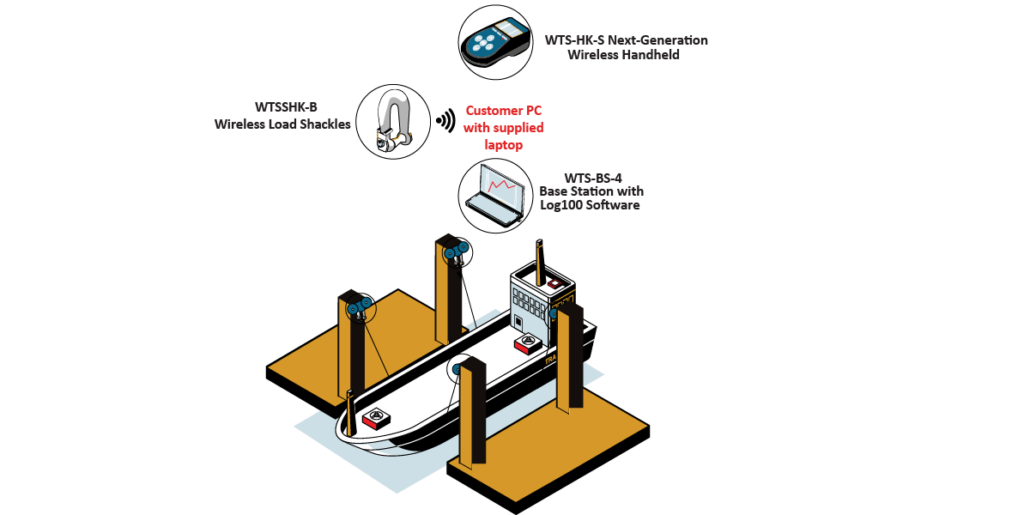
Industrial Winching and Vehicle Recovery
Heavy equipment recovery, mining haul lines, and vehicle tie-downs deal with unpredictable, snag-prone environments. Placing an instrumented shackle between the winch cable and the anchor point allows field operators to monitor pulling force from a safe distance, preventing cable snapback and structural overload. Learn more about boat hoisting.
Engineering Strength and Safety in Harmony
A load shackle is never just a sensor. It is primary load-bearing rigging hardware. Treat the pin and shackle body as an engineered pair, machined for alignment, locked against rotation, and calibrated together under actual rigging conditions. Industries and applications use this combination to deliver dependable, repeatable force data while preserving the certified mechanical safety of lifting and weighing systems.
WATCH TO LEARN MORE ABOUT LOAD PINS AND LOAD SHACKLES