Measuring Minute Force with Interface’s Ultra Low Capacity Mini Load Cell
 In the realm of force measurement, one challenge is accurately quantifying forces that barely register on the scale. For engineers, researchers, and product developers working on the cutting edge of medical, manufacturing, robotics, and consumer product innovations, the need for sensors capable of discerning incredibly subtle loads is paramount. This is precisely where Interface’s ULC Ultra Low Capacity Miniature Load Cell emerges as a critical tool.
Part of Interface’s renowned miniature load cell series, the ULC is engineered for applications demanding unparalleled accuracy in measuring extremely light forces. While the entire Mini line, encompassing miniature beam, load button, load washer, rod end, ConvexBT, and SuperSC S-type load cells, offers capacities from 0.11 lbf (0.5 N) up to 1,124K lbf (5,000kN), the Interface ULC distinguishes itself by specializing in the lower end of this spectrum, handling loads as minute as 0.1 N to 5 N (0.02 lbf to 1.12 lbf).
The Science Behind the Sensitivity
What sets the Model ULC apart in the world of Ultra Low Capacity measurement? It’s a combination of Interface’s proprietary technology and meticulous sensor design:
-
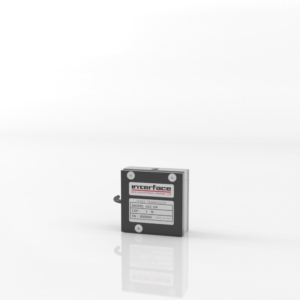
ULC ULTRA LOW CAPACITY LOAD CELL
Proprietary Interface temperature-compensated strain gages are at the core of its exceptional performance. These s are not only inherently sensitive to minute deflections but are also temperature-compensated, ensuring stable and accurate readings across varying thermal conditions. This is crucial for maintaining measurement integrity in sensitive applications where even slight temperature fluctuations could introduce errors.
- The highest performance classification of the world’s most accurate Ultra Low Capacity load cell is substantiated by its impressive accuracy specifications, including non-linearity, hysteresis, and non-repeatability, all of which are within ±0.05% of Full Scale (FS) or Rated Output (RO).
- Robust features are built into the design, with overload protection safeguarding the sensor against unexpected spikes in force. Safe side load overload to 5x capacity minimizes the risk of damage from off-axis forces, a common concern in miniature applications. Low extraneous load sensitivity ensures that only the intended axial force is measured, with minimal interference from other vectors. The low-temperature effect on zero (0.002%/°F) is important for maintaining a stable zero balance, even with temperature changes, which is critical for consistent measurements over time.
The Interface Mini Ultra Low Capacity Load Cell is capable of measuring forces in both tension and compression, offering flexibility for diverse testing and control scenarios. A 5-foot integral cable is included, simplifying the connection to data acquisition systems.
ULC Specification Quick Review
- Capacities: From 0.1 N to 5 N (0.02 lbf to 1.12 lbf)
- Nonlinearity: ±0.05% FS
- Hysteresis: ±0.05% FS
- Nonrepeatability: ±0.05% RO
- Compensated Temperature Range: +15∘F to +115∘F
- Safe Axial Overload: ±1000% CAP
- Safe Side Overload: ±500% CAP
- Material: Aluminum
- Weight: 0.13 kg (0.28 lb)

Applications for Sub-Pound Force Measurement
The ability to accurately measure forces less than one pound opens a vast array of possibilities across various industries, from medical and manufacturing to robotics and consumer products. Here are examples of how the Interface ULC Mini Load Cell would be an indispensable component.
Precision Actuation and Haptic Feedback in Robotics and Prosthetics
In advanced robotics, particularly for delicate manipulation tasks or in prosthetic limbs, the ability to “feel” extremely light contact forces is critical for dexterous control and safe interaction with the environment. The Interface ULC can be integrated into robotic grippers, end-effectors, or prosthetic fingers.
Accurately measuring forces in the gram-force range allows for highly nuanced control algorithms. This enables robots to handle fragile objects without damage, or for prosthetic users to gain finer sensory feedback, thereby improving their ability to perform intricate tasks, such as picking up a small berry or feeling the texture of a fabric. The low extraneous load sensitivity and tension and compression capabilities are crucial for providing reliable feedback, regardless of the contact angle.
Medical Device Testing and Quality Control
The development and manufacturing of miniature medical devices, such as catheters, stents, or micro-surgical tools, often require precise force application and measurement during assembly, calibration, and quality assurance.
Consider the force required to deploy a stent, or the insertion force of a fine-gauge needle. These forces are often well under a pound. Model ULC’s high accuracy and non-repeatability specifications ensure that each device meets stringent performance criteria, contributing to patient safety and device efficacy. Its compact size allows for integration into small-scale test fixtures or actual device equipment.
Material Characterization
In materials science research and development, particularly for novel polymers, biological tissues, or coatings, understanding their mechanical properties at very low forces is crucial. This could involve tensile, compression, or puncture tests on extremely delicate samples.
Less precise sensors lack the resolution and sensitivity to accurately capture the deformation characteristics of materials that exhibit significant strain under minimal load. The Model ULC, with its sub-Newton capacities, provides the necessary precision to determine Young’s modulus, ultimate tensile strength, or puncture resistance of incredibly pliable or thin materials. Its low temperature effect on zero is beneficial for experiments requiring precise environmental control.
Component Testing and Actuation in MEMS and Consumer Electronics
The proliferation of miniature components in consumer electronics (e.g., smartphone buttons, haptic feedback mechanisms, tiny switches) and MEMS devices demands precise force characterization. This could involve testing the actuation force of a micro-switch, the click force of a button, or the adhesion force of a minute bond.
As devices shrink based on user experiences, the forces involved in their capabilities and operation become proportionally smaller. Interface’s ULC can be used in automated test stands to ensure a consistent “feel” for users, or to verify the operational parameters of delicate internal mechanisms. Its overload protection and safe side-load capabilities are beneficial in production environments where slight misalignments can occur during automated testing.
The Interface ULC Ultra Low Capacity Miniature Load Cell is more than just a miniature force measurement sensor. It’s an enabler for innovation in fields where the smallest forces dictate performance and functionality. Its combination of proprietary technology, unparalleled accuracy, and robust design makes it an essential tool for engineers and researchers pushing the boundaries of what’s measurable. When your project demands the most precise quantification of the lightest touch, the ULC provides the answer.