Interface Sensors Support Efficiency Gains in Recycling and Reuse
 In a world increasingly focused on sustainability, the recycling and reuse sectors are more important than ever. By giving materials a second life, we reduce the demand for new resources and maximize the use of precious materials in multiple iterations.
Across various industries, including waste management, water management, energy, manufacturing, and infrastructure, recycling and reuse form the backbone of the circular economy.
To truly maximize efficiency and impact, these processes must be precise and data-driven, utilizing accurate measurements of force, weight, and torque. That’s where Interface’s advanced force sensor technologies, including our load cells, transducers, multi-axis sensors, and instrumentation, are essential.
Evidence of the Need for Accurate Measurement Data
The demand for efficient recycling and reuse is undeniable, and the numbers are staggering. Global municipal solid waste generation is projected to reach 3.5 billion tonnes by 2050, up from 2 billion tons in 2020. This massive volume requires highly optimized systems to manage.
The waste recycling services market is experiencing significant growth, with a projected value of over $100 billion by 2034. By accurately processing materials, companies can capture a greater share of this market.
A major challenge in recycling is contamination, which can render entire batches of material unrecyclable. Accurate sensors help mitigate this risk, which is crucial since contamination can result in substantial economic losses.
Precision Measurement in Recycling and Reuse Operations
Recycling is a complex process that relies on accurate measurement at every stage. Interface’s load cells and instrumentation are essential for optimizing these operations in processing equipment, scales, material handling, robotics, and logistics.
Waste Sorting and Material Recovery Facilities (MRFs)
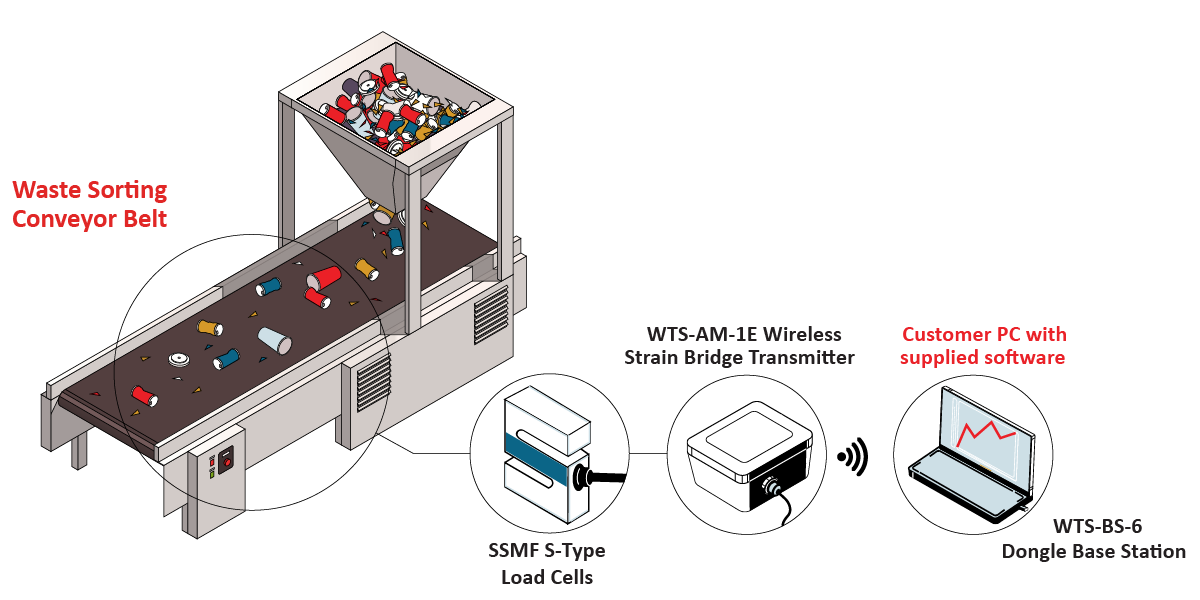
At MRFs, sorting is the most critical step. Our load cells are installed on conveyor belts and sorting equipment to measure the weight and flow of various materials in real-time. This data helps facilities:
- Optimize sorting processes to ensure that recyclable materials are separated efficiently and accurately.
- Monitor the weight of sorted materials to improve tracking and accountability.
- Reduce contamination of recycled streams, which increases the value and quality of the final product.
The use of sensors, such as our SSMF Fatigue Rated S-Type Load Cell, enables continuous, real-time data capture, resulting in more efficient operations and higher-quality recycled goods. Read more about this Waste Sorting application note.
On-Board Waste and Material Transportation Weighing
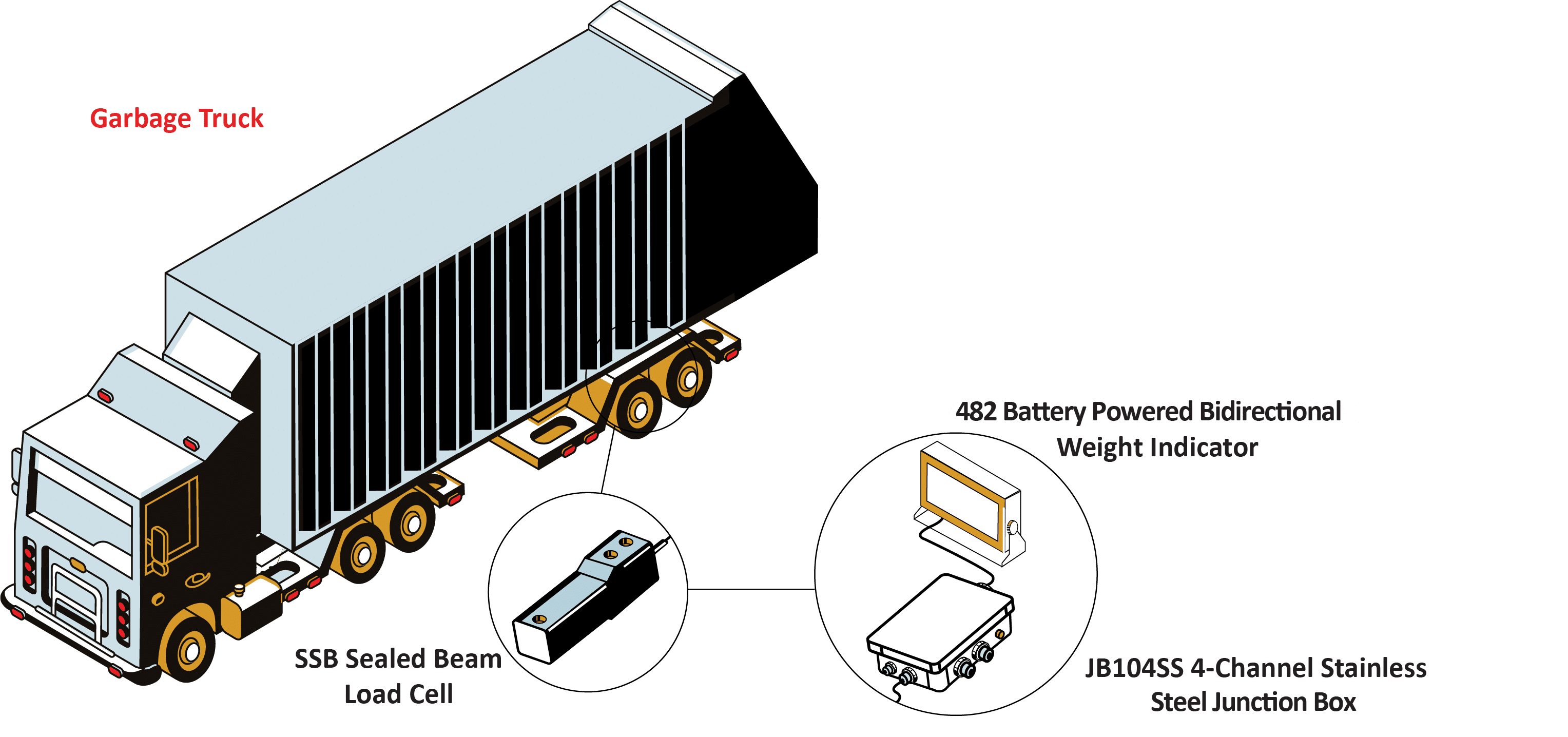
Efficient collection is the first step in successful recycling. Our solutions are integrated into waste and recycling collection vehicles to provide real-time weight data. This technology helps companies:
- Optimize collection routes to reduce fuel consumption and emissions.
- Prevent overloads to ensure vehicle safety and compliance with weight regulations.
- Provide accurate data for billing and resource management.
Our SSB Sealed Beam Load Cells, for example, are customized to fit under a truck’s body, providing continuous feedback on its load capacity. Check out this Garbage Truck On-Board Weighing use case. Additionally, consider our Waste Management Container Weighing solution.
Enabling the Reuse Revolution
The reuse sector is all about extending the lifespan of products and components. This requires careful handling, inspection, and often, remanufacturing. Interface’s force sensors play a vital role in these processes.
Product Disassembly and Refurbishment
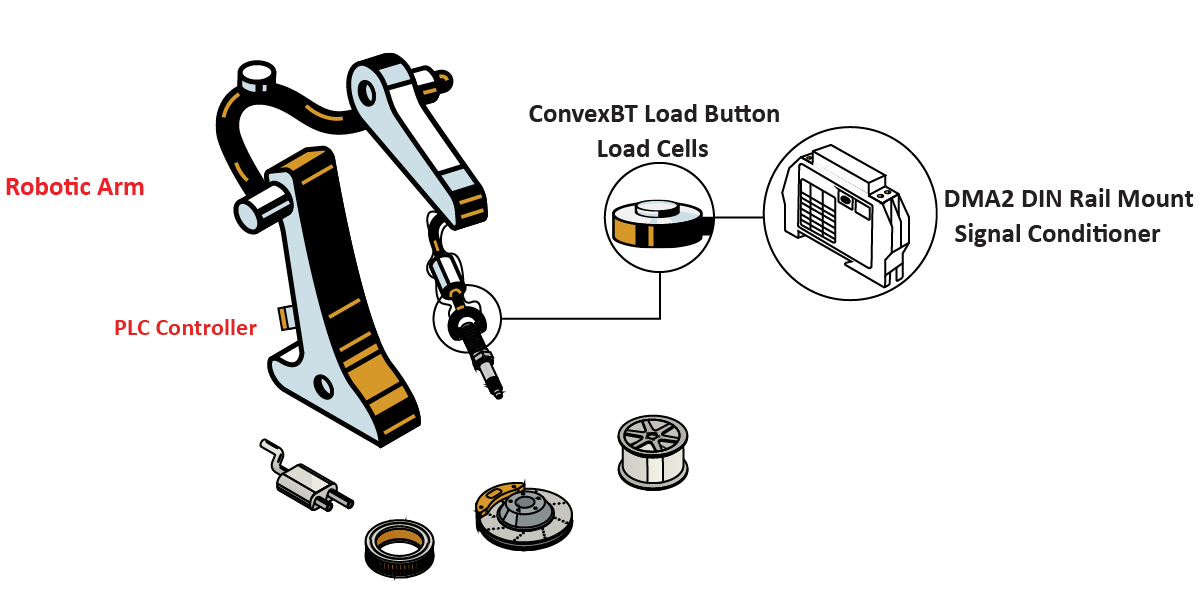
For a product to be reused, it often needs to be disassembled, cleaned, and refurbished. Our load cells assist in these delicate operations by:
- Measuring forces during disassembly, ensuring components are removed without damage.
- Tracking the weight and condition of parts, helping to determine if they are suitable for reuse or if they need to be recycled.
This data is crucial for maintaining the integrity of products and their components, extending their lifespan, and preventing them from ending up in landfills. Learn the specifics about this application by reading Robotic Manufacturing Disassembly.
Quality Control in Remanufacturing
Remanufacturing, the process of restoring a product to like-new conditions, depends on accurate measurements to guarantee quality. Interface’s force sensors are utilized to test the refurbished parts, ensuring they meet original performance standards. This not only guarantees product reliability but also builds trust in the reuse market, motivating more companies and consumers to embrace this sustainable practice.
By providing accurate and reliable data through our measurement solutions, Interface is a supporting partner in the global effort to create a more sustainable future by maximizing the value of every resource through recycling and reuse.

ADDITIONAL RESOURCES
Interface Solutions for Waste Management Applications