For robotics engineers and automation system integrators, keeping consistent handling without damaging fragile items or dropping heavy payloads requires precise force measurement, tactile grip pressure, and multi-axis moment sensing. Unmonitored grip-force fluctuations can cause component damage, slip errors, cycle delays, or dropped parts, so empirical telemetry is essential.
The industrial automation sector demands rapid cycle times, sub-millimeter accuracy, and adaptive handling, where mechanical grip consistency directly impacts throughput. Precision force and torque measurement is central to feedback systems, translating contact pressures and accelerations into actionable data.
Interface load cells and instrumentation provide the accuracy needed to optimize grasp algorithms, confirm payloads, and protect tooling in continuous manufacturing.
Embedding high-performance sensors in gripper parts lets engineers map force profiles, assess motor linearity, and set overload thresholds. Interface’s standard and customized sensors provide continuous physical monitoring for cobots, delta arms, and gantries, ensuring end-effectors securely hold, orient, and manipulate payloads across operating conditions.
Robotic Gripper Sensor Applications Using Interface Products
- Pinch Force Calibration
- Clamping Force and Dynamic Pressure Validation
- Collaborative Robot (Cobot) Tactile Contact and Slip Detection
- Handling Force Profiling
- End-Effector Grip Monitoring
- Robotic Wrist Multi-Axis and Shear Vector Mapping
- Holding Force and Dynamic Load Verification
- Pick-and-Place G-Force and Inertial Payload Retention Testing
- Component Insertion and Snap-Fit Feedback Monitoring
- Non-Destructive Clamping Verification
- Mechanical Wear and Friction Profiling
- Coupling and Retention Latch Force Testing
Dynamic Acceleration, Mass Limits, and Multi-Axis Crosstalk
The primary challenge in gripper testing and measurement is capturing high-frequency tactile forces while the robotic arm rapidly accelerates, decelerates, and reverses direction. Dynamic inertia from high-speed robot maneuvers can generate parasitic forces that standard load cells misinterpret as gripping pressure or payload weight. Capturing true contact force requires miniature load cells with high natural frequencies and fast-response signal conditioning to isolate dynamic motion artifacts from real contact kinetics.
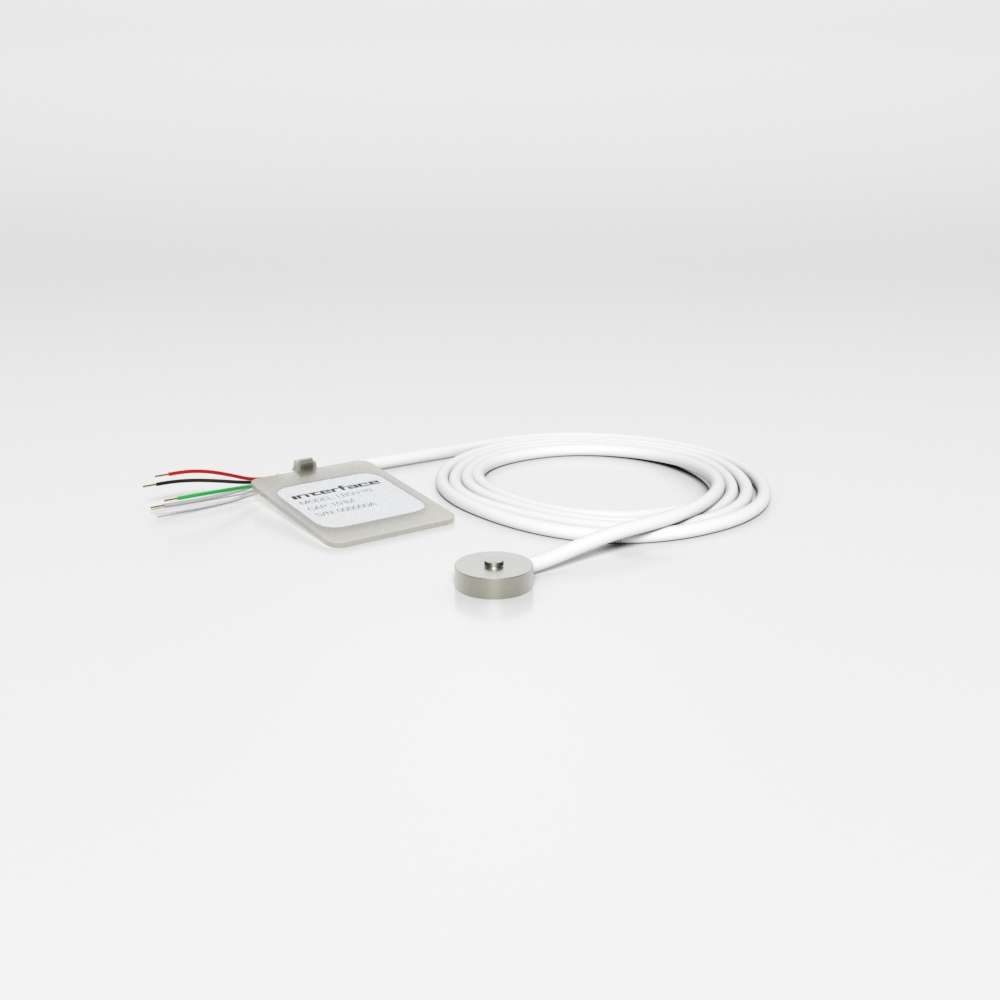
Compact Interface multi-axis sensors, mini load cells, and miniature load button load cells can fit directly into custom finger jaws, delivering clean, decoupled multi-channel telemetry to robot controllers and PLC automation loops.
Interface Products Used in Gripper Applications
- LowProfile® Load Cells
- Miniature Beam and S-Type Load Cells
- Ultra-Mini Load Cells
- Load Button Load Cells
- Load Washer Load Cells
- Reaction Torque Transducers
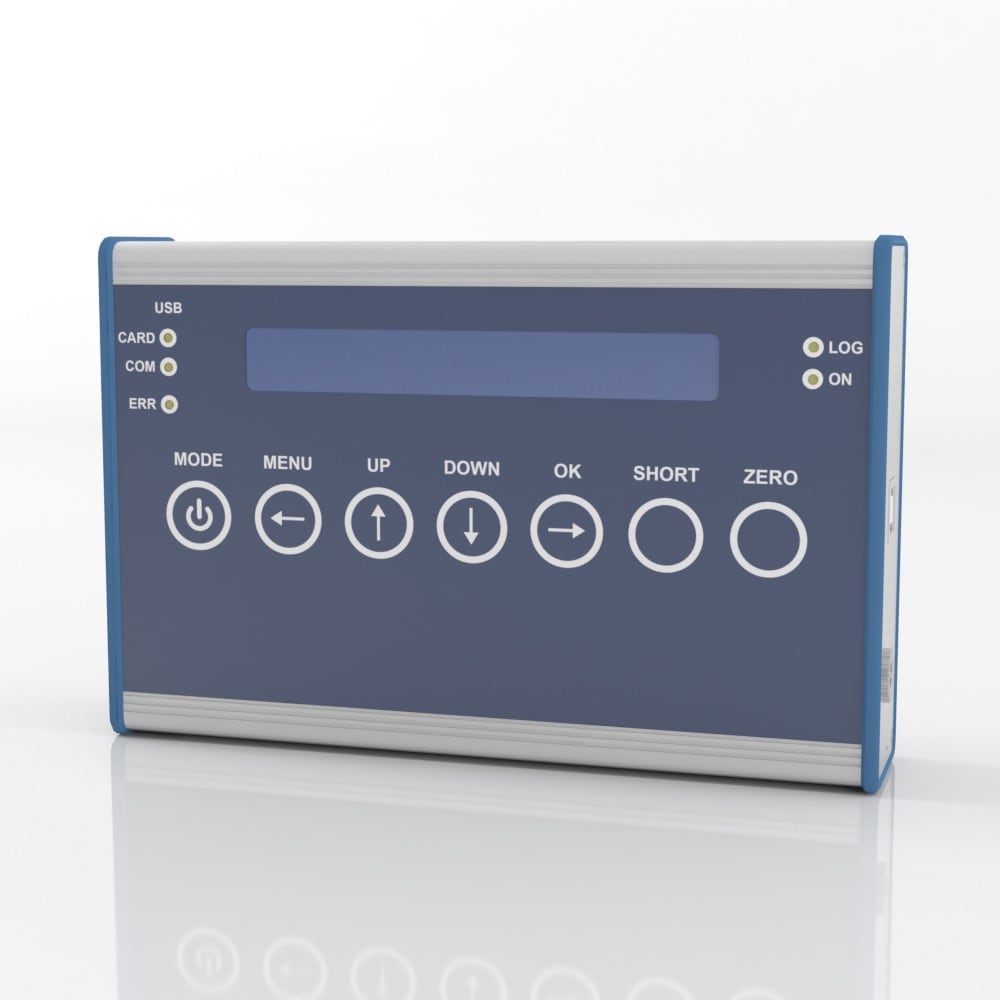
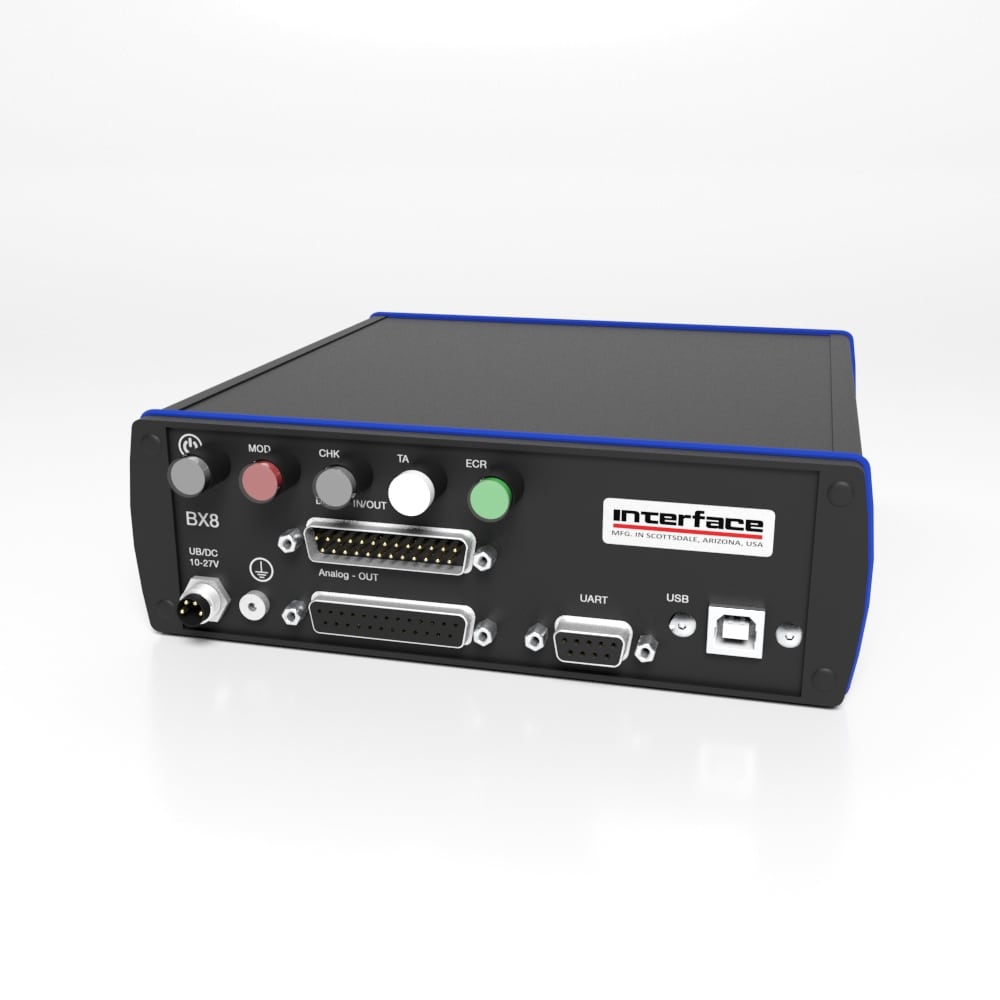
- Data Acquisition (DAQ) Systems
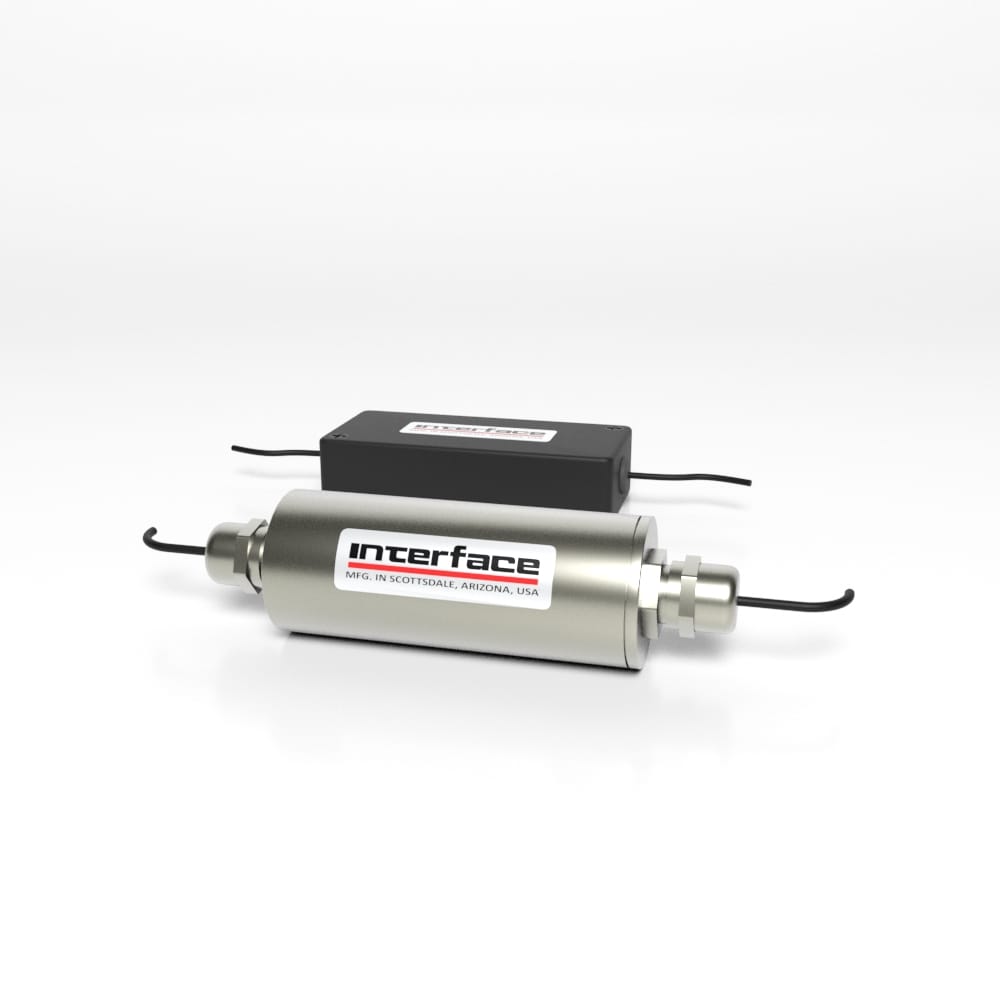
- Instrumentation and Signal Conditioners
- IO-Link and Digitizers
- Wireless Telemetry System (WTS) Transmitters
- Custom and Complete Systems
- OEM Force Sensors for Integration
Gripper Automation Must Be Precise
Without precise force and torque measurement, robotic gripper design relies on theoretical calculations, pneumatic readings, or trial-and-error, which overlook factors like friction, wear, surface compliance, and tolerances. Too little force causes slipping or dropping; too many risks damaging fragile parts. Real-time force feedback provides visibility for better adjustment, reducing waste and enabling safe high-speed assembly.
Interface provides compact form factors, high structural rigidity, and accurate measurement, all essential for reliable robotic end-effectors. Known worldwide for minimal deflection, excellent overload protection, and high signal fidelity, our load cells, multi-axis sensors, and digital instrumentation enable robotics manufacturers, machine builders, and systems integrators to create smarter, faster, and more adaptable robotic gripping solutions.

 6-Axis Force Plate Robotic Arm
 Continuum Robot Testing
 Frankenstein Joint Control
 Friction Testing
 Industrial Robotic Arm
 Robotic Surgery Force Feedback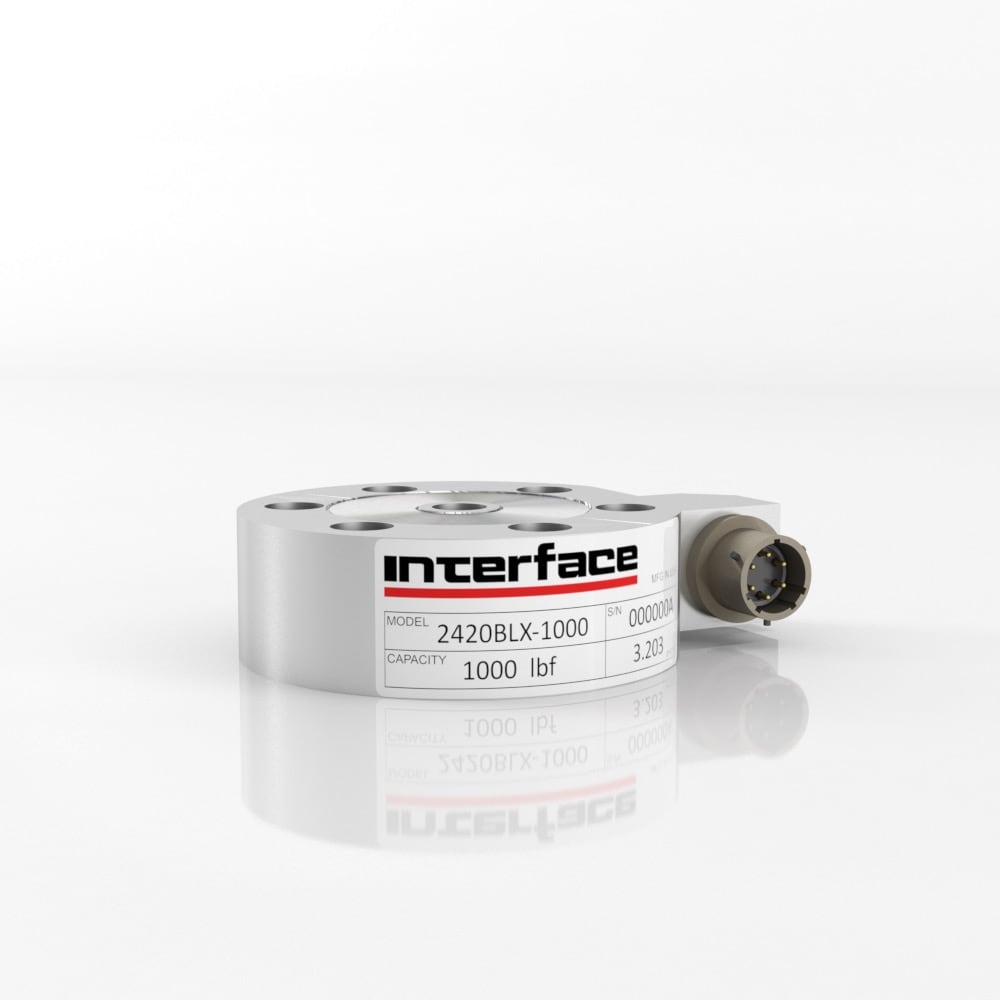
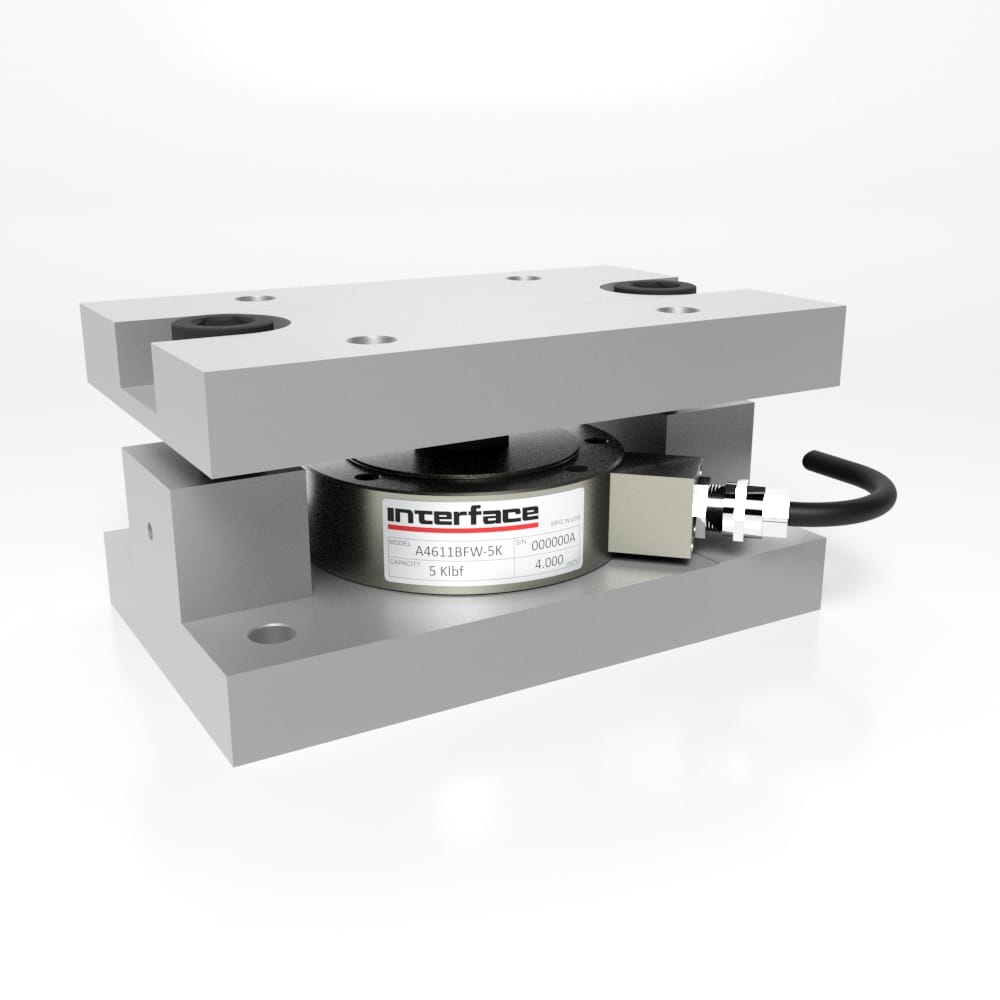



Load Washer Load Cells Versatility and Applications
/in Blog /by Jamie GlassInterface Load Washer Load Cells miniature force measurement sensors with a hollow, thru-hole center. Standard applications in industries that include manufacturing, robotics, medical devices, energy, automation and test machines use load washers to measure tension, compression, and weight. Learn about the versatility of the load washer in a series of applications.
Interface Solutions for Common Challenges of Metal Manufacturing
/in Blog /by Jamie GlassInterface provides high-accuracy force, torque, and weighing sensor solutions for metals manufacturers and equipment makers, specifically for production and processing, to manage metals that are inherently resistant to change. Transforming raw ore into a finished part requires immense energy, whether through high-pressure stamping, thermal molding, or high-speed cutting. Interface provides load cells, torque transducers, and multi-axis sensors for metal manufacturing applications.
Granular Dynamics of Robot Articulated Sensing
/in Blog /by Jamie GlassInterface multi-axis sensors are perfect for testing a robot’s structural components, including joints, grippers, and specialized end-effectors. Robot design engineers and testing labs focus on precision by setting articulation standards and analyzing performance with detailed assessments and accurate measurements of mechanical motion as it translates into perceptive interaction. The development of robotics is shifting from rigid motion to perceptive interaction, measured with multi-axis sensor technology.
Autonomous Navigation in High-Risk Environments Requires Accuracy in Sensing
/in Blog /by Jamie GlassInterface sensor technologies, including multi-axis, torque, and load cells, enable autonomous platforms to navigate subsea, industrial, and aerospace environments with precision. High-risk environments require sensors designed for hazardous, submersible, and extreme temperature conditions to ensure autonomous platforms perform reliably using accurate measurements.
2025 Force Measurement Year in Review
/in Blog /by Jamie GlassThroughout 2025, Interface continues to see trends in digital transformation of the test lab, multi-axis sensors for advanced analytics, AI, and machine learning, new protocols, IO-Link load cells requirements, and adoption of new tools to use in high-production labs including our SimulatorECX and Load Cell Analyzer.
Discovering Bending Beam Load Cell Use Cases
/in Blog /by Jamie GlassInterface bending beam load cells are versatile and cost-effective sensors for weighing and force measurement applications. Bending beam load cells can be embedded directly into a product or used in a test lab for analysis and evaluation. Get Interface’s Bending Beam Cheat Sheet to learn key terms and specification information to help in the selection process. Interface bending beams are compact in size and reliable, leading to innovative, data-driven solutions across various industries, from medical to industrial automation.
Assembly Excellence in Manufacturing
/in Blog /by Jamie GlassMeasurement sensor data provides manufacturers with a real-time understanding of assembly processes such as job batching, mating, fastening, sorting, and weighing for quality control and efficiency management. Interface load cells, torque transducers, and multi-axis sensors used in manufacturing assembly processes ensure the correct force, weight, and pressure are applied at every step of advanced production lines, whether by human or robotic deployment.
Examining Round and Square Multi-Axis Sensors
/in Blog /by Jamie GlassTwo common shapes for Interface multi-axis load cells are round and square. Square multi-axis load cells have a cuboid or block-like shape. This geometry often simplifies mounting and alignment. Round multi-axis load cells have a cylindrical or disc-like shape. This model design is a compact, low-profile form factor, which can be crucial in space-constrained applications. Interface 2-axis, 3-axis, 6-axis, and axial torsion load cells deliver high-accuracy measurements for advanced requirements of more data than a single-axis load cell.
Unidirectional Advantage of Compression-Only Load Cells
/in Blog /by Jamie GlassInterface compression-only load cells are utilized in test and measurement applications for enhanced performance, quality, and reliability in single-axis compression scenarios. The deformation of the strain gage provides measurement data. The design offers a more stable output and a higher resistance to off-axis loading, which can significantly reduce measurement uncertainty. Interface Tech Talk answers the unidirectional advantages of using compression-only load cells.
Moment Compensation Relevance for Aerospace, Robotics, and Structural Testing
/in Blog /by Jamie GlassMoment compensation is a fundamental engineering principle that ensures stability and accuracy by counteracting unwanted forces. Industries like aerospace, robotics, material and structural testing know precision is non-negotiable. At Interface, the moment compensation principle is a core part of our load cell design best practices, making our force measurement solutions a decisive component in some of the world’s most demanding applications.