Tag Archive for: IQBlog

Temperature Compensation 101
Interface's 101 Series details load cell temperature compensation, why temperature compensation matters, and key specifications. Prioritizing temperature compensation minimizes measurement uncertainty, leverages the repeatability of thermal shifts, and ensures that test results reflect true mechanical loading rather than environmental interference.

Tips for Properly Installing S-Type Load Cells

S-type load cell installation success hinges on protecting the sensor's gauged area from extraneous mechanical forces during setup. Interface provides installation tips, a setup video, and instructions. By ensuring that all tightening torque is applied to a single end, maintaining a minimum thread-depth engagement of one diameter, locking the threads to a shoulder or jam nut, and using high-grade hardware for loads exceeding the sensor’s capacity, you eliminate the leading causes of failure. Proper installation protects the load cell's calibration integrity, longevity, and safety across applications.

Countdown to Accurate Measurements for Space Simulations

Interface provides force measurement solutions for space simulations of all types, from space robots to payload and satellite launch tests. Discover how load cells, multi-axis sensors, DAQ, and wireless products from Interface validate flight hardware, as in the Artemis II program. Interface helps engineers optimize next-generation terrestrial space simulations to achieve mission readiness.

How Do You Use Setpoints and Relays?
When designing systems for automation or maintenance monitoring, capturing high-accuracy force data with a load cell is only the first step.…

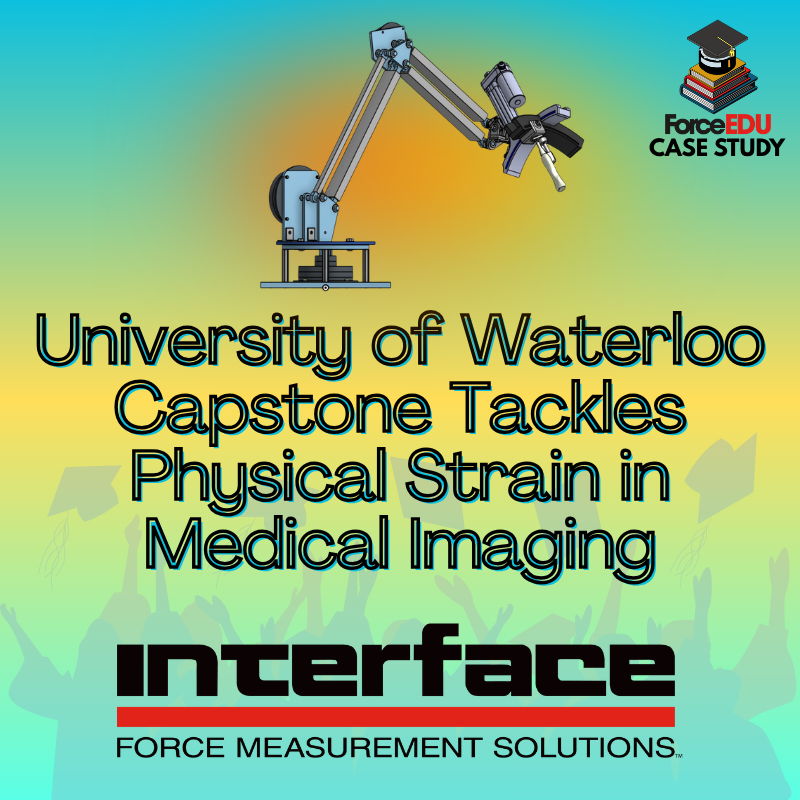
University of Waterloo Capstone Tackles Physical Strain in Medical Imaging

Interface case study highlights the LARS project by the Capstone Symposium Team at the University of Waterloo. The Load Assistance for Reduced-Strain Sonography medical solution is a semi-robotic articulated arm engineered to aid with probe force application while keeping the sonographer fully in control of the procedure. The medical system, using an Interface load cell, integrates directly into existing clinical workflows and provides assistive support without disrupting the established scanning methods of the medical professional.

Sensor Technologies Across the Continuum of Paper and Pulp Manufacturing

Interface is a premier provider of load cells and sensor solutions to the pulp and paper sector, addressing the specific mechanical vulnerabilities found in modern mills, forestry operations, and processors and packaging equipment. As the natural resource pulp and paper sector adopts higher automation standards, accurate force measurement remains essential for maintaining production control, improving material utilization, and ensuring safe operations.

Intelligent Metrology Adopts Smart Load Cell Technologies

Interface smart load cell technologies integrate internal or in-line digitizers, smart instrumentation, and IO-Link capabilities to transform sensors into active, digital devices. The shift toward intelligent force measurement highlights the fact that digitizers and IO-Link communication protocols provide the pipeline for modern data transmission, and accuracy depends on the physical integrity of the primary transducer. Interface load cells are designed for intelligent metrology and smart systems.

Structural Integrity and Load Verification for Rockets and Launch Platforms

Interface provides load cells and sensor technologies for structural and operational validation testing of various rockets and launch platforms. High-accuracy force measurement is the technical foundation for rocket and launch platform evaluations, ensuring that every component, from propellant tank stringers to mobile launcher crawler bogies, performs within an engineered safety margin.

6-Axis Load Cells 101
Interface 6‑axis load cells measure forces along three perpendicular axes and the corresponding moments (torque) about those axes. 6-axis sensors are monolithic flexure instruments equipped with specialized strain-gage bridges. The design is engineered to maintain high stiffness while isolating complex loads into independent electrical signals. Standard-capacity sensors utilize six full-bridge channels, while high-capacity models may employ twelve bridges to increase structural integrity and signal resolution. 6-Axis Load Cells 101 reviews the technical performance and features of the advanced load cell used to acquire more data for complex test and measurement programs, including robotics, aerospace testing, automotive components, energy, and medical equipment designs.