Tag Archive for: IQBlog
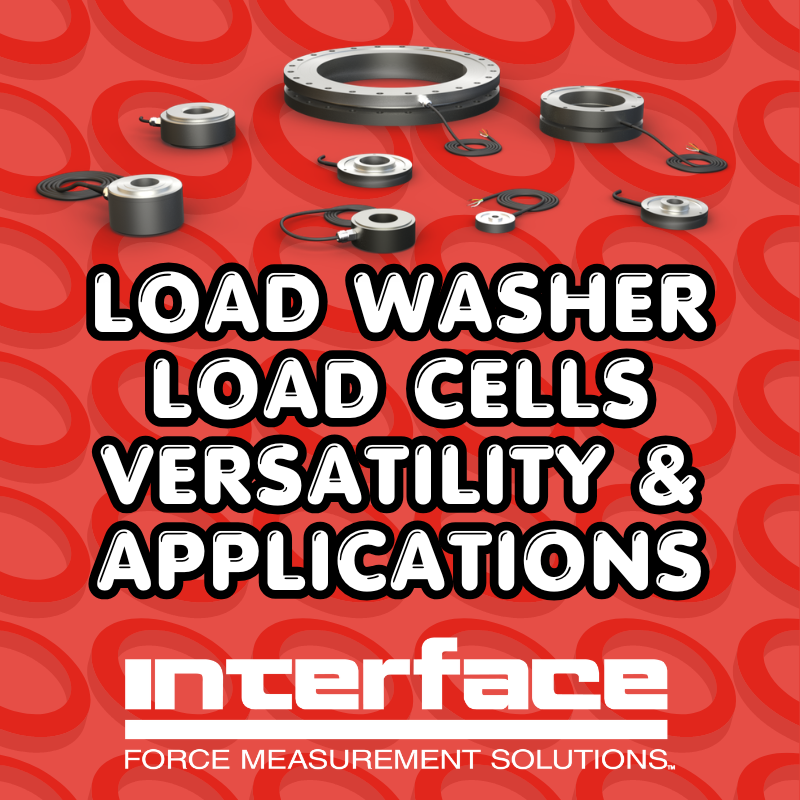
Load Washer Load Cells Versatility and Applications
Interface Load Washer Load Cells miniature force measurement sensors with a hollow, thru-hole center. Standard applications in industries that include manufacturing, robotics, medical devices, energy, automation and test machines use load washers to measure tension, compression, and weight. Learn about the versatility of the load washer in a series of applications.

Engineering Performance and Safety in Sports Equipment
Interface force measurement sensors allow engineers to push the limits of physics in sporting equipment design and testing. Sports technology use Interface high-accuracy load cells to provide the empirical evidence needed to innovate safely, ensuring that equipment is lighter, faster, and more resilient for professional and casual sports of all types.

How Do Thermal Specifications Influence Sensor Selection?

Interface Tech Talk details the differences between compensated and operating temperature ranges in load cell specifications. Thermal variables influence sensor accuracy, the mechanics of static deflection. Thermal gradient, material, strain gages, and repeatability are important when selecting a sensor. Only using capacity ignores the realities of the test environment. A load cell's compensated temperature range is the zone where accuracy is maintained by design. The operating temperature range is the boundary for hardware survival.

Understanding Ultra Miniature Load Cells

Interface Ultra Miniature Load Cells maintain the demanding performance standards of larger models while addressing the spatial limitations inherent in testing small components or integrating them into devices, parts, or end-products. Selecting an ultra mini sensor, whether a ULC, SuperSC, WMC, or another model, requires understanding the specific form factor and how it handles external loads. The core of this category includes using load cells that fit dimensionally and by capacity and capabilities.

Interface Solutions for Common Challenges of Metal Manufacturing
Interface provides high-accuracy force, torque, and weighing sensor solutions for metals manufacturers and equipment makers, specifically for production and processing, to manage metals that are inherently resistant to change. Transforming raw ore into a finished part requires immense energy, whether through high-pressure stamping, thermal molding, or high-speed cutting. Interface provides load cells, torque transducers, and multi-axis sensors for metal manufacturing applications.

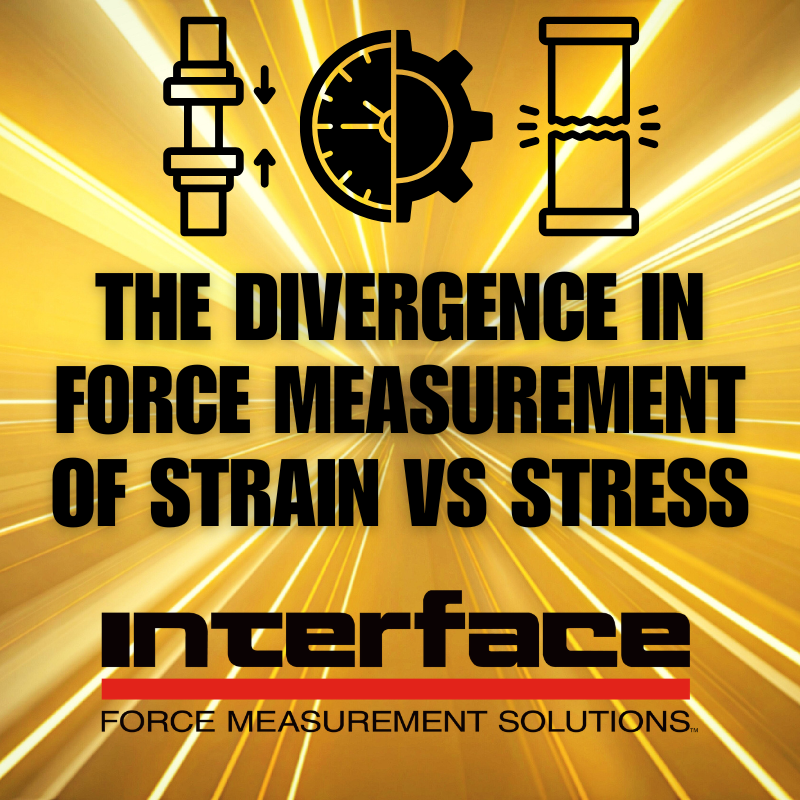
The Divergence in Force Measurement of Strain Versus Stress

Interface details stress testing versus strain testing using force measurement sensors to quantify material deformation and internal resistive forces. Distinguishing between stress and strain is critical for defining test parameters, selecting sensor capacities, and interpreting data from a material’s elastic and plastic regions.

The Consumable Continuum Demands Measurement Technology
Interface is a supplier of measurement solutions for the consumable continuum, which represents the entire lifecycle of a product, from the arrival of raw bulk materials to the moment a consumer opens the package. In high-volume production environments, force, torque, and weight measurement accuracy is the primary factor in determining the difference between a profitable run and a costly recall.

Interface Data Sheet 101
Interface Data Sheet 101 reviews what to expect from our technical product data sheets. Consider data sheets as a technical roadmap of mechanical and electrical performance information. Interface data sheets include features, a reference image, performance specs, and drawings. The characteristics defined on a product data sheet are used to distinguish successful validation from a system failure by highlighting the individual model's specifications, dimensions, diagrams, characteristics, connectors, and wiring, when applicable.

Granular Dynamics of Robot Articulated Sensing
Interface multi-axis sensors are perfect for testing a robot's structural components, including joints, grippers, and specialized end-effectors. Robot design engineers and testing labs focus on precision by setting articulation standards and analyzing performance with detailed assessments and accurate measurements of mechanical motion as it translates into perceptive interaction. The development of robotics is shifting from rigid motion to perceptive interaction, measured with multi-axis sensor technology.