Tag Archive for: InterfaceIQ

How Do Universal Testing Machines Use Load Cells?
Universal testing machines (UTMs) are essential for material qualification, structural research, and quality assurance. Interface load cells sit directly in series with the moving crosshead and the upper specimen grip of a UTM. A machine controller reads the load cell continuously within a closed feedback loop to regulate crosshead travel, maintain constant loading rates, or hold targeted force thresholds during stress relaxation evaluations. The transducer measures the specimen resistance as it deforms. The data acquisition system pairs this instantaneous force data with displacement data to measure elasticity, yield point, and ultimate tensile strength.

6-Axis Load Cells 101
Interface 6‑axis load cells measure forces along three perpendicular axes and the corresponding moments (torque) about those axes. 6-axis sensors are monolithic flexure instruments equipped with specialized strain-gage bridges. The design is engineered to maintain high stiffness while isolating complex loads into independent electrical signals. Standard-capacity sensors utilize six full-bridge channels, while high-capacity models may employ twelve bridges to increase structural integrity and signal resolution. 6-Axis Load Cells 101 reviews the technical performance and features of the advanced load cell used to acquire more data for complex test and measurement programs, including robotics, aerospace testing, automotive components, energy, and medical equipment designs.

How Do Thermal Specifications Influence Sensor Selection?
Interface Tech Talk details the differences between compensated and operating temperature ranges in load cell specifications. Thermal variables influence sensor accuracy, the mechanics of static deflection. Thermal gradient, material, strain gages, and repeatability are important when selecting a sensor. Only using capacity ignores the realities of the test environment. A load cell's compensated temperature range is the zone where accuracy is maintained by design. The operating temperature range is the boundary for hardware survival.

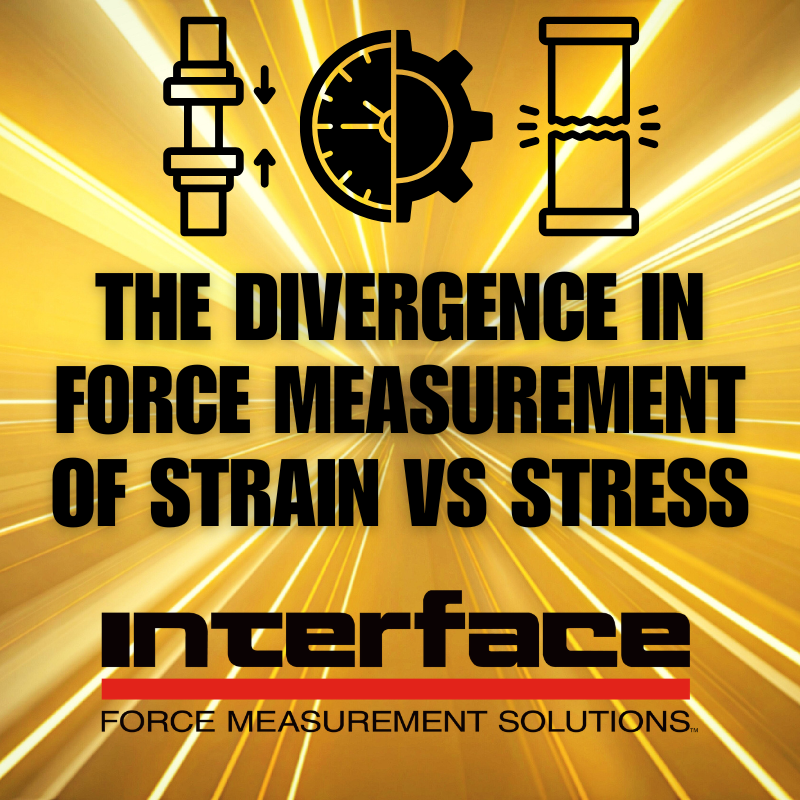
The Divergence in Force Measurement of Strain Versus Stress
Interface details stress testing versus strain testing using force measurement sensors to quantify material deformation and internal resistive forces. Distinguishing between stress and strain is critical for defining test parameters, selecting sensor capacities, and interpreting data from a material’s elastic and plastic regions.

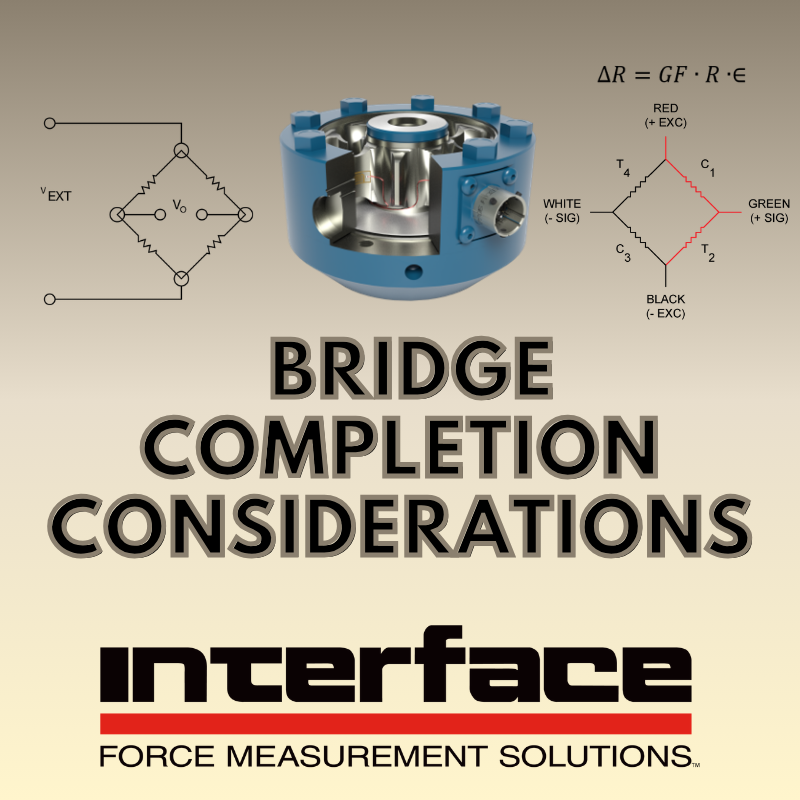
Bridge Completion Considerations
Interface's use of the Wheatstone bridge is considered world-class in load cell design and for its ability to produce accurate measurements. Selecting the right instrumentation and ensuring proper bridge completion are technical necessities for maintaining the integrity of your force measurement data. Our bridge completion solutions simplify selecting the right instrumentation device to pair with your sensor, making it easier than ever to achieve high-quality measurements.

2025 Recap of Trending Interface Articles
Interface recaps the 2025 most-read InterfaceIQ articles, case studies, and technical deep-dives for the force measurement community and load cell users. The articles reflect the perfect balance of "Interface 101" fundamentals, sensor use cases, and industry-leading future-forward applications that defined the users of Interface's growing technical content library this past year.

2025 Recap of Trending Interface Digital Resources
Interface offers hundreds of digital resources to learn about load cells, applications, industry use cases, technical product specifications, installation tips, and best practices. The leader in force measurement offers the first industry podcast, InterfaceIQ. Videos are on YouTube, and Interface ForceEDU digital library.

New InterfaceIQ Podcast and Sensor Cheat Sheets
InterfaceIQ Podcast and Sensor Cheat Sheets are new additions to ForceEDU, the ultimate force measurement resource hub. These tools are designed to provide accessible and valuable insights into the world of force measurement, whether you're just starting to explore using load cells or are a seasoned pro in test and measurement. Interface is sharing the nearly six decades of technical experience and engineering know-how from building millions of load cells and other sensors for users around the world.

Core Measurement Fundamentals of Force, Stress, and Strain
Understanding differences in measuring force, stress, and strain, and how Interface's load cells accurately measure changes in objects, will help you better prepare to maximize the potential of your force measurement solutions for critical applications.