
Interface Plays a Role in Testing Bicycles
 Interface sensors are used in a never-ending list of products, from heavy machinery to miniature medical devices. In the spirit of the Olympics, we thought we would share how our force and torque technologies are used to test and measure bicycles, whether for extreme off-road racing or for speeding around the track. Interface helps get bikes on the road and operating at optimal speeds.
Road, mountain, and e-bikes present a fantastic use case for our products because everything from the force a rider puts on a bike’s suspension, shocks, and frame when sitting on it, to the torque of the pedals and tires needs to be carefully tested before a bike is ready for action. In the application notes below, we outline different parts and types of bikes that use measurement testing in design and in actual use, along with the specific Interface force sensors used in each case.
Mountain Bike Shock Testing
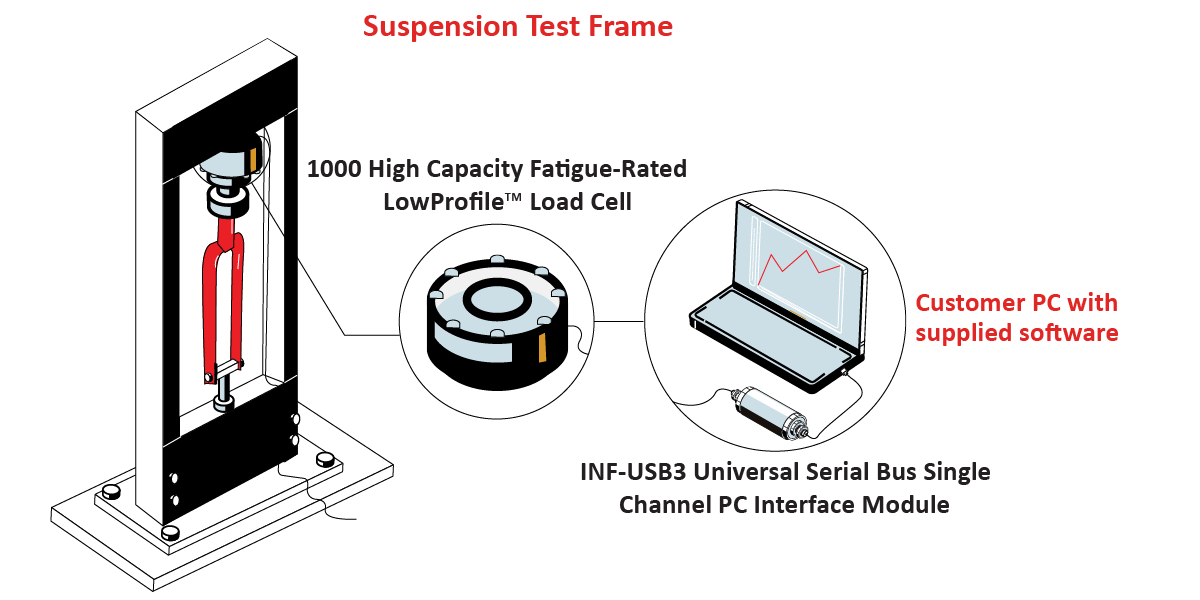
In this application example, when a manufacturer wanted to test the durability of the forks on the front of their bikes, the rear shocks, and the front suspension, and ensure that the bike’s shock absorption is working properly for bike riders, we had a solution. Interface suggested installing the 1000 High Capacity Fatigue-Rated LowProfile™ Load Cell in a fatigue frame using the company’s bike forks. The forks undergo a fatigue test for several hours. Test results from the 1000 High Capacity Fatigue-Rated LowProfile™ Load Cell will be sent to the INF-USB3 Universal Serial Bus Single Channel PC Interface Module, where the customer can view, log, and graph the results on their PC computer or laptop with provided software. Using this solution, the customer was able to test the bike’s front and rear shocks using Interface’s products. They determined if there were any weak spots in the forks or if it was working properly.
E-Bike Torque Measurement
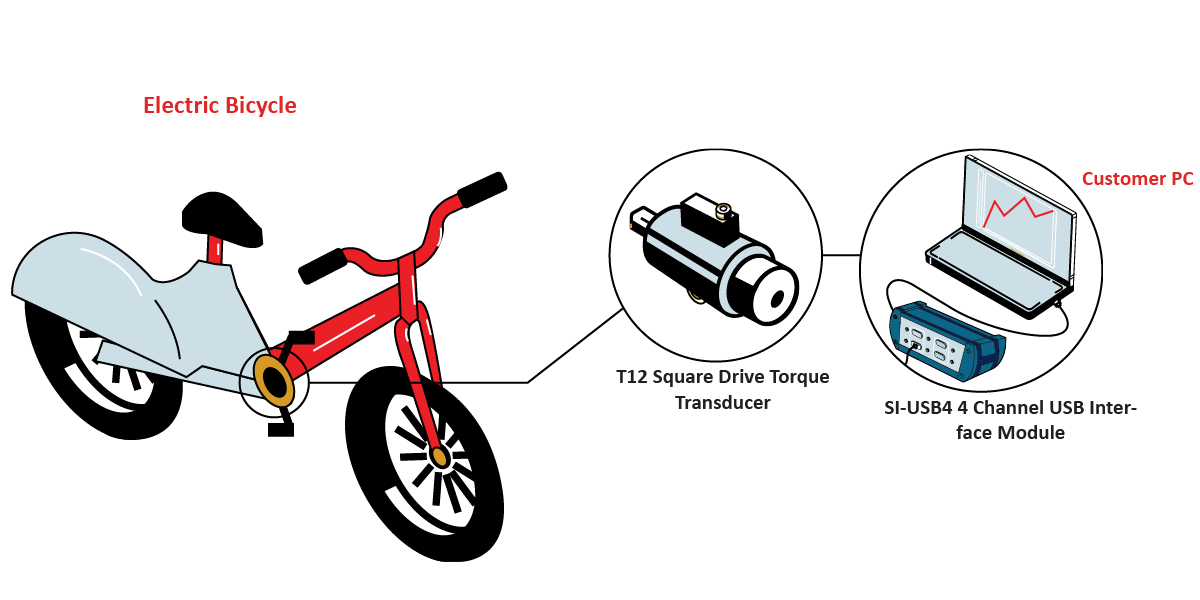
The manufacturer needed to test the torque on their electronic bicycles. They also needed a torque-sensing system to measure the force the bike rider applies to the pedals, because this determines how much electric power the bike’s motor generates. To address this challenge, Interface suggested installing the Model T12 Square Drive Torque Transducer where the pedal assist sensor would normally be. The T12 Square Drive Torque Transducer’s results could then be recorded, graphed, and logged using the SI-USB4 4 Channel USB Interface Module when connected to the customer’s PC. This allows the e-bike manufacturing company to successfully test torque on their electric bicycles using Interface’s products and instrumentation.
Bike Power Pedals
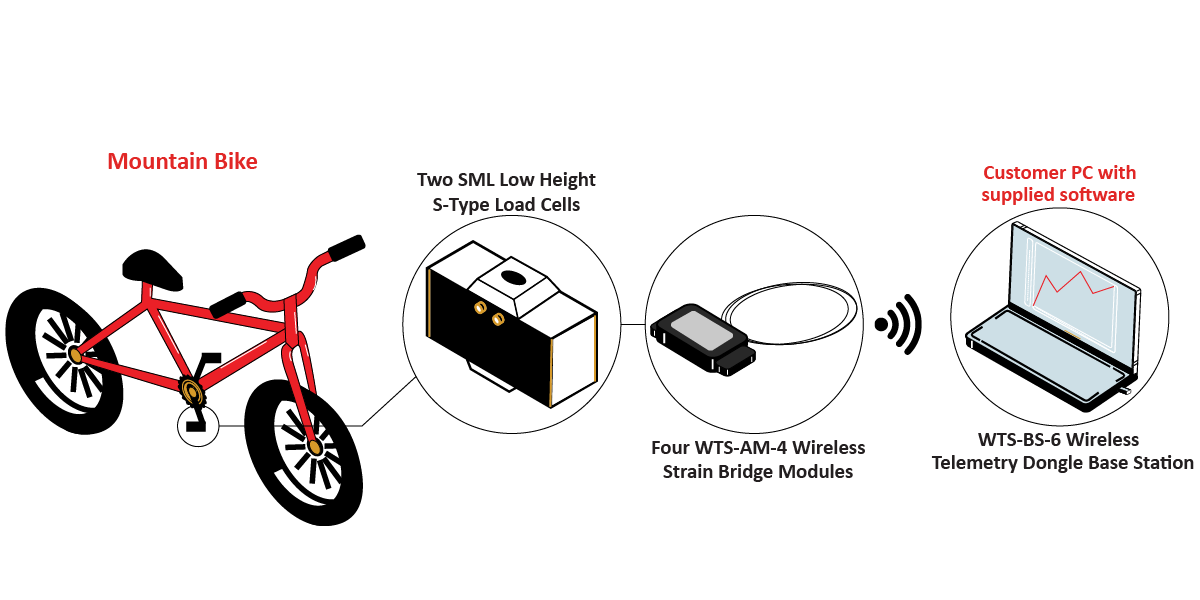
For a bike manufacturer testing the functionality of its power pedals, Interface supplied a full wireless system solution to measure the force the cyclist applies to the pedals. The solution included four Model SML Low-Height S-Type Load Cells installed in the bike’s pedals. The four SMLs were paired with our Wireless Telemetry System components, specifically two WTS-AM-4 Wireless Strain Bridge Transmitter Modules, which transmit force data from the cyclist to the WTS-BS-6 Wireless Telemetry Dongle Base Station, connected to the customer’s PC or laptop. Interface also provided the software needed with their wireless products. Using this system, the bike manufacturer measured the pedal power applied by the cyclist. The customer was also able to measure and log the data wirelessly transmitted to their PC.
Bike Load Testing

A system that measures the bike frame’s load capacities and vibrations on the frame, and to ensure the bike’s high quality and frame load durability during the final step of the product testing process. Interface suggested installing the Model SSMF Fatigue Rated S-Type Load Cell, connected to the WTS product WTS-AM-1E Wireless Strain Bridge, between the mountain bike’s seat and the bike frame. This measured the vibrations and load forces applied to the bike frame. The results are then captured by the WTS-AM-1E and transmitted to the customer’s PC using the WTS-BS-6 Wireless Telemetry Dongle Base Station. Using this solution, the mountain bike manufacturing company was able to gather highly accurate data to determine that their bikes met performance standards through this final testing.
Bike Frame Fatigue Testing
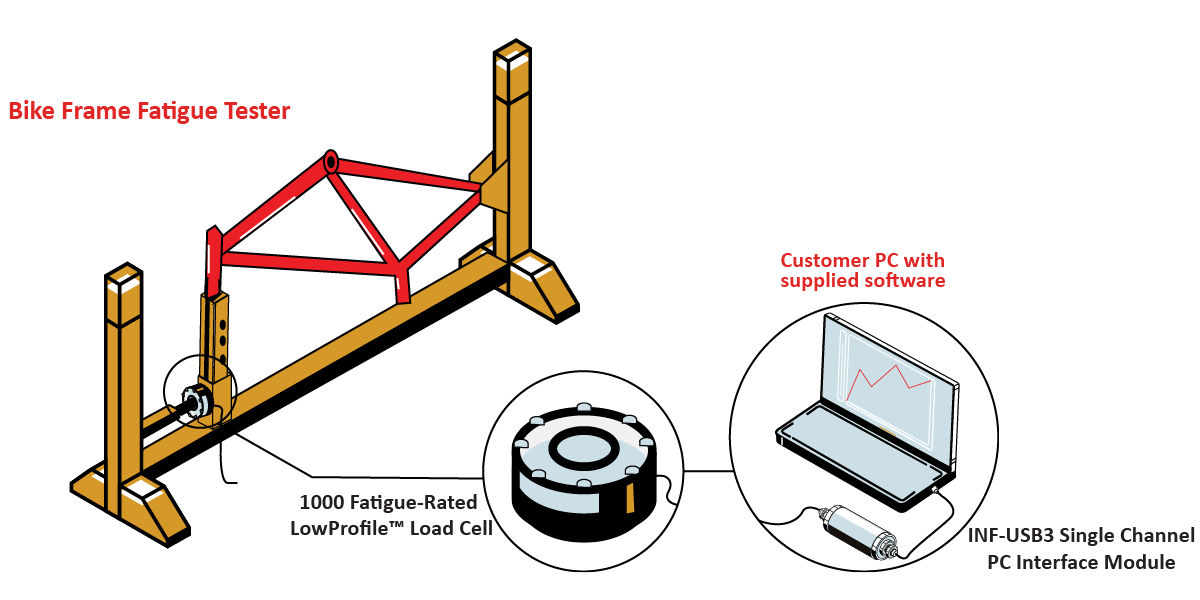
Fatigue testing is critical for bike design engineers. Our customer wanted to perform a fatigue test on their bike frames to analyze their strength, ensure durability, and meet high-quality standards, and turned to Interface for a solution. We suggested installing a Model 1000 Fatigue-Rated LowProfile™ Load Cell on the customer’s bike frame fatigue tester. This load cell provides the customer with highly accurate results through the fatigue cycling. These results are collected using the INF-USB3 Universal Serial Bus Single Channel PC Interface Module and displayed on the customer’s PC or Laptop with Interface’s provided software. With this solution, the bike manufacturing company successfully had their bikes undergo fatigue frame testing, receiving highly accurate results with Interface’s load cell and instrumentation.
This deep dive into bicycle testing is just the beginning in demonstrating how many applications of Interface products can be used to improve the quality and reliability of the final design. When you consider bicycles, testing is critical, whether they’re used in the Olympics, for recreation, or even for transportation. Bicycle safety is fundamental to any design. Testing performance and durability is essential before any bicycle is approved for road use.


