
The Testing Behind Your Favorite Gifts
 It is the season when we gather to celebrate our connections, spread good cheer, and exchange gifts to show our appreciation and gratitude.
Many of these gift exchanges transform our shared spaces into showcases of modern innovation. Whether you are a casual hobbyist or a dedicated enthusiast, the magic of your favorite new gadget is the result of precision engineering and force measurement. At Interface, we see the incredible work that goes into ensuring your unboxing moment leads to years of safe, high-quality, and reliable use.
From the haptic click of a new gaming mouse to the lightweight motorized scooter, we are surrounded by gear designed to move with us. While these gifts are often celebrated for their sleek designs, their true value lies in the rigorous testing that takes place long before they are wrapped.
Do You Know the 10-Million Click Rule? Many high-end gaming mice are tested with button load cells to ensure the click feel remains identical from the first use to the 10-millionth actuation.
Wearable Reliability of Smartwatches
Perhaps the most popular gift for the active family member this year is the smartwatch. Beyond the glass and silicon, these devices undergo rigorous durability testing. Manufacturers use miniature load cells to ensure that every press of a side button delivers a consistent tactile response, while torque sensors verify the integrity of the watch bands and casing.

This ensures that whether you are tracking a light stroll or a marathon, the device remains a reliable companion that can withstand the bumps and bruises of everyday life. The data behind the device ensures it can keep up with your New Year’s resolutions.
Do You Know About Smartwatch Stress? Before hitting your wrist, smartwatches are often subjected to tumble testing and strap-pull tests, in which sensors measure the exact force required to ensure the band won’t snap during a workout. Check out Smartwatch Band Pull Test
The Digital Driver is Precision in Esports and Sim-Racing
For those diving into sim-racing or gaming, the gear has become remarkably sophisticated for the home user. A new set of pedals or a high-end steering wheel requires more than a controller. These esports devices are feedback systems. Load cells are used during development to calibrate brake resistance, ensuring that when you press down to take a virtual corner, the resistance feels natural.

This testing ensures the equipment doesn’t just work but that it feels right, bringing the thrill of the track into your living room. When you hit the brakes at high speed in a simulation, you feel the result of thousands of hours of force calibration.
Do You Know the Reality of Sim-Racing? Professional-grade sim pedals use load cells because humans are better at muscle memory based on pressure rather than on how far the pedal moves. Testing ensures that the pressure is perfectly linear for the driver.
Engineering Superior Pickleball and Golf Gear
The same level of scrutiny applies to the gear we use to get active outdoors. The pickleball and golf equipment being unboxed today has been pushed to its limits in the lab to ensure it performs for the “everyday” athlete. Designers use force sensors to measure the “sweet spot” on a paddle or the flex of a new golf club shaft.

By measuring the deflection of the materials under stress, engineers can guarantee that your new gear provides the perfect balance of power and control. This allows you to focus on your swing, knowing the equipment has been validated to handle every hit.
Do You Know the “Pop” Factor? Pickleball paddles are often tested for “deflection” to ensure they meet USAPA standards. A load cell measures how much the face flexes to ensure the paddle isn’t too “hot” or bouncy.
Bridging Realities in the Subtle Force of VR and Haptics
Even the latest virtual reality (VR) systems rely on this invisible science to bridge the gap between the physical and digital worlds. Handheld controllers and headsets are subjected to drop tests and trigger-pull evaluations to ensure they can handle the excitement of a high-energy game.
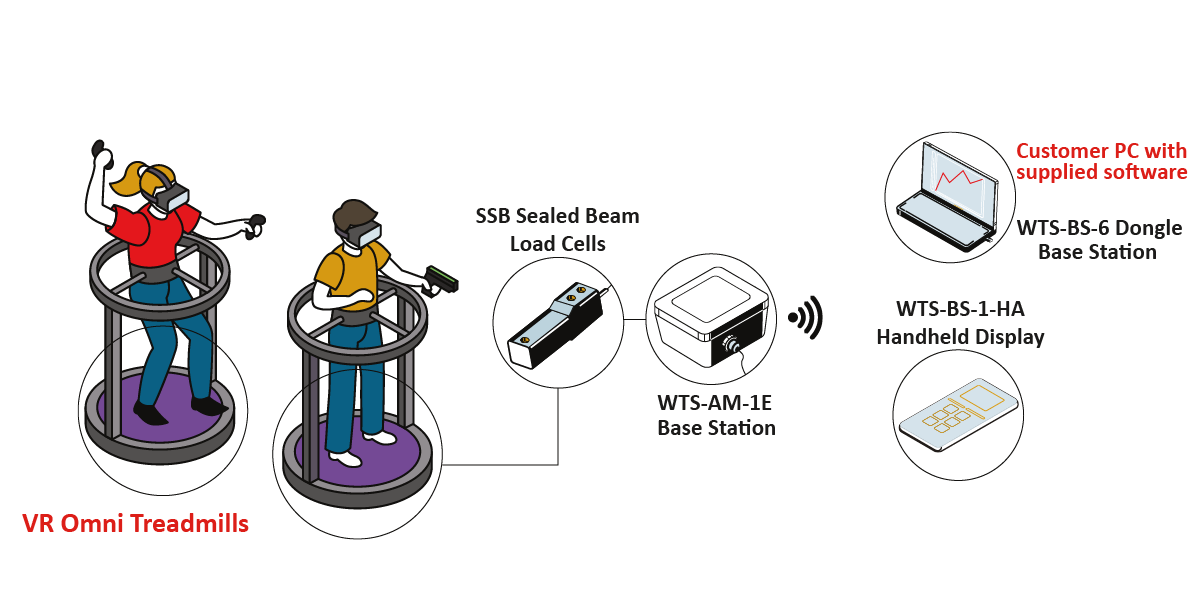
By measuring the minute forces of haptic motors, engineers ensure the vibrations are just strong enough to be felt without being distracting. It is a delicate balance of force and finesse that makes the virtual feel real, ensuring the immersion isn’t broken by a mechanical failure.
Do You Know the Secret of Haptics? To create a realistic sensation, sensors measure the “rise time” of a vibration. If the vibration starts too slowly, the immersion is lost; if it’s too fast, it feels mechanical. Precision measurement ensures it feels just right.
As you enjoy your new tech and head out for a game or a workout, you can appreciate the silent support of test and measurement. It’s the hidden work that ensures every seasonal gift, electronic device, piece of sports gear, and consumer product is built to last far beyond the holiday. From all of us at Interface, we hope your new year is filled with high scores, perfect swings, and plenty of fun!