
Force Measurement for Food Safety Beyond the Label
 In the food and beverage industry, “safety” is often equated with temperature control and expiration dates. However, true food safety begins long before the product hits the shelf. It starts with the mechanics of the production line, ensuring that seals are airtight, ingredients are accurate, and machinery remains free of contaminants.
For modern food manufacturers, the challenge in food safety is twofold. First, protecting consumers from health risks related to allergens or foreign objects. Second, safeguarding the brand from the devastating costs of a recall. This is where precise force measurement becomes a vital line of defense.
Interface provides reliable, accurate, and rugged sensor technologies to the food and beverage industry, suitable for highly regulated environments, including washdown zones, ensuring product safety and line efficiency. By enabling machines to operate with precision and control throughout the production process, Interface sensors help manufacturers create a compliant, safe environment from the mixing bowl to the final pallet.
The Intersection of Food Safety and Sensors
Automated machinery is powerful, but without feedback, it can become a liability. A capping machine that applies too much force can cause microscopic cracks in glass bottles, leading to contamination. A misaligned conveyor belt can dislodge rubber particles, which can end up in the food.

Interface’s force measurement solutions are vital to the factory floor’s control system. Food manufacturers use our sensors to monitor packaging integrity, weigh ingredients, and support cable-free facilities, helping reduce harborage points for bacteria.
Four Force Measurement Use Cases for Food Safety
Industry analysis reveals that over 50% of food recalls stem from operational mistakes, such as undeclared allergens or contamination during production. These errors are precisely what automated monitoring using force measurement is designed to catch. Here are four specific ways Interface sensor technologies are currently deployed to enhance safety protocols in food and beverage production.
#1 – Food Sealing Integrity
In canning and bottling, the seal is the only barrier between food and the outside world. If a capping machine applies too little force, the seal fails, leading to spoilage and bacterial growth. Excessive force can cause the container to crack or chip, introducing hazards such as glass shards or plastic fragments into the product.
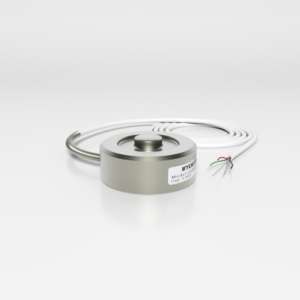 Using Interface’s LBM Compression Load Button, a compact stainless steel sensor for precise force measurement, a machine builder can install the sensor directly into the capping heads of bottling equipment. Because it is made from stainless steel, it resists corrosion and endures the rigorous cleaning protocols required in food plants. By monitoring the exact force applied to each cap, it ensures a hermetic seal without compromising the container’s integrity.
Read more in Smart Food Packaging Uses Force Measurement and Interface Sensors Optimize Food Canning and Production.
#2 – Preventing Food Contamination from Wear
Conveyor belts are the arteries of any food plant. When they become misaligned or overstressed, they don’t just stop working; they can start to disintegrate. Friction can cause belt material, such as rubber or plastic, to wear away and contaminate the food stream. This creates a nightmare scenario for foreign-object detection.
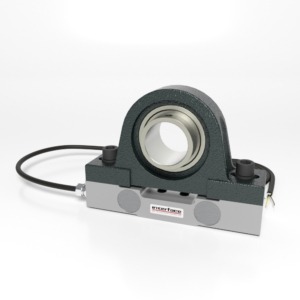 By installing Interface PBLC Pillow Block Load Cells directly under the conveyor’s bearing blocks to monitor tension and alignment in real time, a manufacturer can improve maintenance and predict wear. How is this done? By detecting shifts in force that indicate misalignment, the system can alert operators to correct the belt before it begins to degrade. This proactive approach keeps the food stream clean and free of machine debris.
Read more in Conveyor Belts Use Load Cells to Keep Things Moving.
#3 – Ingredient Verification and Control
Undeclared allergens are among the main causes of food recalls worldwide. If a mixing hopper fails to dispense the correct amount of a specific ingredient, or if a package is labeled but contains traces of the ingredient due to a dosing error, the results can be deadly.
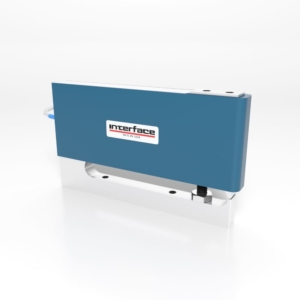 A food manufacturer using Interface SPI Platform Scale Load Cells can deliver the high-precision weighing needed for strict recipe adherence. Installed at batching and check-weighing stations, these sensors verify that the weight of each ingredient added matches the recipe exactly. At the end of the line, they serve as a final quality check, ensuring that the finished package weight matches the label, that no foreign objects have been accidentally included, and that no ingredients are missing.
#4 – Eliminating Harborage Points Using Wireless Telemetry Systems
In a “washdown” environment, cables pose a risk. They can fray, trap moisture, and become breeding grounds for Listeria and other pathogens. The more wires you have hanging over mixing bowls and processing lines, the harder it is to sanitize the facility properly.
 The Interface WTS Wireless Telemetry System enables manufacturers to eliminate lengthy cable runs between sensors and instrumentation that support equipment and process controls in critical food zones. By wirelessly transmitting load-cell data to a handheld display or central computer, engineers can monitor food production data without physical clutter. This streamlined design simplifies washdown procedures and dramatically reduces the risk of cross-contamination.
Learn more about our WTS System in this overview video.

The Measurable Difference is Why Precision Equals Safety
Ultimately, force measurement provides the one thing that visual inspection cannot: quantifiable proof in commercial food processing.
In the past, food safety often relied on reactive measures, such as catching a defect after it happened or, worse, after it left the facility. By integrating Interface sensors, manufacturers shift to a proactive safety model. A sensor doesn’t just hold a load; it can also provide a continuous data stream that verifies the mechanical health of the process in real time.
The cost of inaction is too high to ignore. According to the Food Marketing Institute and the GMA, the average price of a single food recall is $10 million in direct costs alone, excluding the incalculable damage to brand trust.
When you measure the force applied to a seal or the precise weight of an ingredient, you create a digital record of quality. This data is essential not only for regulatory compliance and traceability but also for protecting the company. In an industry where a single mistake can shut down a factory, force measurement serves as a safeguard, ensuring automation remains safe while preserving speed and efficiency in food production.
Whether you are retrofitting your production line, building new machines, need high-accuracy weighing solutions, or researching automation, contact our team to explore how we can help you with your food safety measurement initiatives.
ADDITIONAL RESOURCES
Food and Beverage Conveyor Belt
Smart Food Packaging Uses Force Measurement
Force Measurement for Efficiency in Food Processing and Packaging