
Engineering the Human Touch by Measuring Haptics
 Haptics refers to the technology for communicating with a user through the sense of touch. While we often think of digital interaction as purely visual or auditory, haptics adds a physical dimension by using vibrations, motions, or forces to provide feedback.
To create a haptic experience that feels natural rather than robotic, engineers must bridge the gap between digital commands and human sensation. This requires precise measurement. Without quantifying the exact force a user applies or the resistance a device offers, feedback can feel “mushy,” delayed, or even dangerous in critical settings, such as medical and automotive.
Using high-accuracy load cells enables designers to measure these haptic interactions during prototyping, ensuring the final product mimics the weight, snap, and texture of the real world.
The Landscape of Haptics
Haptic feedback is moving into every corner of modern design. Engineers are no longer satisfied with simple buzzes. They want to replicate the specific mechanical feel of a physical switch or the tension of a steering wheel. Three main areas drive this transition to high-fidelity haptics:
- Consumer device manufacturers make flat glass surfaces feel physically deep and mechanical buttons feel tactile through localized haptic pulses.
- Gaming and simulation users demand realistic haptic resistance in flight sticks, racing pedals, and VR gloves to simulate gravity and inertia. Check out gaming and esports.
- Medical haptics restore the lost sense of touch to surgeons operating through robotic consoles, allowing them to feel tissue resistance remotely. Learn more about medical haptics.
Haptics Prototyping and Design Challenges
Measuring the forces required for haptics is technically demanding. Product designers often struggle with micro-force detection. Capturing haptic inputs measured in grams or millinewtons, especially for medical tools or small touchscreens, is important when selecting a load cell.
Sensor integration and size are important because they must be small enough to fit inside a prototype handle or under a keycap without changing the haptic feel. Interface ULC Ultra Low Capacity Load Cell, SMTM Micro S-Type Load Cell, or SuperSC S-Type Miniature Load Cell are excellent options for integration into extremely small packages.
Environmental noise must be considered. Instrumentation that filters out electrical interference from haptic actuators to provide a clean reading of the user input is valuable. Ultimately, ensuring the sensor can send data fast enough for the haptic feedback to feel instantaneous to the human hand is important.
Haptic Use Cases From Prototype to Performance
The key to a successful haptic prototype is using a load cell that can handle low-capacity measurements with high repeatability. By placing a sensor at the point of contact, designers can map the exact force profile of a physical interaction. This data then becomes the blueprint for the haptic actuator.
Interface provides measurement sensors and high-speed instrumentation needed to capture these micro-interactions and turn them into usable design data. Here are eight examples to show the diversity of how force measurement sensor technologies provide valuable insights into haptic feedback across multiple industries, from medical to VR.
 #1 – Robotic Surgery Haptic Feedback
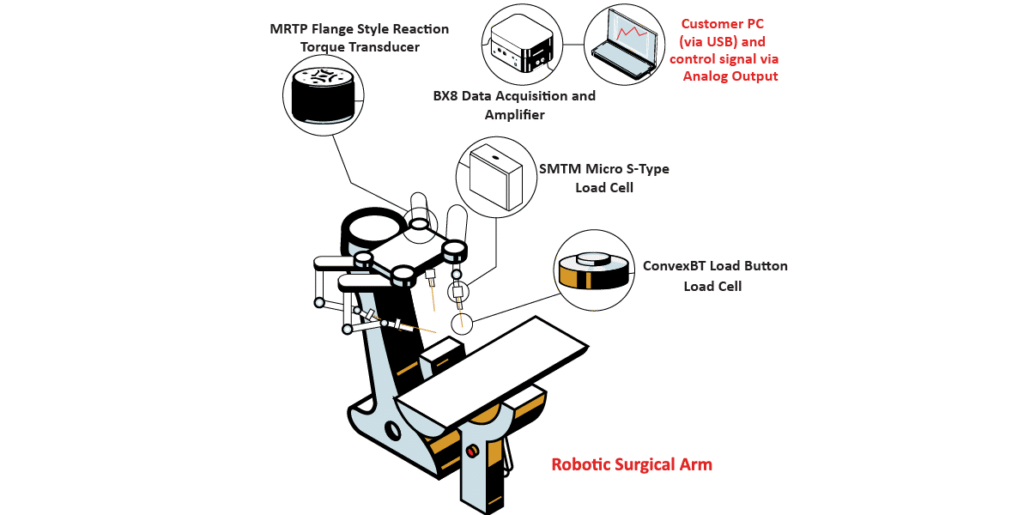
Engineers benefit from using MRTP Miniature Overload Protected Flange Style Reaction Torque Transducers, SMTM Micro S-Type Load Cells, and ConvexBT Load Button Load Cells embedded in the robotic wrist to measure the resistance of biological tissue. This data is sent to a BX8-AS BlueDAQ Series Data Acquisition System with Industrial Enclosure, which processes signals up to 48,000 samples per second. This speed allows the surgeon’s console to push haptic feedback back against the surgeon’s hand in real time, simulating the feel of the tissue. More details in our Robotic Surgery Force Feedback app note.
#2 – Flight and Racing Simulation Haptic Pedals
High-end pedals use the BPL Pedal Load Cell to measure foot pressure, not just travel. This data is fed into a DAQ, allowing the software to simulate haptic brake fade or hydraulic resistance felt by the user through the pedal mechanism. BPL BTS System is a wireless test system for haptic measurements of this type.
 #3 – Automotive Haptic Infotainment Displays
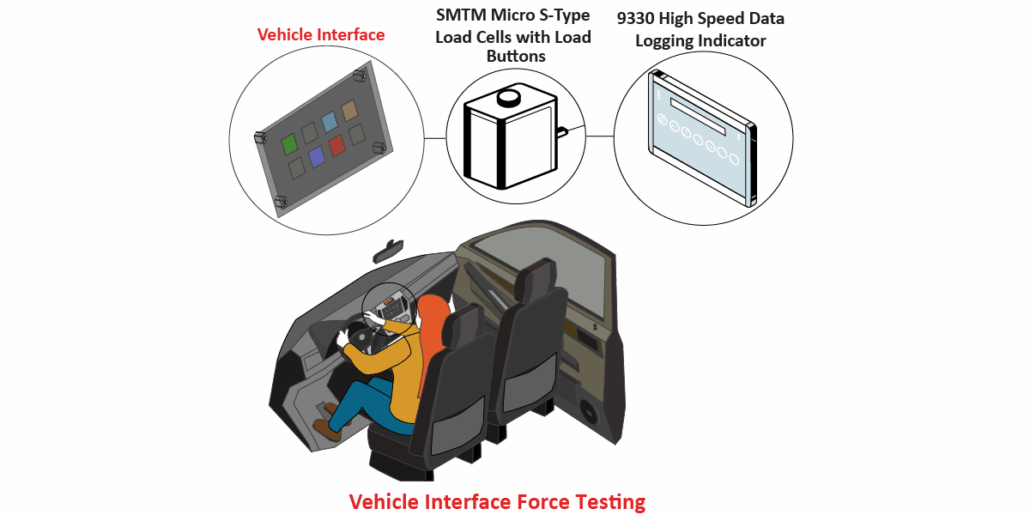
Engineers use mounted SMTM Micro S-Type Load Cells at the corners of a vehicle’s display to detect where and how hard a driver presses. The force data is routed through a 9330 Battery-Powered High-Speed Data-Logging Indicator that triggers a physical haptic “thump,” providing tactile confirmation so the driver can keep their eyes on the road.
#4 – Medical Haptic Vascular Clamping
In surgical tool design, Miniature Beam Load Cells are integrated into the jaws of a clamp. This setup measures the exact clamping force, monitored by a 9330 High Speed Display and Signal Conditioner. This ensures the haptic system provides the surgeon with enough resistance to know they have secured the vessel without causing damage.
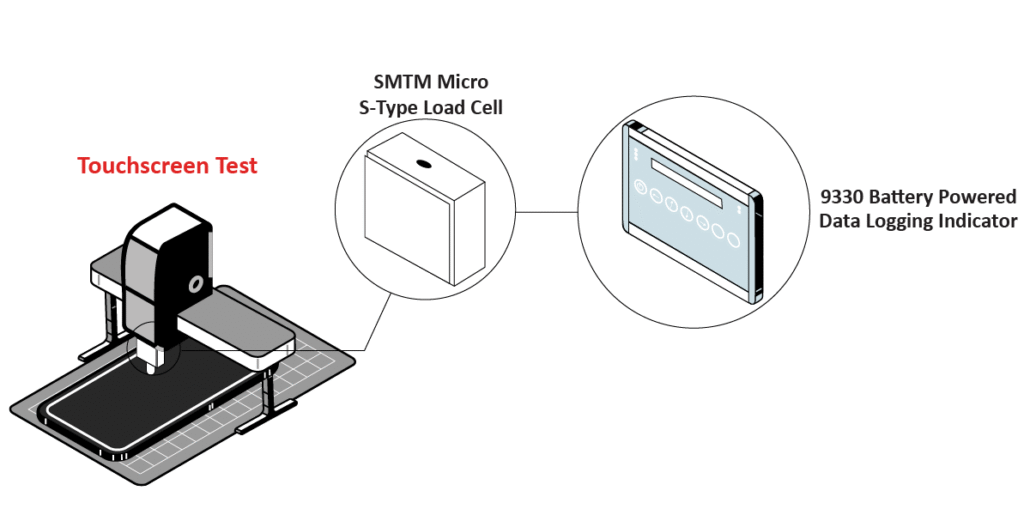 #5 – Mobile Device Haptic Buttons
To make a static piece of glass feel like a moving button, designers use SMTM Micro S-Type Load Cells to test the screen during prototyping. These sensors measure the exact trip force of a human finger. The data is captured via a USB-enabled Signal Conditioner to calibrate the haptic actuator to trigger at the perfect pressure point.
#6 – Esports Competitive Haptic Calibration
Gaming hardware developers use integrated trigger mechanisms. By pairing these with a BX3-M12-CAN Amplifier, they can measure the tension and travel of a trigger pull. This ensures the haptic click in the controller occurs at the exact same tactile breakpoint across every unit.
#7 – Prosthetic Limb Haptic Restoration
Small ConvexBT sensors are placed in the fingertips of a prosthetic hand to measure grip force. This data is monitored by an embedded signal conditioner that drives a haptic motor against the user’s remaining limb, allowing them to “feel” how hard they are holding an object.
#8 – Virtual Reality Haptic Data Gloves
To simulate the weight of a virtual object, Miniature Load Cells are placed at the fingertips of the glove. A high-speed digital instrumentation system monitors the pinch force as the user grabs an object, adjusting the haptic resistance of the glove’s internal cables to match the density of the virtual item. Learn more about Integrating Sensors in Virtual Reality for a Superior UX.
Using high-quality load cells during the design phase ensures a consistent haptic experience, so the feedback feels the same every time. For medical applications, this translates directly to increased patient safety because the surgeon can feel exactly when to stop applying pressure.