Tag Archive for: test and measurement

Interface 2023 Most Watched Videos
Interface provides a glimpse into the collective mind of load cell enthusiasts, engineers, technicians and measurement experts with our 2023 Most Watched Videos list. What applications, industry solutions and webinars are Interface followers watching? Read to learn and watch more.

Top 10 Trends in Test and Measurement
Interface is privy to the evolving landscape of test and measurement based on product demands and applications. Trends show an increased need for mini load cells, customization, environmental solutions, material testing, multi-axis sensors, DAQ, wireless, and measurement data software. Learn more about the 2023 trends test and measurement based on incoming inquiries to our application engineers.

Enhancing Structural Testing with Multi-Axis Load Cells

Interface 2-axis, 3-axis, and 6-axis load cells are all excellent options for structural testing. Multi-axis load cells are essential tools for structural testing, providing valuable insights into the behavior of structures under various loading conditions. These multi-axis sensors measure forces in multiple directions, enabling engineers to identify potential weaknesses, assess structural integrity, and optimize designs.

Fatigue Testing with Interface Load Cells
Fatigue testing requires accurate and reliable force measurement. Interface fatigue-rated load cells are designed to withstand the rigors of repeated loading, which makes them ideal for even the most demanding high cycle count fatigue testing applications. Interface uses 'fatigue-rated' as an exact specification that defines a special class of load cell design and construction.

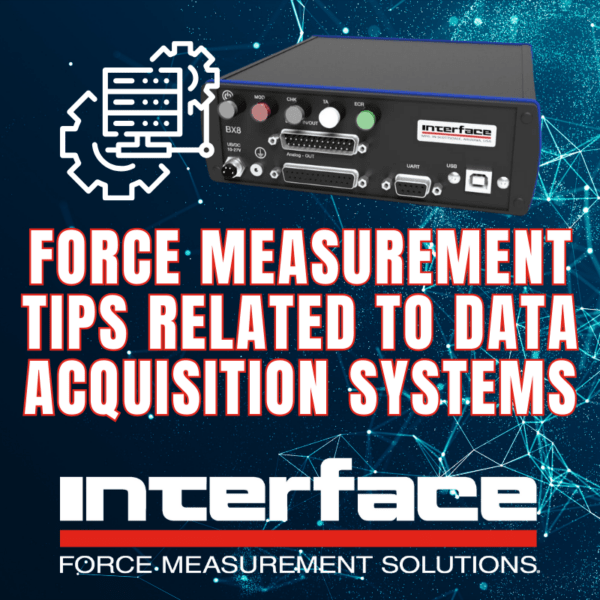
Force Measurement Tips Related to Data Acquisition Systems

Interface continues to add to our line of data acquisition systems to use with our load cells, torque transducers, and multi-axis sensors. These systems are designed for comprehensive force and torque measurement data collection and analysis. Choosing a data acquisition system compatible with your specific force measurement devices and application requirements is crucial. Consider sensor type, measurement range, accuracy, resolution, sampling rate, dimensions, and connectivity options.

Force Measurement is Fundamental in Material Testing
Interface load cells, multi-axis sensors, and data acquisition systems are used for material testing. Common uses of force measurement in material tests include applications to measure hardness, torsion, strength, compression, bending, shear, impact, creep, fatigue, and nondestructive capabilities. It is common to have our 1200 LowProfile load cells installed into material testing machines at test labs and onsite. We also supply a variety of miniature load cells and load pins for material testing, depending on the type of equipment and environment used for tests.

Engineered Solutions for Lifting Webinar

Interface’s technical webinar Engineered Solutions for Lifting details measurement devices used in lifting equipment, machines, and vehicles to improve operations and safety. Interface load cells and instrumentation are used to operate cranes, hoist heavy objects, and measure forces in infrastructure projects. Interface experts answer how load cells are used in safety monitoring for lifting equipment. Learn about Interface sensor products suited for integration into existing equipment and test and measurement projects.

Demystifying Specifications Webinar
Interface's technical force measurement webinar Demystifying Specifications details descriptions, terms, values and parameters found in product datasheets for load cells, torque transducers, instrumentation and specialty products. Learn from our experts what specifications need critical review, recommendations based on product categories, and the insider point of view on what is most important in terms of specifications for different use cases and tests.

Understanding GUM and Measurement Uncertainty
GUM, the Guide to the Expression of Uncertainty in Measurement, defines terms and concepts related to uncertainty. GUM describes methods for uncertainty calculation, and offers guidance for reporting and the documentation of uncertainties in measurement results. Interface knows that understanding GUM and the adherence to good test and measurement practices are essential to minimize uncertainties and ensure reliable measurement results for every application. In addition, reducing uncertainty with regular calibration of testing devices and proper maintenance of the equipment go hand-in-hand with GUM.