Tag Archive for: IQ Blog
 https://www.interfaceforce.com/wp-content/uploads/INTERFACE-TECH-TALK-dut-and-uut.png
800
800
Jamie Glass
/wp-content/uploads/Interface_White_Red.svg
Jamie Glass2026-03-12 08:08:532026-03-11 19:41:46What is the Technical Difference Between DUT and UUT?
https://www.interfaceforce.com/wp-content/uploads/INTERFACE-TECH-TALK-dut-and-uut.png
800
800
Jamie Glass
/wp-content/uploads/Interface_White_Red.svg
Jamie Glass2026-03-12 08:08:532026-03-11 19:41:46What is the Technical Difference Between DUT and UUT? https://www.interfaceforce.com/wp-content/uploads/human-haptics.png
800
800
Jamie Glass
/wp-content/uploads/Interface_White_Red.svg
Jamie Glass2026-03-10 08:08:052026-03-10 06:46:06Engineering the Human Touch by Measuring Haptics
https://www.interfaceforce.com/wp-content/uploads/human-haptics.png
800
800
Jamie Glass
/wp-content/uploads/Interface_White_Red.svg
Jamie Glass2026-03-10 08:08:052026-03-10 06:46:06Engineering the Human Touch by Measuring Haptics https://www.interfaceforce.com/wp-content/uploads/sensor-roi.png
800
800
Jamie Glass
/wp-content/uploads/Interface_White_Red.svg
Jamie Glass2026-03-05 08:08:582026-03-06 10:51:17High-Stakes Oversights That Can Derail Sensor ROI
https://www.interfaceforce.com/wp-content/uploads/sensor-roi.png
800
800
Jamie Glass
/wp-content/uploads/Interface_White_Red.svg
Jamie Glass2026-03-05 08:08:582026-03-06 10:51:17High-Stakes Oversights That Can Derail Sensor ROI https://www.interfaceforce.com/wp-content/uploads/engineering-force-intelligence-heavy-machinery.png
800
800
Jamie Glass
/wp-content/uploads/Interface_White_Red.svg
Jamie Glass2026-03-03 08:08:482026-03-02 18:50:29Engineering Force Intelligence in Heavy Machinery
https://www.interfaceforce.com/wp-content/uploads/engineering-force-intelligence-heavy-machinery.png
800
800
Jamie Glass
/wp-content/uploads/Interface_White_Red.svg
Jamie Glass2026-03-03 08:08:482026-03-02 18:50:29Engineering Force Intelligence in Heavy Machinery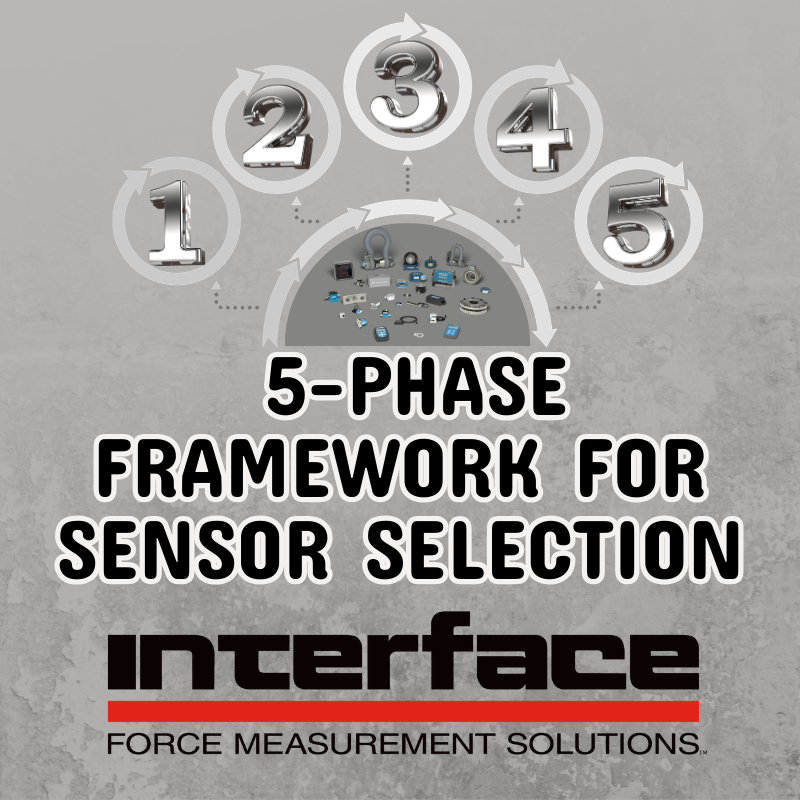 https://www.interfaceforce.com/wp-content/uploads/5-phase-framework.png
800
800
Jamie Glass
/wp-content/uploads/Interface_White_Red.svg
Jamie Glass2026-02-26 08:08:162026-02-25 15:00:55Interface Five-Phase Framework for Sensor Selection
https://www.interfaceforce.com/wp-content/uploads/5-phase-framework.png
800
800
Jamie Glass
/wp-content/uploads/Interface_White_Red.svg
Jamie Glass2026-02-26 08:08:162026-02-25 15:00:55Interface Five-Phase Framework for Sensor Selection https://www.interfaceforce.com/wp-content/uploads/in-line-adv-s-types-BANNER.png
800
800
Jamie Glass
/wp-content/uploads/Interface_White_Red.svg
Jamie Glass2026-02-24 08:08:372026-02-23 13:33:22The In-Line Advantage of S-Type Load Cells
https://www.interfaceforce.com/wp-content/uploads/in-line-adv-s-types-BANNER.png
800
800
Jamie Glass
/wp-content/uploads/Interface_White_Red.svg
Jamie Glass2026-02-24 08:08:372026-02-23 13:33:22The In-Line Advantage of S-Type Load Cells https://www.interfaceforce.com/wp-content/uploads/high-capacity-column-load-cell-tech.png
800
800
Jamie Glass
/wp-content/uploads/Interface_White_Red.svg
Jamie Glass2026-02-19 08:08:232026-02-18 16:27:44High-Capacity Column Load Cell Technology
https://www.interfaceforce.com/wp-content/uploads/high-capacity-column-load-cell-tech.png
800
800
Jamie Glass
/wp-content/uploads/Interface_White_Red.svg
Jamie Glass2026-02-19 08:08:232026-02-18 16:27:44High-Capacity Column Load Cell Technology https://www.interfaceforce.com/wp-content/uploads/elasticity-101.png
800
800
Jamie Glass
/wp-content/uploads/Interface_White_Red.svg
Jamie Glass2026-02-17 08:08:102026-02-16 12:48:29Elasticity 101
https://www.interfaceforce.com/wp-content/uploads/elasticity-101.png
800
800
Jamie Glass
/wp-content/uploads/Interface_White_Red.svg
Jamie Glass2026-02-17 08:08:102026-02-16 12:48:29Elasticity 101 https://www.interfaceforce.com/wp-content/uploads/autonomous-navigation.png
800
800
Jamie Glass
/wp-content/uploads/Interface_White_Red.svg
Jamie Glass2026-02-12 08:08:332026-02-10 12:33:43Autonomous Navigation in High-Risk Environments Requires Accuracy in Sensing
https://www.interfaceforce.com/wp-content/uploads/autonomous-navigation.png
800
800
Jamie Glass
/wp-content/uploads/Interface_White_Red.svg
Jamie Glass2026-02-12 08:08:332026-02-10 12:33:43Autonomous Navigation in High-Risk Environments Requires Accuracy in Sensing