Manufacturing
Interface works with manufacturers and equipment makers by supplying high-performance measurement solutions, including top of the line load cells, torque transducers and instrumentation.
Manufacturers use Interface products to improve their products and processes, meet safety requirements, automate machines, and test new designs. Force measurement products are versatile and valuable tools for manufacturers in both product design and the actual manufacturing of the products. Our sensor solutions improve the quality, safety, and efficiency of products and the equipment and tools used to make them.
Interface Products Used in the Manufacturing
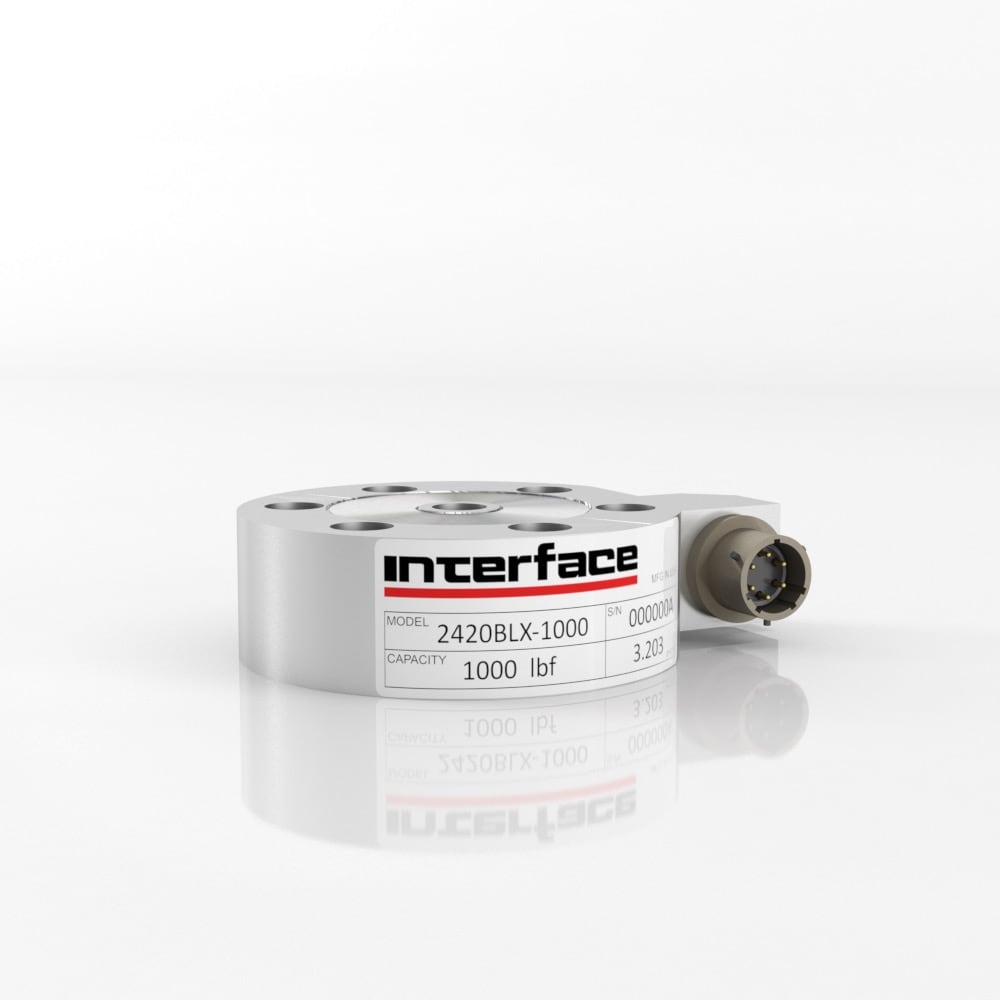
Interface products are commonplace in manufacturing and production. Force measurement is integral to advanced manufacturing systems, production lines, packaging, and product testing. Interface sensors are utilized in testing and monitoring various machines, from presses to lifting equipment, to ensure accuracy and repeatability throughout the production line.
We understand manufacturing test and measurement applications, from using miniature load cells to apply the force needed to press a brand identity onto fragile consumables to using multi-axis sensors to verify performance data when making intricately machined parts. Interface custom OEM solutions are ideal for manufacturers who require direct installation to monitor weight, force, and torque.
Manufacturing equipment and processes that utilize Interface load cells and torque transducers:
How measurement solutions are used in the manufacturing of products:
Our depth of force measurement expertise and experience enable us to innovate, engineer, and produce the world’s most accurate, reliable, and quality sensor technology for manufacturers worldwide.
Manufacturing assembly refers to the process of combining individual parts or components to create a finished product. It’s a crucial stage in the overall manufacturing process, where pre-made components are brought together in a specific sequence to form a complete unit.
Assembly manufacturing automation and innovation are driving efficiency, quality, and safety. Whether in component integration, sequential processing, final product formation, or process control, assembly often defines operational success. Interface’s diverse measurement sensors ensure that the correct force, weight, and pressure are applied during assembly on advanced production lines and when deploying functional robotic systems.
Output from load cells, torque transducers, and multi-axis sensors, combined with data acquisition systems and indicators, provides manufacturers with a comprehensive understanding of their assembly processes, including job batching, mating, fastening, sorting, and weighing.
Assembly Applications Using Interface Transducers and Instrumentation
With ongoing advancements in assembly AI, robotics, and automation, Interface’s products are used for testing, monitoring, and controlling assembly machines at various stages of production. Load cells and force sensors serve as vital safeguards, preventing equipment overloads and protecting workers from potential hazards during assembly.
Multi-axis sensors are rapidly transforming robotic assembly, particularly in collaborative robot applications and the manipulation of complex parts. These sensors provide critical force and torque feedback, allowing robots to perform intricate assembly tasks with precision and dexterity. The integration of force and torque sensors into end-of-arm tooling enables robots to manage delicate components, adapt to variations in part geometry, and conduct assembly operations with remarkable accuracy.
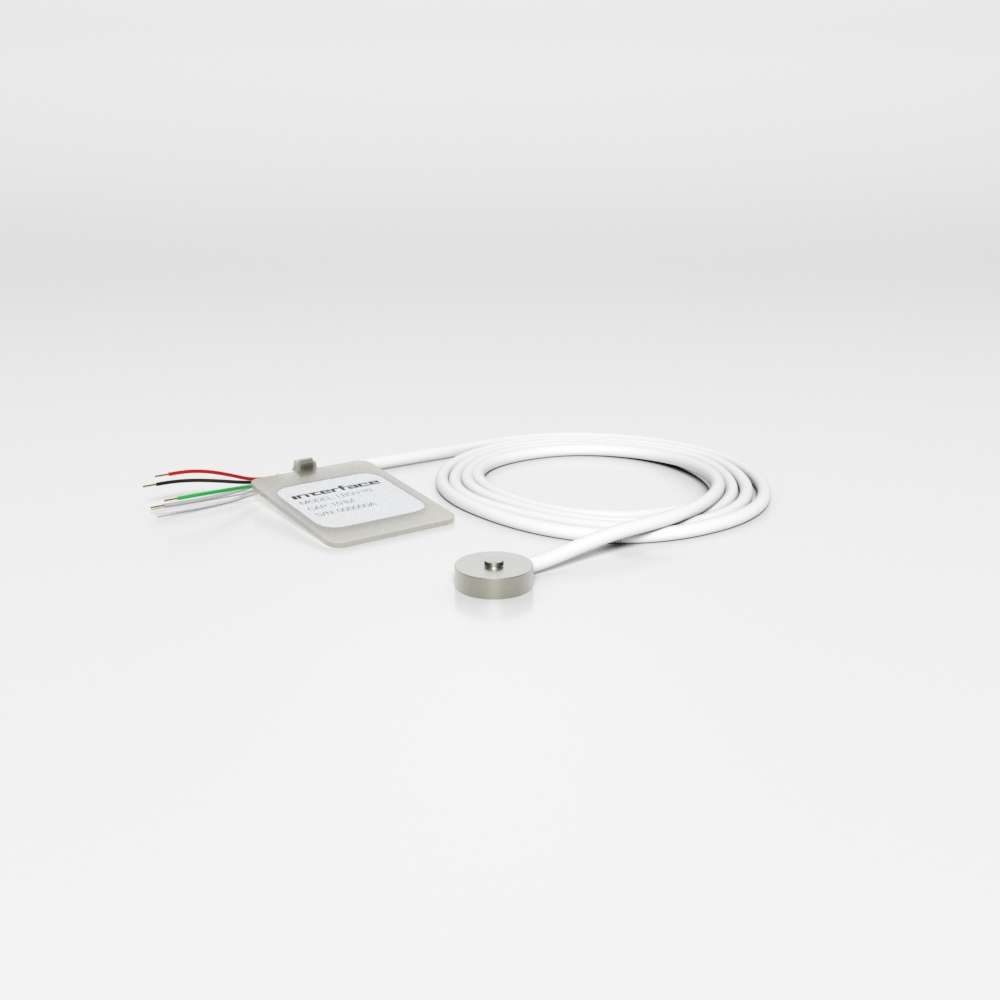
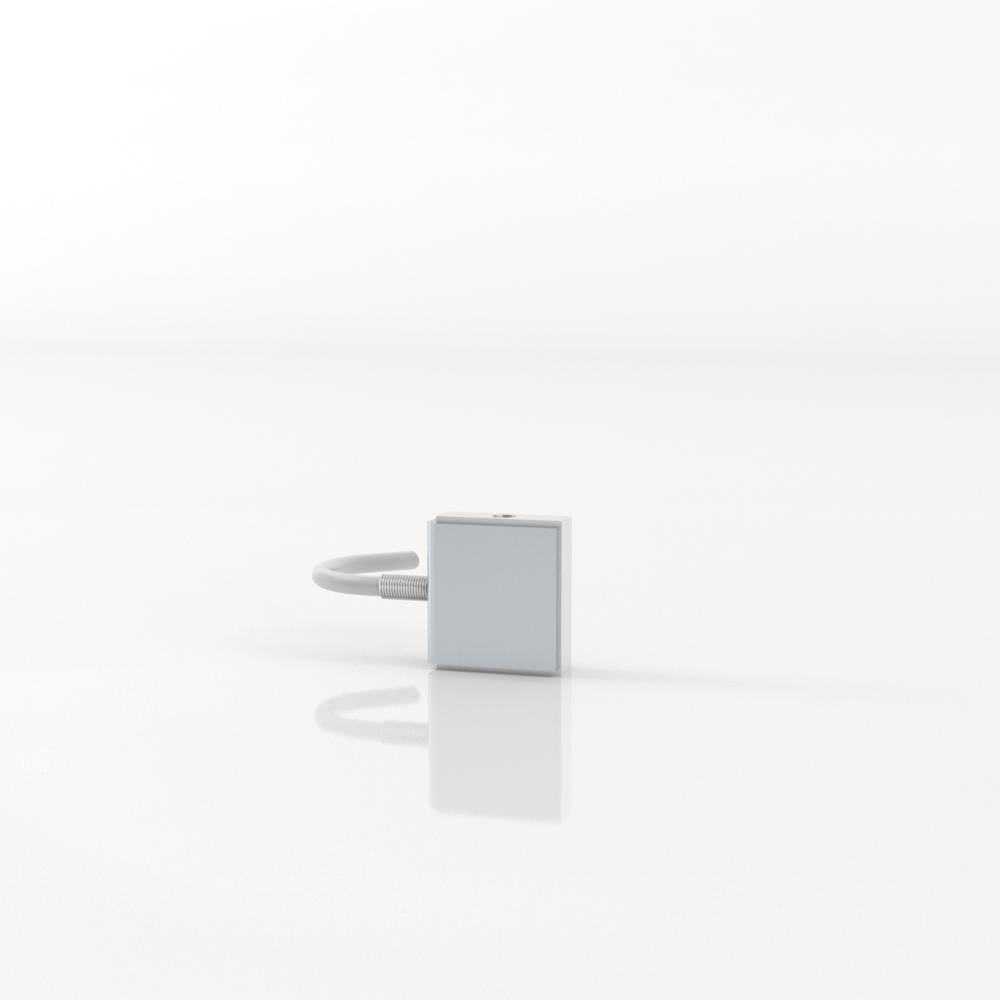
Manufacturers and equipment makers are incorporating Interface’s miniature beams, s-types, and load button load cells into applications with severely limited space, such as in the assembly of small electronic devices, medical implants, and micro-mechanical systems. These miniature sensors deliver essential force and torque feedback for quality control and precise process monitoring within these tightly constrained environments, ensuring that even the smallest components are assembled with utmost accuracy and reliability.
Continuous monitoring with Interface sensors and instrumentation guarantees that machinery operates within safe parameters, minimizing risks and safety issues. Real-time monitoring offers instant feedback, enabling rapid adjustments and preventing costly downtime. Moreover, continuous force feedback analysis supports proactive maintenance, ensuring that production lines remain operational.
Contact us to explore your options for utilizing Interface products to enhance assembly functions.
Production lines are the backbone of modern manufacturing, facilitating the efficient assembly of products. Consistency and maintaining precision while conducting thorough inspections stand out as paramount elements for creating top-tier products. Sensor data is vital in optimizing the production line.
Interface’s measurement solutions provide accurate data on production parameters such as temperature, speed, pressure, force, and other relevant variables. These can then be used to optimize the production process, detect and resolve problems in real-time, and prevent downtime. Additionally, Interface sensors can be integrated into industrial IoT systems and automation machinery to provide valuable insights and analytics to help manufacturers make data-driven decisions.
One of the main sensor types that play a role in these automated production lines is force sensors. Production line engineers use Interface force sensors to design and develop systems to ensure accuracy in measurements of force, weight, compression, and torque as products and components move throughout the line, including distribution.
How Interface Sensor Technologies are Utilized on Production Lines
Interface’s Force sensors are tools in manufacturing production lines, helping manufacturers ensure product quality, safety, and efficiency. They enable precise control, real-time feedback, and automation, all of which contribute to streamlined manufacturing processes and the delivery of high-quality products to consumers.
Textiles are cloth or woven fabrics created through weaving, knitting, crocheting, or felting natural or synthetic fiber. In the manufacturing industry, different machines spin fibers into yarns and other woven textiles, including clothing, household linens, upholstery, and other materials used in various industries.
By providing quantitative data on the mechanical properties of yarns and fabrics, force measurement solutions contribute to improved product quality, optimized production processes, and innovative applications in smart textiles and wearable technology.
Interface load cells and instrumentation are used in several machines at various stages of textile production. From maintaining consistent tension in yarn to weighing fabric rolls and yarn packages, force measurement solutions are essential for quality control and efficient production. Interface products used by textile machine makers, engineers, lab technicians and product designers include:
LowProfile Load Cells can also be used in textile testing machines that measure tear strength testing to evaluate the strength. Load cells measure the tensile strength, tear resistance, and elongation of yarns and fabrics, providing vital data for quality control and material selection.
Force measurement is frequently used to monitor textile equipment performance. Interface load pin load cells can be installed directly into textile machines and retrofitting machines to monitor specific forces in real-time. In textile manufacturing, force sensors are valuable for identifying machine misalignments. Our load cells, combined with instrumentation, can help monitor textile machines, avoiding unnecessary repairs and disruption in production.
Textile Applications Using Interface Products:
Load cells monitor the tension of fibers during the drawing process, ensuring consistent fiber diameter and yarn quality. Load cells on the drafting system and traveler path track yarn tension, preventing breakage and ensuring uniformity. Load cell data provides valuable insights into machine performance and fabric properties, facilitating process optimization and product development.
Using Interface products for textile equipment, research, testing, and production provides precise control, optimizes production processes, and enhances product quality. Force measurement is a valuable tool for textile manufacturers striving for efficiency, consistency, and continuous improvement.
The textile industry involves complex manufacturing processes, from spinning and weaving to finishing and dyeing, resulting in many products that meet functional and aesthetic needs. Textiles are integral to our everyday lives, whether it’s the comfort of clothing, technical textile functionality, or fashion’s artistic expression through modern textile inventions.
Industrial machinery is used across many industries, and is classified as technology, tools and equipment commonly utilized in manufacturing, handling, and construction. These machines include straightforward tools to complex robotics and systems.
The machines require extensive testing in design and for performance monitoring. Interface products are found in heavy machinery used in commercial and industrial sites. These machines are engineered to tolerate heavy use. Force sensors from Interface are designed into robots to allow for more precise and delicate tasks. Load cells in machine tools help to prevent damage to tools and workpieces by monitoring cutting forces. Interface’s force sensors empower industrial machinery in all industries the ability to monitor, regulate, and assure safety in production processes.
Industrial Machinery Types Utilizing Sensor Technologies
Interface load cells, torque transducers, multi-axis sensors, load shackles and instrumentation provide industrial engineers and manufacturers high quality data that monitors and confirms the design and in-action processes of their equipment. The accuracy of these devices is critical to high-quality outcomes, low-costs and most importantly, worker safety.
From manufacturing to assembly, Interface’s force sensors are frequently integrated into the machines to measure and monitor the forces exerted during different operations. They are used in testing equipment and labs, as well as R&D facilities that are retrofitting machinery to manage automated tasks.
With AI and automation technologies influencing manufacturing factories, the estimated 21 million manufacturing companies worldwide are beginning to adjust and advance their manufacturing processes. There are various types of manufacturing, from repetitive, continuous, batch, job shop, and discrete. All employ tools, machines, and equipment used through multiple processes that rely on accurate sensor data and technologies.
Retrofitting factories is a strategic approach to modernize and enhance existing production facilities. This involves installing new equipment, upgrading technology, redesigning layouts, and implementing new processes to make the factory more modern and competitive.
Factory equipment, systems, and processes upgrades are needed to improve efficiency, productivity, safety, and sustainability. Force measurement solutions are a cost-effective and efficient way to modernize older machinery and gain a competitive edge in the industry, increase production, improve quality, and decrease costly downtime and maintenance.
Interface’s sensor technologies, including our load cells and multi-axis sensors, provide critical data for various machinery designs and functions. Interface analog and digital instrumentation products are available to amplify, condition, and display the signals from force measurement sensors.
Manufacturers require modern tools and equipment to meet growing demands. Interface products are used to retrofit machines and update tools with sensor-based technologies. Integrating load cell data with control systems enables the implementation of tasks based on specific force thresholds. This can automate actions like triggering material feed, stopping processes upon reaching desired force levels or sorting parts based on weight or pressure applied.
Load Pin Load Cells are versatile tools for measuring tension or compression forces in various applications. Retrofitting existing equipment with load pins can unlock valuable insights into machine performance, optimize processes, and prevent costly breakdowns.
How load cells are used in retrofitting factories:
Retrofitting manufacturing equipment with load cells offers a cost-effective way to modernize existing infrastructure, improve process control, enhance quality, and gain valuable data for informed decision-making.
Interface measurement solutions, known for quality and accuracy, are at the forefront of all safety and regulation testing decisions.
In manufacturing, our load cells and torque transducers are integrated into machines and operating systems to ensure that equipment operates within safe operational limits. The sensor data enables automation functionality to help reduce risk and prevent accidents or injuries.
Production equipment makers and machine builders must adhere to workplace safety and comply with regulations. Safety systems are pervasive in manufacturing, whether building cobots to work on the production line or designing and testing equipment to move packages in a warehouse. Using accurate measurement is quintessential to workplace safety and automation.
Safety and Automation Applications Using Interface Sensors and Instrumentation
Interface application engineers work closely with our customers to ensure they have suitable sensors, instrumentation, DAQ systems, and accessories for each use case. We can build complete systems, such as lock-out boxes with sensor technologies and alarms. We also offer engineering services to customize a load cell for OEM and integrated solutions.
Benefits of Using Sensor Technologies for Workplace Safety and Automation
Precision and Accuracy: Load cells and torque transducers provide highly accurate measurements of force and rotation, respectively. This allows for precise control of automated machinery, ensuring consistent product quality and reducing errors. Less rework and higher-quality products contribute to a safer work environment, as there’s less chance of operators needing to fix mistakes or handle malfunctioning equipment.
Process Optimization: Manufacturers can gain valuable insights into their machines’ operations by precisely measuring forces and torques. This data can be used to optimize processes, identify inefficiencies, and reduce waste. Optimized processes with smoother operation result in fewer chances of equipment malfunction and potential safety hazards.
Safety Measures: Interface sensor devices can be designed into automated machines, tools, and equipment to measure safety during use. For example, our transducers can detect overloads or excessive torque, which could lead to equipment failure and injure workers. These sensors help prevent accidents and create a safer work environment by triggering alarms or automatic shutdowns.
Quality Control: Accurate measurement of forces and torques allows for real-time product quality monitoring. This enables manufacturers to identify and address any deviations from specifications early in production, reducing the risk of defective products reaching the customer. Fewer defective products mean less chance of needing rework or repairs later, keeping workers out of harm’s way.
Load cells and torque transducers come in various designs and capacities, making them suitable for multiple automation applications. This versatility allows manufacturers to integrate them into different machines and processes, enhancing overall safety and efficiency across their production lines.
Additive manufacturing, known as 3D printing, has developed and grown since its first prototypes for 3-dimensional printing in the 1980s. By the early 2000s, additive manufacturing was beginning to create functional products.
Today, additive manufacturing has improved and continues to expand in creating objects like small-scale models, prototypes, and even full-scale manufactured parts and products. Its popularity is driven by less process time and a much cheaper cost for production.
Additive manufacturing is a layer-by-layer process used to create objects, molds, or prototypes. Various materials, including polymers, metals, ceramics, foams, gels, and biomaterials, can be used. In contrast to traditional manufacturing, additive manufacturing can create complex shapes and small sizes. Interface load cells play a crucial role in this process, measuring the force or weight during dimensional printing to ensure precision and quality control.
Force Measurement Additive Manufacturing Applications
Sensor Technology Benefits in Additive Manufacturing Use Cases
Process Monitoring: Interface Mini load cells are used in additive manufacturing for process monitoring. These load cells can be integrated into 3D printers to monitor the forces exerted during printing. By measuring the force applied by the print head or the build platform, manufacturers can ensure that the printing process is proceeding as expected and detect any anomalies that may affect the quality of the final product.
Specification Quality Control: Load cells are ideal for verifying the mechanical properties of the printed parts. By subjecting the printed objects to controlled mechanical tests, such as tensile or compression tests, manufacturers can determine whether the parts meet the required specifications and standards.
Material Testing: Interface sensor technologies are commonly used to test the materials prior to the actual printing process. By measuring the forces required to extrude or deposit the material during the creation process. Manufacturers can evaluate the strength, flexibility, and viscosity of the material, thus achieving a consistent print quality.
Structural and Prototype Testing: Product designers and engineers use load cells and multi-axis sensors to gather critical measurement data in testing the final prototype or structure of objects being printed, ensuring structural integrity. Manufacturers can determine and assess different factors, such as stiffness, strength, and durability, of the prototype to ensure it meets the required performance criteria.
Interface offers a variety of sensors for use in additive manufacturing processes, including:
The range of sensors is especially important for industries that need precision data and easy integration into equipment and testing. These include industries that are turning to additive manufacturing, such as aerospace, medical, and automotive. Selecting the right load cell is critical to product development, and manufacturers rely on Interface due to the accuracy and reliability of our solutions.
Interface load cells and torque transducers are frequently used to test and develop packaging machinery, materials, production equipment, and distribution systems.
Accurate force measurement tools provide essential data to automate and regulate every packaging stage, from material testing to automation in handling fragile consumer goods. Interface sensor technologies and instrumentation ensure the quality and durability of product packaging across diverse applications.
Interface provides solutions for monitoring the health of packaging machinery and systems. From harvesting and sorting to processing and packing, force measurements enhance quality control, efficiency, and safety in packaging. For instance, production line engineers utilize sensors to detect and reject defective products, monitor equipment performance, and identify potential hazards.
Interface Load Cells in Packaging Applications
Packaging is crucial for cost savings, production efficiency, time-to-market, and product safety. Whether measuring, weighing, or securing, Interface load cells, mini load cells, torque transducers, and instrumentation play a pivotal role in ensuring the quality and accuracy needed to protect your brand and ensure customer satisfaction, particularly in terms of product safety.
Load cells and torque transducers play a critical role in ensuring various packaging processes’ accuracy, consistency, and quality. From precisely measuring product fills and controlling the tension of wrapping materials to verifying package weight and monitoring capping torque, these sensors ensure efficient use of materials, prevent product damage, and maintain consistent quality throughout the packaging line.
Interface is a leading force measurement manufacturer of solutions in the packaging industry. We collaborate with OEMs and engineering consultants to implement systems and products that reduce waste, automate packaging processes, and significantly improve efficiency, providing accurate, repeatable results and a brighter outlook for your operations. Contact our application experts to assist in getting the right measurement solutions in place for your packaging requirements.
Interface measurement sensors are engineered to deliver accuracy, consistency, and efficiency across critical industrial supply chain and inventory management processes.
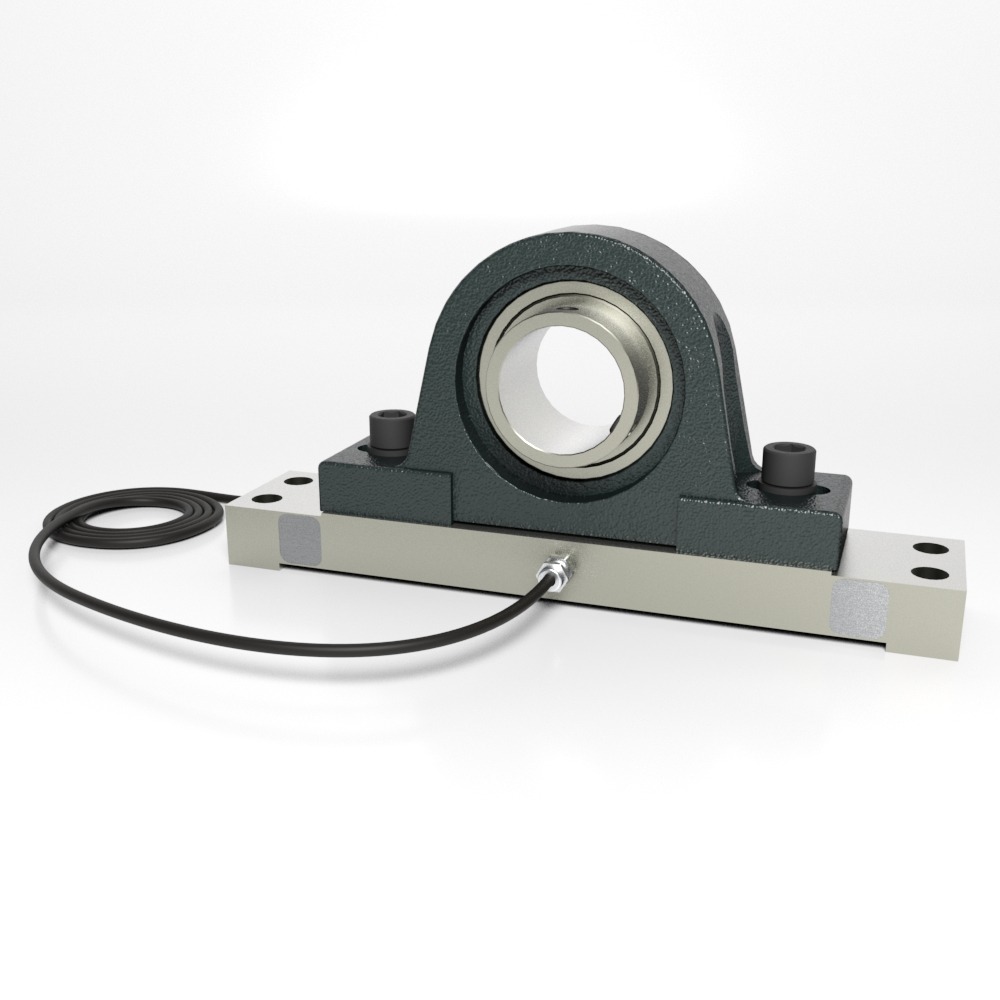
From precise weighing in automated production lines and integrated inventory systems to verifying product load integrity during transit, our load cells, miniature load cells, load pins and shackles, wireless systems, multi-axis load cells and instrumentation contribute to controlling quality, optimizing logistics, and significantly reducing operational costs.
Supply Chain and Inventory Use Cases for Interface Measurement Solutions
Automated Material Handling
Packaging and Processing
Logistics and Transportation
In industrial settings, load cells provide precise weight measurement of goods at various stages of supply and inventory. Sensor technologies are integrated into process control systems to minimize material waste, maintain product uniformity, and adhere to industry regulations.
In warehouse operations, force measurement solutions are used in pallet and floor scales, conveyor systems and throughout production to measure weight. These weigh checks are vital for inventory tracking, load planning, and transportation logistics, helping companies maximize truck loads without violating safety regulations or overloading transport vehicles.
Additionally, some warehouses use load cell in storage systems, such as automated vertical storage carousels, to monitor inventory weight changes in real time. This allows for precise stock level management without manual counting, streamlining inventory control processes and improving stock accuracy.
Why Choose Interface Solutions for Supply and Inventory Management?
Across diverse industries, Interface’s broad range of load cells are indispensable for maintaining control, precision, and efficiency throughout the entire supply chain and inventory lifecycle. Their versatility allows them to support critical functions from raw material receiving and in-process manufacturing to final product shipping.
As companies continue to automate and optimize their supply chains, the essential role of Interface load cells in ensuring accuracy, reducing costs, and enhancing operational reliability will only continue to grow.
The global metal manufacturing market, which includes processing and production, is a cornerstone of the industrial economy. The metals sector encompasses the processing of ferrous metals like steel and iron, as well as non-ferrous and specialty metals, including aluminum, copper, titanium, and high-strength alloys.
As demand surges for lightweight components and faster processing, manufacturers must achieve extreme precision in forming and cutting these materials. Interface force measurement solutions provide the data required to control high-pressure forming, monitor tool wear during cutting, and manage bulk material weighing with absolute accuracy.
Metal Manufacturing Applications Using Interface Products
The primary challenge in metal manufacturing is maintaining laboratory-grade precision within a punishing industrial environment defined by high-tonnage impacts, abrasive debris, and extreme thermal cycles. Inconsistent force application during forming or undetected tool wear during cutting can compromise structural integrity, waste raw materials, and cause costly machinery downtime.
Interface Solutions for Metal Manufacturing
Interface force measurement solutions provide the data needed to control high-pressure forming, monitor tool wear during cutting, and manage bulk material weighing with absolute accuracy. Interface offers ruggedized hardware and instrumentation designed to meet the heavy-duty requirements of the metal industry.
Interface addresses these challenges by providing a robust ecosystem of fatigue-rated, environmentally protected sensors that serve as the digital eyes and ears of the production line. From LowProfile™ Load Cells that withstand millions of cycles in heavy-duty stamping presses to Multi-Axis Sensors that detect the subtle onset of tool chatter in high-speed milling, our solutions provide the real-time data needed to maintain zero-error production.
By integrating these high-accuracy tools with Wireless Telemetry and ruggedized Instrumentation, manufacturers gain the visibility required to optimize power consumption, ensure compliance with safety regulations, and deliver the high-quality metal components that power global infrastructure.
Logistics within the manufacturing industry involves automated handling, sorting, transport, warehousing, and distribution of raw materials and finished goods. Modern manufacturing logistics relies heavily on automated material handling equipment (AMHE), high-speed sorting systems, automated guided vehicles (AGVs), autonomous mobile robots (AMRs), and smart warehousing infrastructure to maintain lean supply chains. For manufacturing and systems engineers, ensuring the reliability of these high-throughput systems requires correct force, weight, tension, and torque data during operation. Because unmonitored load imbalances, conveyor jams, or structural overloads can cause costly line stoppages, product damage, or safety hazards, operators depend on continuous physical measurement.
Interface load cells, torque transducers, and instrumentation provide the stable data output needed in these motion systems to track payload weights, monitor cable tensions, and confirm automated handling mechanics across global supply chain operations.
Interface Manufacturing Logistics Solutions
As global manufacturing adapts to smart factory automation, high-density warehousing, and autonomous robotic transport, accurate component signal networks at critical logistical stages become essential. Interface LowProfile load cells, miniature tension and compression sensors, reaction torque transducers, and wireless data acquisition hardware are engineered to measure lifting, holding, and moving forces without restricting equipment speed or altering machinery footprints.
The primary challenge in manufacturing logistics testing and operation is sustaining measurement stability across high-speed, continuous duty cycles that generate constant movement. Signal lag or sensor drift within an automated sorting or weighing system can lead to inaccurate inventory logging, improper sorting, or unmonitored machinery jams. Capturing these rapid physical interactions safely require high-speed, low-latency signal conditioning to ensure that sudden weight spikes, stopping forces, and dynamic accelerations are recorded and processed in real time without data gaps.
Manufacturing Logistics Sensor Applications
Interface Products Used in Manufacturing Logistics
Logistics Automation Require Measurement Solutions
Force, torque and weight serve as the mandatory data for automated manufacturing logistics, converting measurements into clear, empirical data. Interface provides load cells, torque transducers, multi-axis sensors, instrumentation, and data acquisition systems for logistics engineers and automation equipment makers to accurately track performance across all types of material handling machinery.
Interface solutions provide system designers confidence in confirming operational safety, optimizing equipment longevity, and supporting seamless uptime across the global manufacturing logistics sector.
Composites are engineered materials made by combining high-strength fibers such as carbon fiber, fiberglass, aramid, or basalt with a polymer, ceramic, or metal matrix. They play a critical role in lightweighting across aerospace, automotive, renewable energy, manufacturing, and industrial automation.
Unlike isotropic metals, composites have direction-dependent mechanical properties and can experience complex failure modes, including matrix cracking, fiber-matrix debonding, fiber pull-out, and delamination. Because these failures can occur suddenly with little visible warning, scientists, lab managers, and engineers rely on sensor-based testing to characterize material behavior and validate structural performance. Standardized tensile, compressive, shear, flexural, impact, and fatigue testing provides the empirical data needed to establish reliable material models, optimize structural layups, and qualify finished components.
Weighing in on Composites and Advanced Materials
The composites industry must balance lightweight construction with demanding performance and reliability requirements. Force and torque measurement help convert mechanical loads and stresses into actionable material data. High-performance sensors integrated into universal testing machines (UTMs), automated fiber placement (AFP) systems, resin transfer molding (RTM) presses, autoclaves, and other manufacturing equipment can monitor forces, pressures, tool-part interactions, and fatigue behavior over thousands of cycles.
Accurate, repeatable measurements establish reliable material baselines, support process control, reduce unexpected failures, and help manufacturers produce composite structures that perform consistently under demanding conditions.
Overcoming Composite Testing Challenges
Testing anisotropic composites presents unique measurement challenges. Sudden brittle failures can produce rapid load drops that require high-speed, low-latency data acquisition to capture peak forces and fracture behavior accurately. Testing fixtures can also introduce off-axis bending moments, side loads, and other measurement errors caused by misalignment or asymmetric material structures.
Fatigue testing adds another challenge, requiring sensors capable of maintaining stable, accurate measurements through repeated loading cycles without calibration drift. As manufacturers adopt increasingly complex layups, thermoplastic matrices, and carbon-fiber-reinforced polymers (CFRP), reliable force and torque measurement becomes essential for both material qualification and process validation.
Interface addresses these challenges with fatigue-rated LowProfile® load cells, multi-axis force and torque transducers, high-resolution digital instrumentation, and high-speed data acquisition systems designed to capture dynamic loading while minimizing measurement interference.
Interface Composite Materials Solutions
Interface provides force measurement technologies for material testing, composite manufacturing, and structural validation. Solutions include:
Composite Materials Sensor Applications
Why Precision Metrology Matters in Composite Engineering
Reliable force and torque measurements allow engineers to better understand actual material behavior rather than relying solely on conservative safety factors. High-fidelity measurement data can reveal changes during fatigue testing, verify consistent consolidation and clamping forces, and provide the data needed to validate FEA models and optimize composite designs.
For aerospace, automotive, renewable energy, and other safety-critical applications, precise measurement supports the development of lighter, stronger, and more reliable composite structures. Interface provides the sensing and instrumentation technologies that help materials researchers, test engineers, and advanced manufacturing teams characterize performance and push the boundaries of composite engineering.
Autonomous Robot Dog Beam Stress Test Bike Fork Bending Bike Frame Fatigue Testing
Bike Handlebar Fatigue Testing Bike Helmet Impact Test Bike Load Testing
Bike Power Pedals
Bike Power Pedals
Bolt Tension Monitoring Cheese Weighing
Chocolate Melanger Torque
Cobot Arm
Cobot Palletizer
Cobot Safety Programming Commercial Food Processing Conveyor Belt Adhesion Test E-Bike Torque Measurement Fabric Winding Machine Feed Roller System Food and Beverage Conveyor Belt Food Delivery Robot Furniture Fatigue Cycle Testing Gaming Chair Fatigue Testing Gift Wrap Winding Machine Golf Ball Tee Headset Manufacturing
Industrial Robotic Arm Inventory Weighing Manufacturing Material Tensile Testing Metal Bending Force Metal Press Cutting Machine
Mountain Bike Shocks Testing Mouse Touch-Pad Force Testing Package Drop Tester Paper Press Machine Paper Pulp Refinement Peel Testing Pickleball Racket Core Assembly Pots and Pans Press
Press Load Monitoring
Printer Cartridge Seal Proving Theoretical Cutting Forces of Rotary Ultrasonic Machining PRV (Pressure Relief Valve) System Testing
Roboforming
Robotic Grinding and Polishing
Robotic Manufacturing Disassembly Rubber Injection Molding
Sanding Machine Force Monitoring Smartwatch Band Pull Test Snack Weighing and Packaging Machine Syringe Plunger Force Measurement Tablet Hardness Testing Tablet Machine Hardness Calibration Tensile Testing for 3D Materials Torque Measurement for Electric Vehicles Touchscreen Force Testing

Water Bottle Dispensing and Weighing

Weave Loom Efficiency Yarn Tension Monitoring
Please share your location to continue.
Check our help guide for more info.
Center of Gravity Testing in Robotics Demands Precision Load Cells
/in Blog, Industrial Automation /by Jamie GlassInterface specializes in precision force measurement solutions. There are different methods for determining the CoG of a robotic system. One common method is to use strain gage load cells. Not all load cells are designed for precision measurement. Center of gravity testing demands strict measurement. For example, Interface compression load cells are often used in center of gravity testing for robotics because they are very accurate and can measure remarkably small forces.
Industry 5.0 and the Role of Force Measurement
/in Blog, Industrial Automation /by Jamie GlassInterface is working with industry leaders, integrators, and innovators to provide advanced sensor technologies that will support the adoption of Industry 5.0 products, with all the benefits of optimization and reliability. See how Interface load cells, load buttons, multi-axis sensors, data acqusition systems and wireless telemetry systems support Industry 5.0 advancements and inventions in the use of robotics, AI, cobots, systems and production efficiency machines.
Types of Robots Using Interface Sensors
/in Blog, Industrial Automation /by Jamie GlassInterface load cells and torque transducers are commonly used in the design and testing of robots to measure and monitor forces and loads experienced by various robot components. Load cells are used to measure the forces exerted by robotic arms and grippers, while torque transducers are used to measure the torque generated by motors. Multi-axis load cells are growing in use with robotic engineers throughout the R&D phases for more measurement data to make smarter decisions in design and use of the robot.
Advancing Lithium-Ion Battery Test and Measurement
/in Blog /by Jamie GlassInterface supplies load cells, instrumentation, and multi-axis sensors for testing and performance monitoring of lithium-ion batteries. To achieve the goal of improved and longer-lasting Li-ion batteries, accurate force measurement testing is needed to confirm performance, capacity, safety and fatigue. Force testing is done on the battery itself and is used for various stages within the R&D and manufacturing processes.
Hydraulic Press Machines and Load Cells
/in Blog /by Jamie GlassLoad cells are commonly used in hydraulic presses to measure the force or weight of the load that is being applied to the press. Load cells are essentially transducers that convert a mechanical force into an electrical signal. Load cells play a critical role in ensuring the safety, quality, and efficiency of hydraulic press operations, as they allow operators to monitor and control the force being applied to the workpiece with a high degree of accuracy and precision.
Interface Manufacturing and Production Solutions
/in Blog, Industrial Automation /by Jamie GlassInterface offers manufacturing and production standard off-the-shelf, engineered to order and complete OEM solutions including load cells, instrumentation and weighing devices. Our products provide the quality and durability necessary within industrial environments. In addition, we can customize the majority of our products to fit unique and evolving needs as sensor technologies like robotics and advanced manufacturing devices are integrated into production lines.
Electrical Engineers Choose Interface Sensor Technologies
/in Blog /by Jamie GlassInterface is a top provider of force, torque and weighing measurement solutions to electrical engineers around the world. Sensors are a critical tool for electrical engineers in testing and optimizing the performance of electronic devices, systems, and processes. The type of sensor used, and the specific testing application will depend on the needs of the project or product.
Introducing the Interface Consumer Product Testing Case Study
/in Blog /by Jamie GlassThe global consumer products market is a multi-billion dollar industry that thrives on innovation and new product development. There are numerous opportunities to utilize sensor-based technologies to test for safe use and monitor product performance. Interface is a source of quality […]
Interface Solutions for Production Line Engineers
/in Blog /by Jamie GlassDue to the influence of IoT, AI and big data, the role of production line engineer has become far more critical as manufacturers demand peak efficiency. These engineers need to stay current in automation technologies used to design, build, and […]
Quality Engineers Require Accurate Force Measurement Solutions
/in Blog /by Jamie GlassIn engineering and manufacturing, when introducing a product onto the market the requirements and regulations can be immense. Each industry has strict guidelines to ensure safety, durability, quality, and overall customer satisfaction. To meet these requirements, most product and component […]