Tag Archive for: IQBlog
Engineering Force Intelligence in Heavy Machinery
Interface load cells and torque transducers provide force intelligence to modernize heavy machinery and enable autonomous control, predictive maintenance, and high-fidelity testing for equipment OEMs. Heavy machinery for construction, mining, and agricultural need force intelligence. Interface’s sensors enable the transformation of standard mechanical joints into smart components that provide the data-driven insights necessary for modern high-production operations.

Interface Five-Phase Framework for Sensor Selection
Sensor selection with Interface’s 5-phase framework is a checklist for optimizing your measurement system. The Sensor Selection Guide takes you through a series of important considerations when selecting the right devices for your project requirements. Go through the phases of characterization, mechanical fit, interconnect, instrumentation, and calibration. Learn how to optimize load cells, torque transducers, and multi-axis sensors for accuracy and reliability in this sensor-first approach.

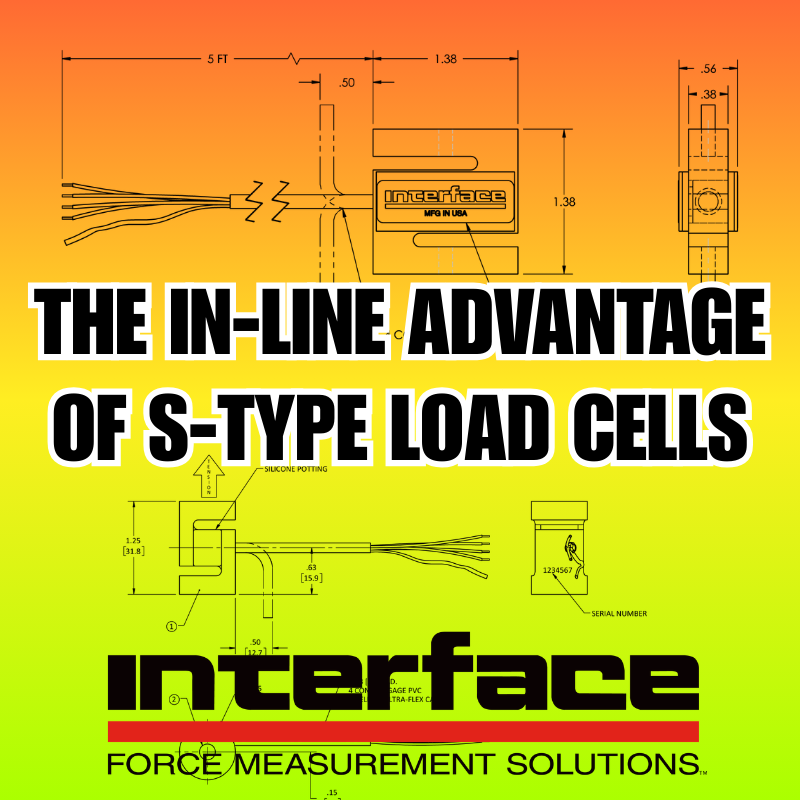
The In-Line Advantage of S-Type Load Cells
Interface S-Type load cells are the preferred choice for in-line force measurement. The miniaturized high-accuracy load cell is easy to integrate due to the compact footprint of the sensor design. Learn the technical details of it's patented unitary construction, flexure zones, and key specifications like static error band and natural frequency ideal for machines, OEMs, automotive, aerospace, medical, and robotic applications.

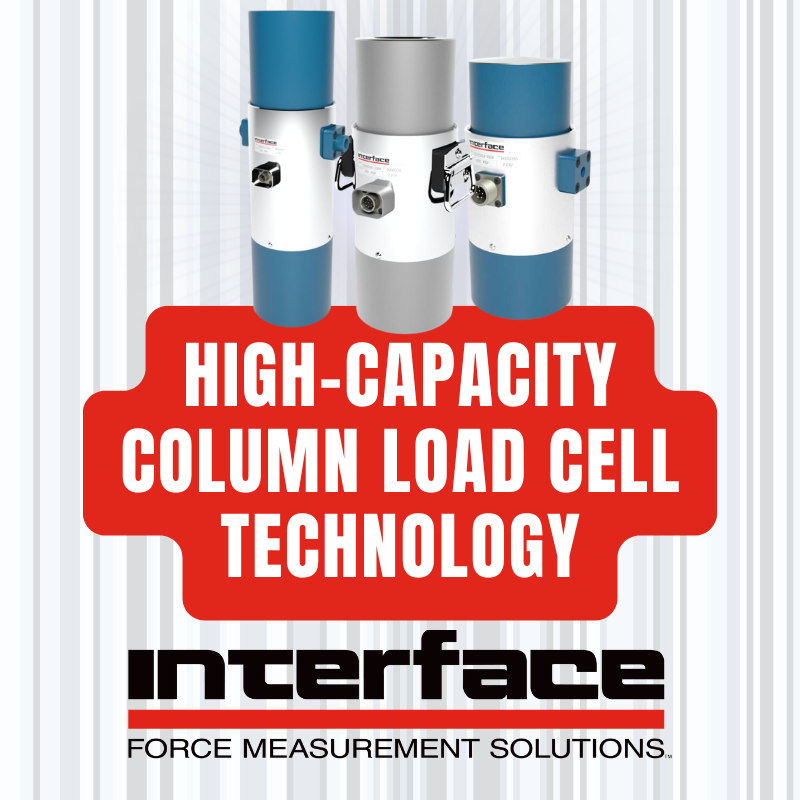
High-Capacity Column Load Cell Technology
Interface high-capacity column load cells have a canister design and are used for industrial, aerospace, infrastructure, and ruggedized testing environments. To address specific high-capacity requirements, Interface provides specialized column architectures ranging from calibration standards to redundant-bridge industrial models. Capacities range from 100,000 to 1,000,000 pounds of force. It is the choice for the primary choice for extreme-scale engineering. The technical appeal of the canister design lies in its construction.

Elasticity 101
Interface's Elasticity 101 details the importance of Hooke's Law of Physics. In a load cell, we want a material with a very predictable stiffness. If the material permanently deforms or creeps, the deformation value won't return to zero, and your measurements will be inaccurate. A load cell is essentially a mechanical transducer that converts mechanical force into elastic potential energy, which we then capture as data. Understanding how your sensor bends is the first step toward mastering precision force measurement. Learn more in Interface's ForceEDU 101 Series.

Autonomous Navigation in High-Risk Environments Requires Accuracy in Sensing
Interface sensor technologies, including multi-axis, torque, and load cells, enable autonomous platforms to navigate subsea, industrial, and aerospace environments with precision. High-risk environments require sensors designed for hazardous, submersible, and extreme temperature conditions to ensure autonomous platforms perform reliably using accurate measurements.

Why Do Torque Wrenches Use Transducers?
Interface's Tech Talk reviews torque wrenches, applications, and FAQs when combining wrenches with reaction torque transducers to validate the tightness of fasteners, bolts, screws, and other mechanical assembly tools used in aerospace, energy, automotive, and manufacturing. A torque wrench is only as reliable as the data supporting it. Combining a torque wrench with high-accuracy torque measurements from torque transducers and advanced instrumentation provides the validation necessary to protect machines, equipment, products, consumers, and workers.

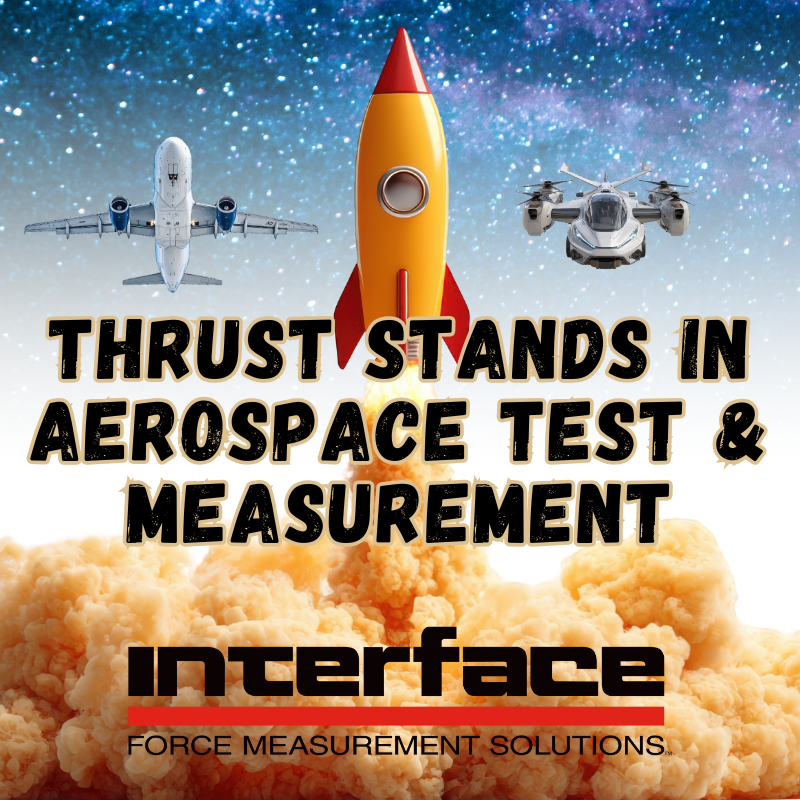
Thrust Stands in Aerospace Test and Measurement
Thrust stands are testing rigs built to measure propulsion output and efficiency of aerospace industry launches of rockets, aircraft, drones, and UAVs. Using Interface high-capacity load cells, the goal is to map the thrust curve and verify engine specifications against design requirements. Unlike the distributed loads encountered in structural testing, a thrust rig handles a concentrated axial force.

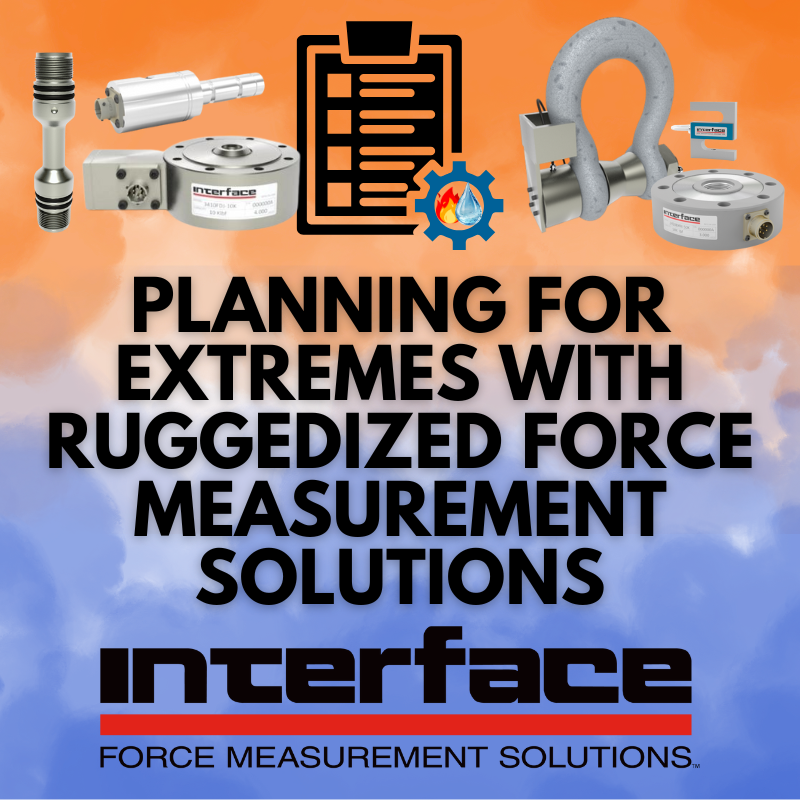
Planning for Extremes with Ruggedized Force Measurement Solutions
Interface answers FAQs about ruggedized force measurement testing, including ATEX load cells, load pins, coil tubing, submersible, stainless steel, and fatigue-rated sensors, and cabled and wireless instrumentation. Get a ruggedized test plan checklist and best practices. Engineering for ruggedized test and measurement starts with the sensor design. Talk to Interface experts.