Solution


Electric Vehicle Battery Monitoring

A customer would like a system to monitor their lithium-batteries for electric vehicles. Normally, lithium-batteries are measured through voltage and current measurements, or (ICV), to analyze and monitor it’s life.
Summary

  • Customer Need / Challenge

    A customer would like a system to monitor their lithium-batteries for electric vehicles. Normally, lithium-batteries are measured through voltage and current measurements, or (ICV),  to analyze and monitor it’s life. 
  • Interface Solution

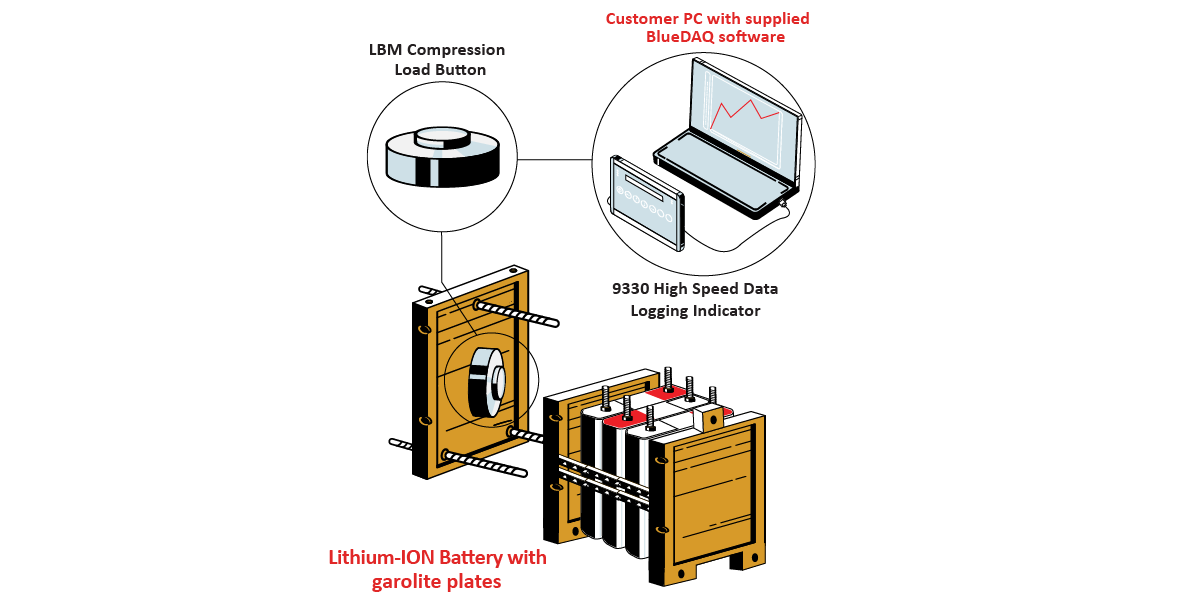
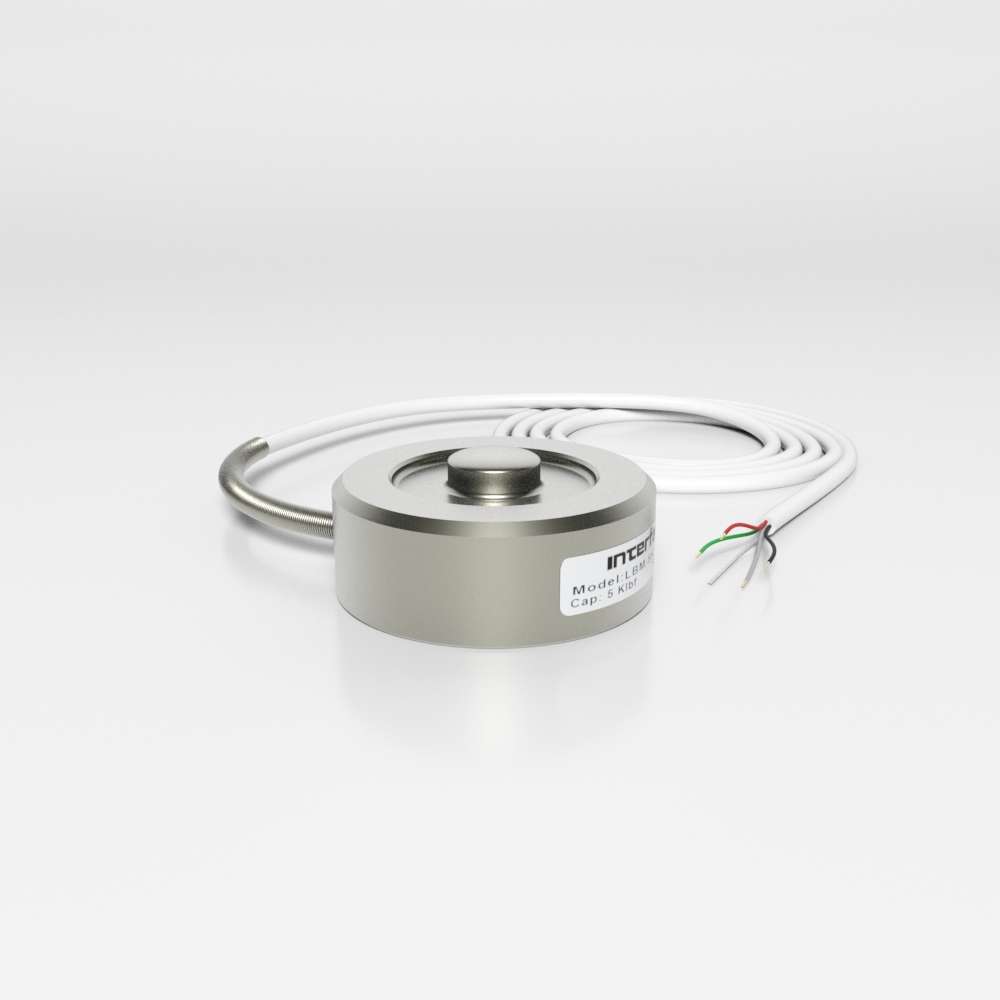
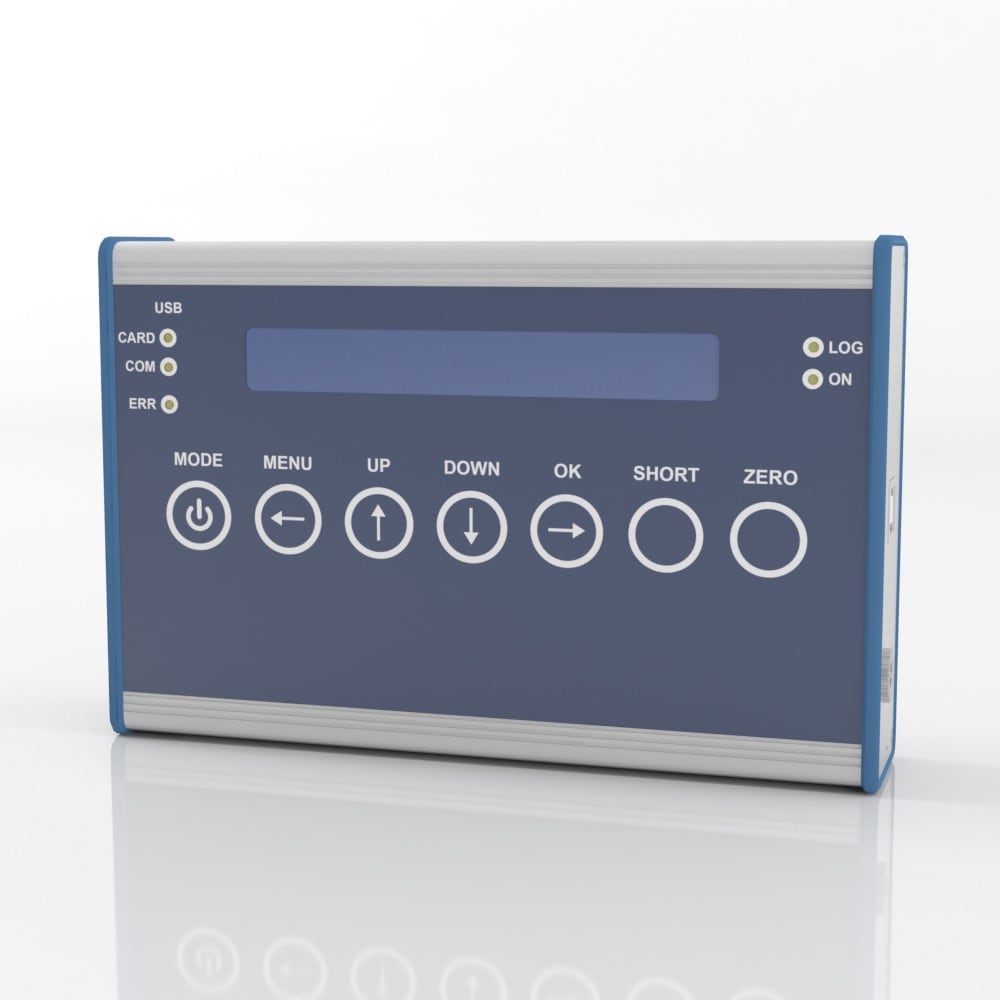
    Interface suggests using a different method by installing their LBM Compression Load Button Load Cell in between two garolite end plates, and measuring the force due to cell swelling or expansion. Instead of monitoring through voltage (ICV), this method is based on measured force (ICF). Paired with the 9330 Battery Powered High Speed Data Logging Indicator, force results can be displayed, recorded, and logged with supplied software.

  • Results

    Interface successfully created a ICF system to monitor the customer’s lithium-ion batteries for their electric vehicles. 

Materials


  • LBM Compression Load Button Load Cell
  • 9330 Battery Powered High Speed Data Logging Indicator with BlueDAQ software
  • Lithium-Ion Battery
  • Garolite Plates
  • Customer PC or Laptop

How it Works


  1. The customer’s lithium-ion cells are installed between two garolite end plates. The LBM Compression Load Button Load Cell is bolted and separated from the battery cells using one of the garolite plates.
  2. Through testing, the lithium-ion battery expands, and the LBM Compression Load Button Load Cell measures the amount of force being pressed up on the end plate as the battery cell expands.
  3. The 9330 Battery Powered High Speed Data Logging Indicator measures and records the results on the customer’s laptop using the included BlueDAQ software.

Download PDF