Solution


Tablet Forming Machine Optimization

A pharmaceutical tablet producer wanted to monitor the forces applied by the tablet forming machine in an effort to understand the relationship between raw material, die set, forming force, and motor cycle speed.
TabletMachineGraphic Color

Summary

  • Customer Need / Challenge

    A pharmaceutical tablet producer wanted to monitor the forces applied by the tablet forming machine in an effort to understand the relationship between raw material, die set, forming force, and motor cycle speed. The goal was to improve productivity and efficiency of the tablet forming process, while reducing losses (i.e. cracked tablets or voids) by adding a dimension of feedback that could be used to assign specific press adjustment criterion for given inputs.

  • Interface Solution

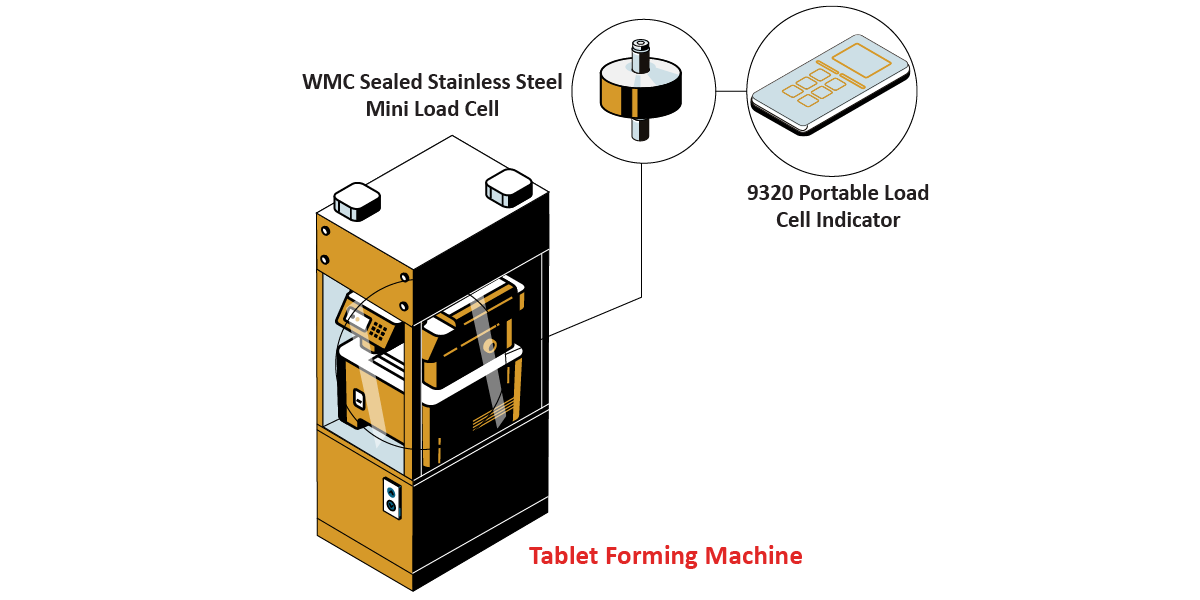
    An Interface Model WMC Sealed Stainless Steel Mini Load Cell (10K lbf Capacity) was mounted in the section of the downward press bar. The machine was modified to accomplish this. The load cell was then connected to a Model 9320 Portable Load Cell Indicator to collect the needed data.

  • Results

    After analyzing the data, the tablet producer was able to quantify adjustment levels by monitoring which forces produced the most optimal results for a given cycle speed, die set, and raw material. Productivity and efficiency was greatly improved by the enhancement of the data feedback.

Materials


  • WMC Sealed Stainless Steel Mini Load Cell.
  • 9320 Portable Load Cell Indicator.

How it Works


  1. The customer made a custom fixture that allowed for the mounting of the WMC Sealed Stainless Steel Mini Load Cell between the downward press bar and the tablet, replacing a section of that downward press bar.
  2. The output of the load cell was connected to the 9320 Portable Load Cell Indicator and set aside so that the cable did not interfere with the cycle and no snagging would occur. A cable tie was used to stow aside the cable and to ensure there was enough clearance for the entire cycle.
  3. The customer then set out to establish a data correlation between the press forces for tablet forming and the outcome of the tablet itself for given raw materials, die sets, and speeds. Any variation in those variables warranted the possibility of a different optimal force.
  4. The customer was then able to produce a set of guidelines to adjust the press force for the given inputs (raw materials, die sets, and speeds). These guidelines, when followed, increased productivity and efficiency while reducing losses by being able to calibrate the force.

Download PDF