Solution


Rover Wheel Torque Monitoring

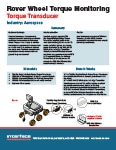
A space company wants a system to measure the wheel spin torque and force applied onto the wheels of their space rovers.


Summary

  • Customer Need / Challenge

    A space company wants a system to measure the wheel spin torque and force applied onto the wheels of their space rovers. They want to be able to monitor the torque measurements to see whether or not the rover is in motion or static as the motor runs. The force measurement is needed to monitor contact with the ground for ground control.

  • Interface Solution

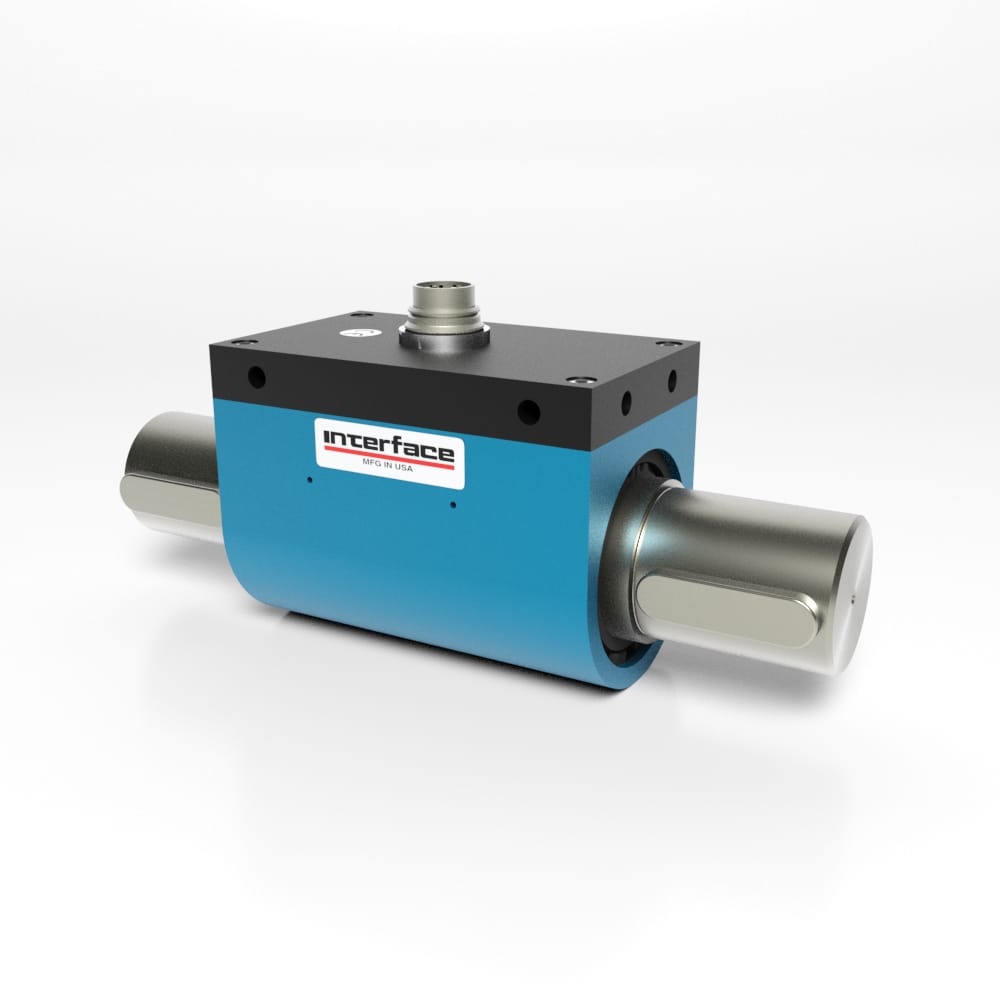
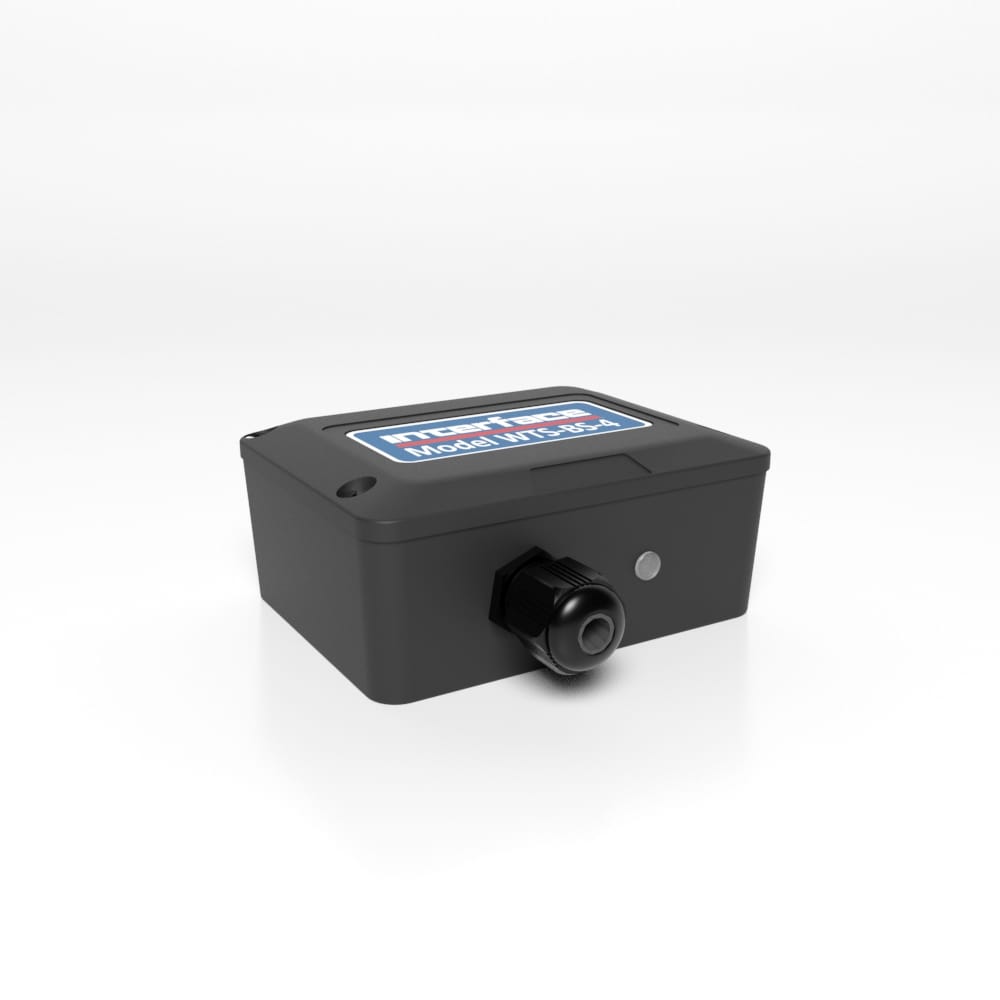
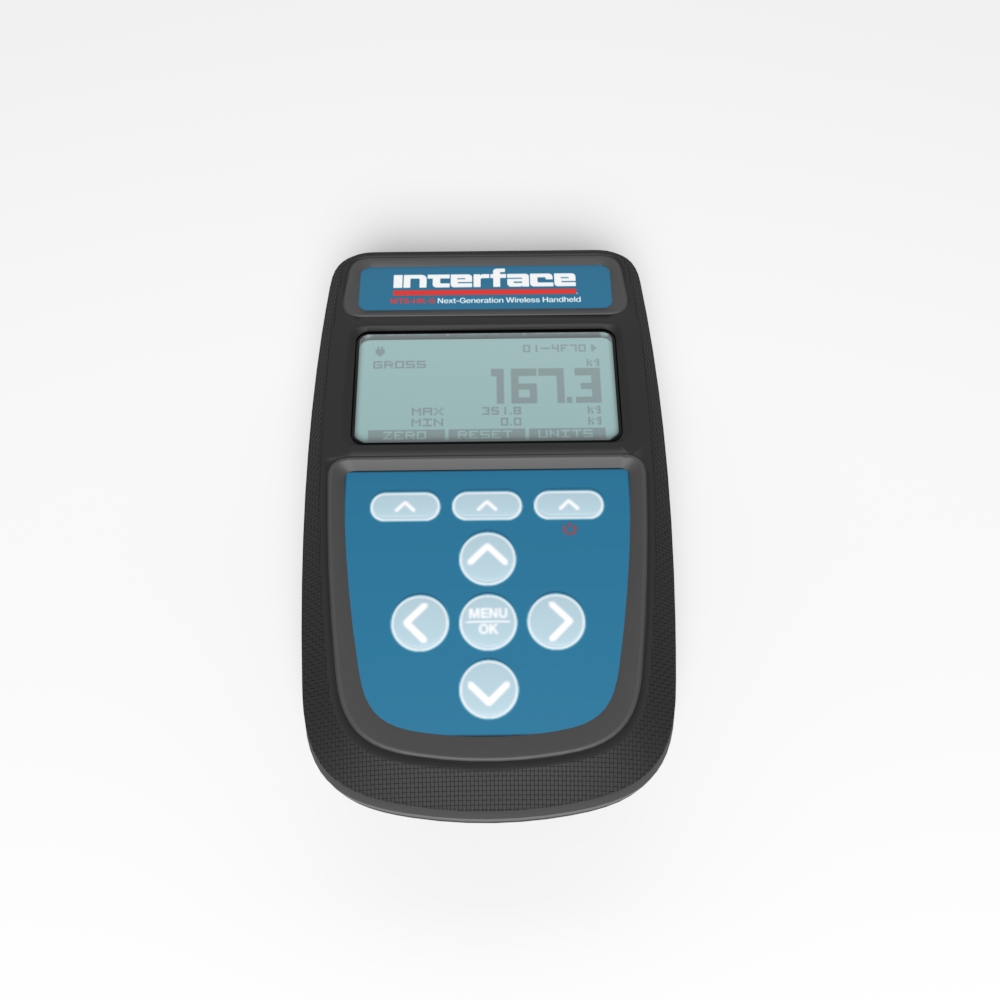
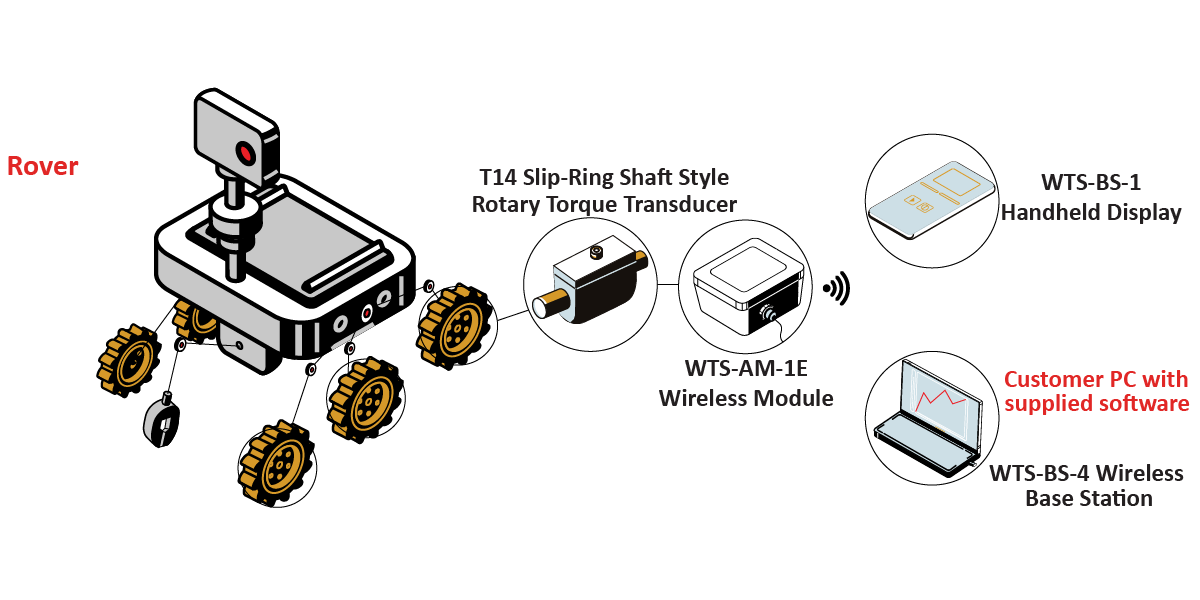
    Interface suggests using the T14 Slip-Ring Shaft Style Rotary Torque Transducer, installed inside of the rover’s wheel alongside the motor. To create a wireless system, the torque sensor is attached to the WTS-AM-1E Wireless Strain Bridge Transmitter Module, which will wireless transmit the sensor’s measurements to the WTS-HK-S Next-Generation Wireless Handheld, or the customer’s PC through the WTS-BS-4 Wireless Base Station with USB Interface.
  • Results

    Interface’s torque sensor and Wireless Telemetry System (WTS) solution successfully measured the rover wheels spin torque and forces.

Materials


  • T14 Slip-Ring Shaft Style Rotary Torque Transducer
  • WTS-AM-1E Wireless Strain Bridge Transmitter Module
  • WTS-HK-S Next-Generation Wireless Handheld
  • WTS-BS-4 Wireless Base Station with USB Interface
  • Customer PC or Laptop

How it Works


  1. The T14 Slip-Ring Shaft Style Rotary Torque Transducer is installed inside the rover’s wheels, and connected to the motor.
  2. The WTS-AM-1E Wireless Strain Bridge Transmitter Module connects to the T14, collecting data results of the wheels when the rover is static or moving. .
  3. Data results are transmitted wirelessly to either the WTS-HK-S Next-Generation Wireless Handheld, or, to the WTS-BS-4 Wireless Base Station with USB Interface and connected to the customer’s PC or laptop.

Download PDF